Everett Lawn Care LLC

Professional Landscaping in Raleigh, NC

Everett Lawn Care provides mowing, aeration, seeding, sod installation, mulch, cleanups, landscaping, and pressure washing in Raleigh and Wake County.

Serving Raleigh, Cary, Apex, Holly Springs, Wake Forest, and nearby Triangle cities.

Request an estimate · Contact us · (919) 899-2341 · info@everett-lawncare.com

5300 Six Forks Rd, Raleigh, NC 27609

Landscape Design Cost Raleigh NC: 2026 Pricing Guide

By Everett McLain

Last Updated: October 23, 2026

Quick Summary

Landscape design cost in Raleigh NC splits into two separate bills: the design fee and the installation cost. A design fee buys a plan, while installation buys soil, stone, plants, and labor. Ask any provider to separate the two in writing so you can compare quotes.

  • Design fees are quoted as flat fee by scope, hourly, or a percentage of installation.
  • Confirm the included revision rounds and whether the design fee is credited toward installation.
  • Installation cost is driven by project scope, yard size, design complexity, and site access.
  • Piedmont red clay compacts hard and drains slowly, often requiring soil amendment and drainage work.
  • Phase projects by fixing grading, drainage, and soil before building hardscaping and planting beds.

Table of Contents

What Landscape Design Cost in Raleigh NC Actually Covers

Landscape design cost in Raleigh NC breaks into two separate bills that homeowners routinely blur together: the design fee and the installation cost. This confusion matters because the two numbers behave nothing alike. A design fee buys a plan.

Most homeowners searching for a price walk away with a single figure and no idea what sits inside it. That single figure is where budgets go wrong.

Design Fees vs. Installation Costs

A design fee is what you pay a landscape designer or landscape architect to measure the property, resolve the layout, and produce a buildable plan. An installation cost is what you pay to execute that plan with materials and labor.

The design fee depends on scope and complexity, not yard size alone. A small garden with a clear backyard refresh may need only a simple planting plan.

Key Takeaway Ask any provider to separate the design fee from the installation estimate in writing. A quote that blends them hides where your money goes and makes comparison shopping impossible.

Landscape Architect Cost and Landscape Design Plans Cost

Landscape architect cost and landscape design plans cost are driven by the deliverable, not the title on the business card. A licensed landscape architect typically produces stamped drawings and coordinates with engineers when grading or stormwater work is involved.

What you actually receive varies widely:

  • A sketch and plant list for a single garden bed
  • A scaled plan with plant selection and material callouts
  • A full set with grading, drainage, and construction details

Ask to see a sample plan before you sign. The plan is the product, and its detail level is the clearest signal of what your fee buys.

How Design Fees Are Actually Priced

Design fees are usually quoted one of three ways, and the structure tells you a lot about what you are buying:

  1. Flat fee by scope. A single-bed planting plan is commonly quoted as a fixed price, while a full-property plan with grading and hardscaping is quoted higher because it takes more site time and drafting hours. Flat fees are the easiest to compare across providers.
  2. Hourly. Designers who bill hourly typically charge for site measurement, concept revisions, and construction documentation separately. Hourly billing is transparent but open-ended, so ask for an estimated hour range in writing.
  3. Percentage of installation. Some firms price design as a percentage of the projected build cost. This ties the fee to project size, which can be fair on large builds but rewards a bigger scope, get the percentage and the assumed construction budget in writing before you agree.

A common pattern is a tiered menu: a concept-only option, a full planting and layout plan, and a construction-ready set with grading and drainage details. Each tier should be priced separately so you can see what the next level of detail costs.

What a Design-Only Fee Includes, and What It Does Not

A design-only fee generally covers site measurement, a base plan, concept options, a plant schedule, and material callouts. It usually does not cover construction drawings for permits, engineered grading plans, or contractor bidding support unless those are listed.

Two questions decide whether the fee is fair:

  • How many revision rounds are included? Most plans include one or two rounds; additional rounds are often billed hourly.
  • Is the design fee credited toward installation if you hire the same firm? Many design-build firms credit part or all of the design fee against the installation contract. Ask directly, because a credited fee changes the true cost of the design.
Key Takeaway Get the fee structure, the included revision count, and the credit-toward-installation policy in writing before you pay a deposit. Those three terms matter more than the headline design number.

Designer Versus Landscape Architect

A landscape designer is not automatically cheaper or less qualified, the difference is the scope of work each can legally stamp and coordinate. When a project involves retaining walls above a certain height, grading that changes drainage, or stormwater work, a licensed landscape architect's stamped drawings may be required. For planting refreshes and layout work, a designer's plan is often sufficient and more cost-effective.

Landscape Installation Cost Raleigh NC: What Drives the Number

Landscape installation cost Raleigh NC comes down to four levers: project scope, yard size, design complexity, and site access. Change any one and the estimate moves.

Scope is the biggest. A planting refresh across existing beds is a different job from building a patio, walkway, and retaining wall in the same weekend.

Site access is the one homeowners underestimate. A backyard reachable only through a narrow side gate means crews carry materials by hand instead of dropping them with equipment.

Itemized Ranges by Project Type

Broad averages hide the differences between project types. Treat them as planning bands, not quotes, because soil, slope, and access shift every number.

Project Type Typical Scope Planning Range (USD)
Planting bed refresh Amend soil, reset beds, mulch, replace shrubs Low four figures per bed area
Foundation planting Front-of-house beds, small trees, edging Low-to-mid four figures
Patio installation Base prep, paver or stone surface, edging Mid-to-high four figures for a modest patio
Walkway Base prep, pavers or flagstone, curves Low-to-mid four figures
Retaining wall Block or stone, base, drainage behind wall Mid-to-high four figures depending on height and length
Grading and drainage Regrade slope, drains, discharge routing Mid four figures and up on larger lots
Full-yard design and install Combined hardscape, planting, drainage Five figures and up

Hardscaping, Planting, and Drainage Line Items

Ask for an itemized estimate, and you should see these categories separated:

  1. Site preparation and grading: clearing, excavation, earth moving, and shaping the slope
  2. Hardscaping: patio, walkway, retaining wall, and edging materials plus base prep
  3. Planting: plant selection, garden beds, soil amendment, and mulch
  4. Drainage and stormwater management: grading corrections, drains, and discharge routing
  5. Labor and equipment: crew hours, machine rental, and disposal

A line item you cannot find is a cost you cannot question. Push back on lump sums.

Instant Estimate →

Why Local Conditions Change the Number

Piedmont red clay compacts hard and drains slowly, so planting beds often need amendment and drainage work that sandy-soil guides never mention. Slopes that look minor on a walkthrough can require regrading before a patio or wall goes in. Heavy summer rain events make discharge routing a real design decision, not an afterthought. Each of these adds scope, and scope is what moves the estimate.

Watch Out The cheapest line item is often the one that causes the most expensive rework. Skipping soil correction or drainage to hit a lower number usually costs more once plants fail or water pools against the foundation.

Using a Landscaping Cost Calculator Without Getting Misled

A landscaping cost calculator gives you a starting range, not a quote. Online tools multiply a rough area figure by an average rate, and that math cannot see your clay soil, your slope, or your gate width.

Use a calculator for one job only: setting a realistic ceiling before you call anyone. Then treat every real estimate as the authority.

Watch Out The most common mistake is anchoring on a calculator number and rejecting accurate quotes as too high. Local site conditions routinely push real costs above generic averages, and the calculator never accounts for them.

Local Site and Climate Factors That Move Your Project Estimate

Piedmont red clay is the single biggest local variable in a Raleigh-area estimate. Clay compacts hard, drains slowly, and holds root systems back, so planting beds often need amendment and drainage work that sandy-soil guides never mention.
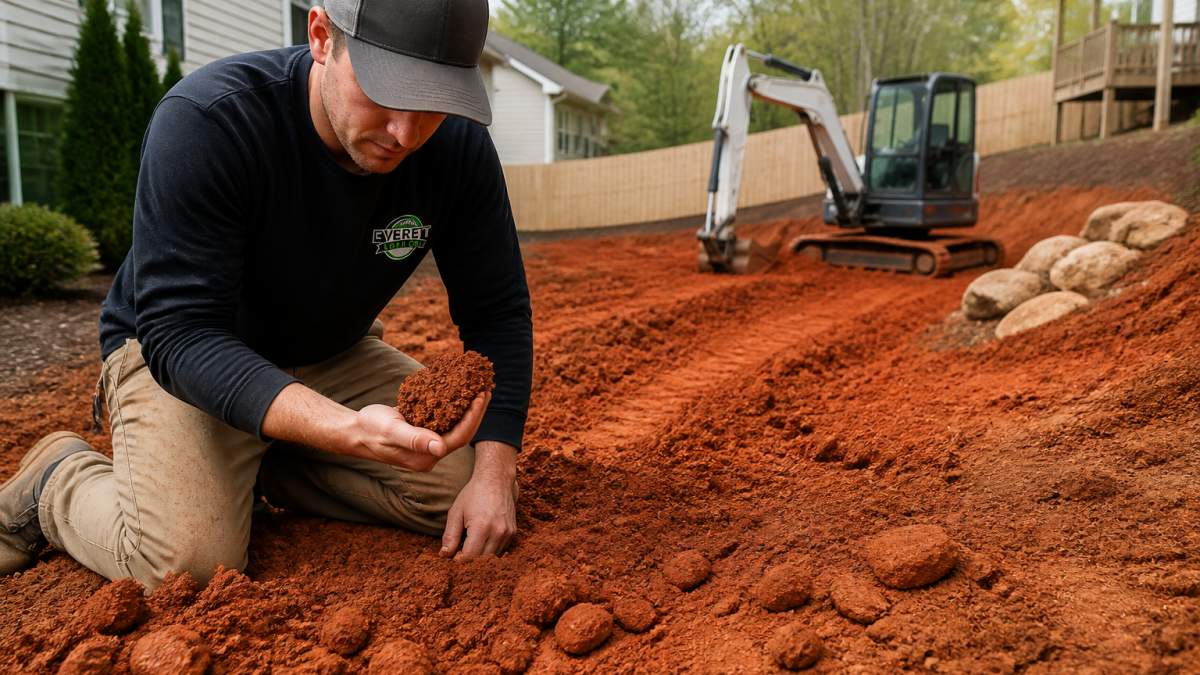
Landscaper inspecting red clay soil near an excavator to help determine landscape design cost factors.

Summer heat and heavy rain events add pressure. Plant selection has to survive both, and grading has to move water away from the foundation rather than toward it.

Clay Soil, Grading, and Stormwater Rules

Grading is not cosmetic. It decides where stormwater goes, and in Wake County that has regulatory weight. Larger projects that disturb significant areas of soil can trigger erosion control and stormwater requirements, so confirm what applies to your property before work begins.

Soil testing is the cheapest step most homeowners skip. A North Carolina Cooperative Extension soil test tells you what your clay actually needs before you spend money on plants that will struggle.

Permits, HOA Rules, and How to Evaluate a Landscape Design Proposal

Permits and HOA approval are the two gates that stall projects after the deposit is paid. Retaining walls above a certain height, structural hardscaping, and work near drainage easements commonly require review. HOA architectural committees often have their own plant lists and material restrictions.

Then evaluate the proposal itself:

  • Is the design fee stated separately from installation?
  • Are hardscaping, planting, and drainage itemized?
  • Does the plan show grading and drainage, not just plants?

That last box is not a formality. When you are ready to see what a full design and build looks like, you can explore professional landscaping in Raleigh, NC and request an estimate, or read our deeper guide to professional landscape design for landscaping if you want to understand how the design process works end to end.

Pro Tip Ask for before-and-after photos from properties with your same soil and shade pattern. A portfolio built on irrigated, full-sun lots tells you little about what will survive your backyard.

Sample Budgets and Phasing a Project Over Time

Phasing is how real homeowners afford good landscaping. Instead of pricing the whole property at once, split it into stages that each stand alone.

Phase Typical Scope Priority
Phase 1 Grading, drainage, soil correction Fix water and soil first
Phase 2 Hardscaping: patio, walkway, walls Build the structure
Phase 3 Garden beds and plant selection Plant into prepared ground
Phase 4 Mulch, edging, seasonal cleanups Finish and maintain

The order is not arbitrary. Drainage work done after a patio means tearing out the patio. Soil correction done after planting means losing the plants.

Best For Homeowners with a clear long-term plan who want to spread spending across two or three seasons without redoing finished work.

Everett Lawn Care is licensed and insured, and our local crew handles design, installation, aeration, and ongoing maintenance across the Triangle. If your soil is compacted from construction, our soil testing and aeration and seeding services address the root problem before you invest in plantings.

Frequently Asked Questions

How much does landscape design cost in Raleigh?

Design fees in the Triangle typically depend on yard size, design complexity, and whether you hire a landscape designer or a licensed landscape architect. A simple planting plan for a small garden costs far less than a full property master plan with hardscaping and drainage. Most firms quote a flat fee after a consultation rather than a per-square-foot rate. Request an itemized proposal so you can see exactly what the design fee covers before you commit.

Does a landscape design fee include installation?

No. Design fees and landscape installation cost Raleigh NC homeowners pay are almost always separate line items. The design fee pays for the site visit, measurements, concept drawings, plant selection, and a construction-ready plan. Installation covers materials, labor, excavation, and grading. Some firms credit part of the design fee toward installation if you hire them to build the plan, so ask about that before signing. Get both numbers in writing.

Are landscape architects worth the cost?

For a straightforward backyard refresh, a landscape designer is usually enough. Landscape architect cost runs higher because of licensing and advanced training, and it makes sense when your project involves grading changes, retaining walls, drainage engineering, or stormwater requirements that need stamped drawings. If your yard has steep slopes, clay soil issues, or a complicated layout with mixed sun and shade, the extra expertise often prevents costly rework later.

How do I calculate landscaping costs accurately?

A landscaping cost calculator gives a rough starting point, but it cannot see your site. Accurate numbers come from an on-site assessment that measures square footage, checks soil conditions, evaluates access for equipment, and identifies drainage problems. Ask for a line-item estimate separating design, materials, labor, and site preparation. Get at least three quotes using the same project scope so you are comparing like for like rather than guessing from a web tool.

What factors affect the cost of a landscape design project?

The biggest drivers are yard size, design complexity, site preparation, and access. A flat, empty lot is cheaper to work with than a sloped yard full of mature trees and compacted clay. Hardscaping like patios and retaining walls adds significant cost compared with planting beds alone. Drainage solutions, permit requirements, and HOA approvals also affect the total. Material choice matters too: native plants cost less to maintain than exotic specimens.

How can I get an accurate landscaping estimate?

Start with a free on-site consultation so a professional can see your property layout, soil, and access conditions. Share your budget openly and ask for a written, itemized estimate that separates design fees from installation costs. Confirm what is included, such as soil testing, mulch, or cleanup, and what is not. Ask for references and before-and-after photos from nearby projects, and check that the company is licensed and insured before any work begins.


Landscape design cost in Raleigh comes down to two honest numbers and a plan that separates them. Get the design fee, the itemized installation estimate, and the site conditions on paper before you commit to anything. Everett Lawn Care provides professional landscape design and installation with licensed and insured crews serving Raleigh, Cary, and Apex. Get a free estimate and start with a plan built for your soil, your slope, and your budget.

GoogleAdd everett-lawncare.com as a preferred source on Google →

Landscape Design Cost Raleigh NC: 2026 Pricing Guide

By Everett McLain

Last Updated: October 23, 2026

Quick Summary

Landscape design cost in Raleigh NC splits into two separate bills: the design fee and the installation cost. A design fee buys a plan, while installation buys soil, stone, plants, and labor. Ask any provider to separate the two in writing so you can compare quotes.

  • Design fees are quoted as flat fee by scope, hourly, or a percentage of installation.
  • Confirm the included revision rounds and whether the design fee is credited toward installation.
  • Installation cost is driven by project scope, yard size, design complexity, and site access.
  • Piedmont red clay compacts hard and drains slowly, often requiring soil amendment and drainage work.
  • Phase projects by fixing grading, drainage, and soil before building hardscaping and planting beds.

Table of Contents

What Landscape Design Cost in Raleigh NC Actually Covers

Landscape design cost in Raleigh NC breaks into two separate bills that homeowners routinely blur together: the design fee and the installation cost. This confusion matters because the two numbers behave nothing alike. A design fee buys a plan.

Most homeowners searching for a price walk away with a single figure and no idea what sits inside it. That single figure is where budgets go wrong.

Design Fees vs. Installation Costs

A design fee is what you pay a landscape designer or landscape architect to measure the property, resolve the layout, and produce a buildable plan. An installation cost is what you pay to execute that plan with materials and labor.

The design fee depends on scope and complexity, not yard size alone. A small garden with a clear backyard refresh may need only a simple planting plan.

Key Takeaway Ask any provider to separate the design fee from the installation estimate in writing. A quote that blends them hides where your money goes and makes comparison shopping impossible.

Landscape Architect Cost and Landscape Design Plans Cost

Landscape architect cost and landscape design plans cost are driven by the deliverable, not the title on the business card. A licensed landscape architect typically produces stamped drawings and coordinates with engineers when grading or stormwater work is involved.

What you actually receive varies widely:

  • A sketch and plant list for a single garden bed
  • A scaled plan with plant selection and material callouts
  • A full set with grading, drainage, and construction details

Ask to see a sample plan before you sign. The plan is the product, and its detail level is the clearest signal of what your fee buys.

How Design Fees Are Actually Priced

Design fees are usually quoted one of three ways, and the structure tells you a lot about what you are buying:

  1. Flat fee by scope. A single-bed planting plan is commonly quoted as a fixed price, while a full-property plan with grading and hardscaping is quoted higher because it takes more site time and drafting hours. Flat fees are the easiest to compare across providers.
  2. Hourly. Designers who bill hourly typically charge for site measurement, concept revisions, and construction documentation separately. Hourly billing is transparent but open-ended, so ask for an estimated hour range in writing.
  3. Percentage of installation. Some firms price design as a percentage of the projected build cost. This ties the fee to project size, which can be fair on large builds but rewards a bigger scope, get the percentage and the assumed construction budget in writing before you agree.

A common pattern is a tiered menu: a concept-only option, a full planting and layout plan, and a construction-ready set with grading and drainage details. Each tier should be priced separately so you can see what the next level of detail costs.

What a Design-Only Fee Includes, and What It Does Not

A design-only fee generally covers site measurement, a base plan, concept options, a plant schedule, and material callouts. It usually does not cover construction drawings for permits, engineered grading plans, or contractor bidding support unless those are listed.

Two questions decide whether the fee is fair:

  • How many revision rounds are included? Most plans include one or two rounds; additional rounds are often billed hourly.
  • Is the design fee credited toward installation if you hire the same firm? Many design-build firms credit part or all of the design fee against the installation contract. Ask directly, because a credited fee changes the true cost of the design.
Key Takeaway Get the fee structure, the included revision count, and the credit-toward-installation policy in writing before you pay a deposit. Those three terms matter more than the headline design number.

Designer Versus Landscape Architect

A landscape designer is not automatically cheaper or less qualified, the difference is the scope of work each can legally stamp and coordinate. When a project involves retaining walls above a certain height, grading that changes drainage, or stormwater work, a licensed landscape architect's stamped drawings may be required. For planting refreshes and layout work, a designer's plan is often sufficient and more cost-effective.

Landscape Installation Cost Raleigh NC: What Drives the Number

Landscape installation cost Raleigh NC comes down to four levers: project scope, yard size, design complexity, and site access. Change any one and the estimate moves.

Scope is the biggest. A planting refresh across existing beds is a different job from building a patio, walkway, and retaining wall in the same weekend.

Site access is the one homeowners underestimate. A backyard reachable only through a narrow side gate means crews carry materials by hand instead of dropping them with equipment.

Itemized Ranges by Project Type

Broad averages hide the differences between project types. Treat them as planning bands, not quotes, because soil, slope, and access shift every number.

Project Type Typical Scope Planning Range (USD)
Planting bed refresh Amend soil, reset beds, mulch, replace shrubs Low four figures per bed area
Foundation planting Front-of-house beds, small trees, edging Low-to-mid four figures
Patio installation Base prep, paver or stone surface, edging Mid-to-high four figures for a modest patio
Walkway Base prep, pavers or flagstone, curves Low-to-mid four figures
Retaining wall Block or stone, base, drainage behind wall Mid-to-high four figures depending on height and length
Grading and drainage Regrade slope, drains, discharge routing Mid four figures and up on larger lots
Full-yard design and install Combined hardscape, planting, drainage Five figures and up

Hardscaping, Planting, and Drainage Line Items

Ask for an itemized estimate, and you should see these categories separated:

  1. Site preparation and grading: clearing, excavation, earth moving, and shaping the slope
  2. Hardscaping: patio, walkway, retaining wall, and edging materials plus base prep
  3. Planting: plant selection, garden beds, soil amendment, and mulch
  4. Drainage and stormwater management: grading corrections, drains, and discharge routing
  5. Labor and equipment: crew hours, machine rental, and disposal

A line item you cannot find is a cost you cannot question. Push back on lump sums.

Instant Estimate →

Why Local Conditions Change the Number

Piedmont red clay compacts hard and drains slowly, so planting beds often need amendment and drainage work that sandy-soil guides never mention. Slopes that look minor on a walkthrough can require regrading before a patio or wall goes in. Heavy summer rain events make discharge routing a real design decision, not an afterthought. Each of these adds scope, and scope is what moves the estimate.

Watch Out The cheapest line item is often the one that causes the most expensive rework. Skipping soil correction or drainage to hit a lower number usually costs more once plants fail or water pools against the foundation.

Using a Landscaping Cost Calculator Without Getting Misled

A landscaping cost calculator gives you a starting range, not a quote. Online tools multiply a rough area figure by an average rate, and that math cannot see your clay soil, your slope, or your gate width.

Use a calculator for one job only: setting a realistic ceiling before you call anyone. Then treat every real estimate as the authority.

Watch Out The most common mistake is anchoring on a calculator number and rejecting accurate quotes as too high. Local site conditions routinely push real costs above generic averages, and the calculator never accounts for them.

Local Site and Climate Factors That Move Your Project Estimate

Piedmont red clay is the single biggest local variable in a Raleigh-area estimate. Clay compacts hard, drains slowly, and holds root systems back, so planting beds often need amendment and drainage work that sandy-soil guides never mention.

Landscaper inspecting red clay soil near an excavator to help determine landscape design cost factors.

Summer heat and heavy rain events add pressure. Plant selection has to survive both, and grading has to move water away from the foundation rather than toward it.

Clay Soil, Grading, and Stormwater Rules

Grading is not cosmetic. It decides where stormwater goes, and in Wake County that has regulatory weight. Larger projects that disturb significant areas of soil can trigger erosion control and stormwater requirements, so confirm what applies to your property before work begins.

Soil testing is the cheapest step most homeowners skip. A North Carolina Cooperative Extension soil test tells you what your clay actually needs before you spend money on plants that will struggle.

Permits, HOA Rules, and How to Evaluate a Landscape Design Proposal

Permits and HOA approval are the two gates that stall projects after the deposit is paid. Retaining walls above a certain height, structural hardscaping, and work near drainage easements commonly require review. HOA architectural committees often have their own plant lists and material restrictions.

Then evaluate the proposal itself:

  • Is the design fee stated separately from installation?
  • Are hardscaping, planting, and drainage itemized?
  • Does the plan show grading and drainage, not just plants?

That last box is not a formality. When you are ready to see what a full design and build looks like, you can explore professional landscaping in Raleigh, NC and request an estimate, or read our deeper guide to professional landscape design for landscaping if you want to understand how the design process works end to end.

Pro Tip Ask for before-and-after photos from properties with your same soil and shade pattern. A portfolio built on irrigated, full-sun lots tells you little about what will survive your backyard.

Sample Budgets and Phasing a Project Over Time

Phasing is how real homeowners afford good landscaping. Instead of pricing the whole property at once, split it into stages that each stand alone.

Phase Typical Scope Priority
Phase 1 Grading, drainage, soil correction Fix water and soil first
Phase 2 Hardscaping: patio, walkway, walls Build the structure
Phase 3 Garden beds and plant selection Plant into prepared ground
Phase 4 Mulch, edging, seasonal cleanups Finish and maintain

The order is not arbitrary. Drainage work done after a patio means tearing out the patio. Soil correction done after planting means losing the plants.

Best For Homeowners with a clear long-term plan who want to spread spending across two or three seasons without redoing finished work.

Everett Lawn Care is licensed and insured, and our local crew handles design, installation, aeration, and ongoing maintenance across the Triangle. If your soil is compacted from construction, our soil testing and aeration and seeding services address the root problem before you invest in plantings.

Frequently Asked Questions

How much does landscape design cost in Raleigh?

Design fees in the Triangle typically depend on yard size, design complexity, and whether you hire a landscape designer or a licensed landscape architect. A simple planting plan for a small garden costs far less than a full property master plan with hardscaping and drainage. Most firms quote a flat fee after a consultation rather than a per-square-foot rate. Request an itemized proposal so you can see exactly what the design fee covers before you commit.

Does a landscape design fee include installation?

No. Design fees and landscape installation cost Raleigh NC homeowners pay are almost always separate line items. The design fee pays for the site visit, measurements, concept drawings, plant selection, and a construction-ready plan. Installation covers materials, labor, excavation, and grading. Some firms credit part of the design fee toward installation if you hire them to build the plan, so ask about that before signing. Get both numbers in writing.

Are landscape architects worth the cost?

For a straightforward backyard refresh, a landscape designer is usually enough. Landscape architect cost runs higher because of licensing and advanced training, and it makes sense when your project involves grading changes, retaining walls, drainage engineering, or stormwater requirements that need stamped drawings. If your yard has steep slopes, clay soil issues, or a complicated layout with mixed sun and shade, the extra expertise often prevents costly rework later.

How do I calculate landscaping costs accurately?

A landscaping cost calculator gives a rough starting point, but it cannot see your site. Accurate numbers come from an on-site assessment that measures square footage, checks soil conditions, evaluates access for equipment, and identifies drainage problems. Ask for a line-item estimate separating design, materials, labor, and site preparation. Get at least three quotes using the same project scope so you are comparing like for like rather than guessing from a web tool.

What factors affect the cost of a landscape design project?

The biggest drivers are yard size, design complexity, site preparation, and access. A flat, empty lot is cheaper to work with than a sloped yard full of mature trees and compacted clay. Hardscaping like patios and retaining walls adds significant cost compared with planting beds alone. Drainage solutions, permit requirements, and HOA approvals also affect the total. Material choice matters too: native plants cost less to maintain than exotic specimens.

How can I get an accurate landscaping estimate?

Start with a free on-site consultation so a professional can see your property layout, soil, and access conditions. Share your budget openly and ask for a written, itemized estimate that separates design fees from installation costs. Confirm what is included, such as soil testing, mulch, or cleanup, and what is not. Ask for references and before-and-after photos from nearby projects, and check that the company is licensed and insured before any work begins.


Landscape design cost in Raleigh comes down to two honest numbers and a plan that separates them. Get the design fee, the itemized installation estimate, and the site conditions on paper before you commit to anything. Everett Lawn Care provides professional landscape design and installation with licensed and insured crews serving Raleigh, Cary, and Apex. Get a free estimate and start with a plan built for your soil, your slope, and your budget.

GoogleAdd everett-lawncare.com as a preferred source on Google →

Everett Lawn Care

Loading your experience…

Please wait — this usually finishes in a few seconds.