Table of Contents
- Why a Licensed and Insured Lawn Care Service Matters
- Lawn Care Service License Requirements: What Varies by State and Task
- How to Verify a Lawn Care Company's Insurance
- Coverage Limits, Exclusions, and the Policies That Protect You
- Questions to Ask a Lawn Care Company Before Hiring
- Lawn Care Service Estimate Checklist: Comparing Quotes Side by Side
- Frequently Asked Questions
Last Updated: October 21, 2026
Why a Licensed and Insured Lawn Care Service Matters
A lawn care service licensed insured protects you from the two costs nobody budgets for: property damage and injury on your property.
The difference between a legitimate provider and a cheap one shows up after something goes wrong. An uninsured crew that clips your fence or damages a sprinkler head has no mechanism to cover the repair, leaving you to negotiate with someone who may stop answering calls.
Lawn Care Service License Requirements: What Varies by State and Task
Lawn care licensing is not one credential but a patchwork of state rules that depend on what the crew actually does.
Mowing, edging, and blowing typically fall outside specialized licensing. Applying fertilizer, herbicides, or pesticides usually requires a state-issued applicator license, and the business often needs a separate commercial applicator license. The crew that cuts your grass may not be legally permitted to spray your weeds.
Who Regulates What
The regulator depends on the task, not the company name:
- Pesticide and fertilizer application: Regulated at the state level, usually by the department of agriculture or a pesticide regulatory office. Individual applicators hold a license or certification, and the business holds a separate commercial applicator license. The EPA sets the federal framework under FIFRA, but exams and renewals are state-run.
- Irrigation installation and backflow prevention: Often regulated by state or local plumbing or water-authority rules. Many municipalities require a certified backflow tester for any irrigation line connected to the public water supply, and some require a separate irrigation contractor license.
- Tree care above a certain height: A handful of states license arborists or tree care companies separately, particularly for work near utility lines. Utility line clearance is usually a separate credential altogether.
Insurance requirements follow a similar pattern. General liability is expected across the board, but states set their own minimums for commercial auto and workers' compensation, and requirements change with crew size and payroll. A solo operator and a ten-person crew face different obligations in most jurisdictions.
A Task-by-Task View
| Task | Typical Credential | Who Issues It |
|---|---|---|
| Mowing, edging, blowing | General business registration | State or local business office |
| Fertilizer and weed control | Individual applicator license plus commercial applicator license | State department of agriculture or pesticide office |
| Irrigation installation | Irrigation contractor license and/or backflow certification | State or local plumbing/water authority |
| Tree pruning and removal | Arborist or tree care license in some states | State agriculture or forestry agency |
| Seasonal cleanup, aeration, overseeding | Usually no specialized license | General business registration only |
If a provider offers weed control or lawn treatments, ask directly whether they hold an applicator license and whether the business holds a commercial applicator license. At Everett Lawn Care, our lawn treatments are handled by licensed and insured experts, which is the standard any homeowner should expect.
Why the Task Matters More Than the Company Name
Two companies can both advertise "licensed and insured lawn care" and hold completely different credentials. One may hold only a business registration and a general liability policy; the other may hold a commercial applicator license, a backflow certification, and workers' compensation covering a full crew.
When you review an estimate, match each line item to the credential it requires. Fertilization or weed control calls for the applicator license; irrigation repair calls for backflow certification; mowing and cleanup call for business registration and insurance certificates.
How to Verify a Lawn Care Company's Insurance
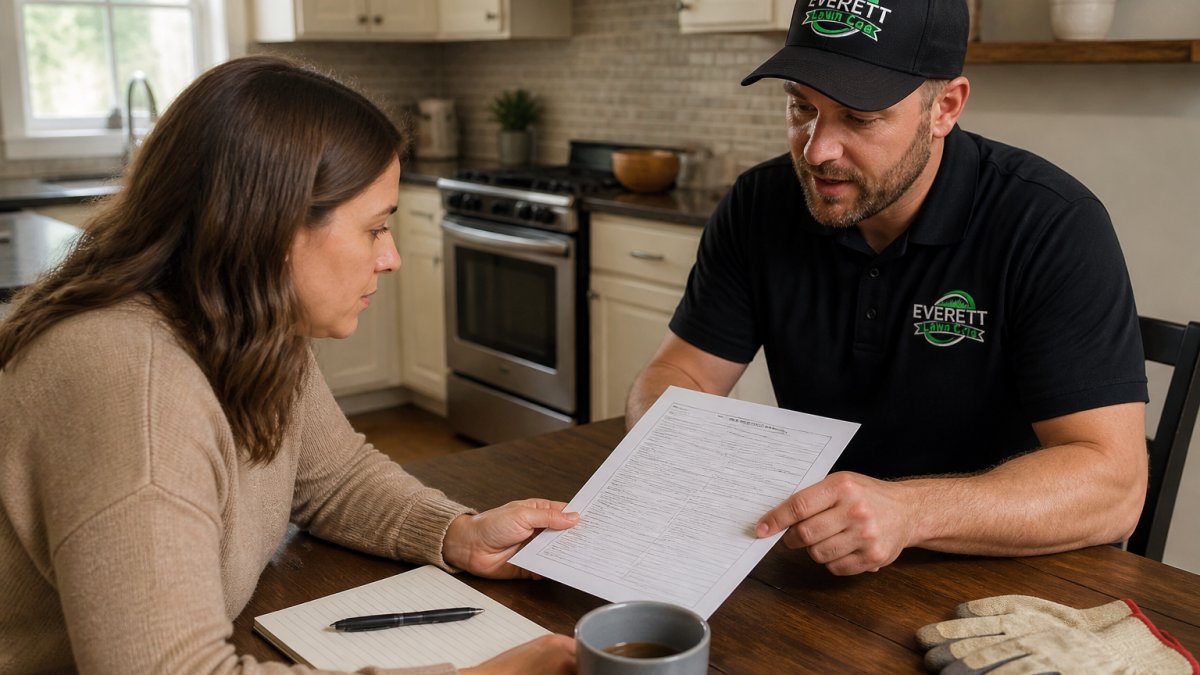
Verifying insurance takes about ten minutes and two phone calls. Ask for a certificate of insurance, then confirm the policy is active by calling the insurer listed on it.
Step 1: Check the License First
Start with your state licensing board or department of agriculture website, which maintains searchable databases of licensed applicators and contractors. Search both the business name and the individual applicator name, and cross-check the license number against the estimate.
If the provider applies fertilizer, herbicide, or pesticide, the state pesticide regulatory office is the place to look. Most of these offices publish an online license lookup that shows the license type, status, and expiration date.
Step 2: Request the Right Certificates
Request three documents: a general liability certificate, a commercial auto certificate if they drive to your property, and proof of workers' compensation if they employ anyone. Then call the insurer's verification line printed on the certificate and confirm the policy number is active.
Ask the provider to have their insurer email the certificate directly to you rather than forwarding a PDF. It removes the possibility of an edited document and takes the provider about two minutes.
Step 3: Read the Certificate Carefully
A certificate of insurance is a one-page insurer summary listing the policyholder, coverage types, limits, and effective dates. Read four fields closely:
- Named insured: The business name must match the company you hired, not an individual's personal policy.
- Policy effective and expiration dates: Confirm coverage is active on the day work begins.
- General liability limits: Look for per-occurrence and aggregate limits.
Step 4: Confirm With the Insurer
The certificate is a snapshot; the insurer's verification line is the live record. Call the number on the certificate, give the policy number, and ask: Is the policy active today? What are the per-occurrence and aggregate limits? Is the named insured exactly the business I am hiring? If any answer does not match the certificate, stop and ask the provider to explain before work begins.
Red Flags in the Verification Process
- The provider cannot produce a certificate within a day or two.
- The certificate lists an individual's name rather than the business entity.
- The policy expiration date is in the past or within a few days of the start date.
What Verification Does Not Cover
Verification confirms the license and policy exist, not that the provider will do good work, show up on schedule, or handle a claim smoothly. Pair it with references, a written estimate, and a clear damage policy so paperwork and performance are both covered.
Coverage Limits, Exclusions, and the Policies That Protect You
Coverage limits are the ceiling an insurer will pay for a single claim, and they matter more than the existence of a policy. A low per-occurrence limit may not cover a serious property claim.
Exclusions are where claims get denied. Common ones include faulty workmanship, intentional acts, and damage to property the policyholder is working on. Chemical drift onto a neighboring property is a frequent gray area, so ask how their policy handles drift and overspray before any treatment is scheduled.
Questions to Ask a Lawn Care Company Before Hiring
The right questions separate a professional operation from a truck and a mower. Ask them before signing anything, and expect direct answers. They fall into three groups: credentials, scope, and accountability.
Credentials and coverage
- Are you licensed for the specific work you will do on my property?
- Can you send a current certificate of insurance with me listed as certificate holder?
- Do you carry workers' compensation, and how many employees does it cover?
Scope and expectations
- What exactly is included in the service, and what costs extra?
- How do you handle chemical applications, and who holds the applicator license?
- What is the schedule, and how do you notify me of changes?
Accountability
- What happens if something on my property gets damaged?
- Can you provide references from properties similar to mine?
- How do you handle complaints or re-service requests?
A provider who hesitates on the insurance question is telling you something. Legitimate companies keep certificates on hand and send them without friction.
Lawn Care Service Estimate Checklist: Comparing Quotes Side by Side
Comparing estimates on price alone is the fastest way to hire the wrong provider. A lawn care service estimate checklist forces an apples-to-apples comparison across scope, credentials, and terms, where the real differences hide. Here is a working checklist for reviewing quotes.
| Comparison Point | What to Look For | Why It Matters |
|---|---|---|
| License number | State-issued, matches business name | Confirms legal authority to perform the work |
| General liability | Current certificate, adequate limits | Covers property damage claims |
| Workers' compensation | Active policy, crew count listed | Protects you from injury liability |
| Scope of service | Itemized, with extras priced | Prevents surprise charges |
| Treatment licensing | Applicator license for chemical work | Legal compliance and safety |
| References | Properties similar to yours | Evidence of consistent results |
| Damage policy | Written process for claims | Clear accountability |
| Contract terms | Cancellation, renewal, notice | Avoids lock-in |
What a Fair Estimate Should Include
A fair estimate is itemized, dated, and specific: services performed, frequency, price per visit or season, and terms for changes or cancellation.
Look for a written scope separating recurring maintenance from one-time work such as aeration, seeding, or seasonal cleanup.
Hiring a lawn care provider is a decision about risk as much as appearance. The company you choose should prove its license, produce a current certificate of insurance, and explain exactly what happens if something goes wrong.
Frequently Asked Questions
What kind of insurance should a lawn care service carry?
A legitimate lawn care service typically carries general liability insurance, which covers third-party bodily injury and property damage, plus commercial auto insurance for the trucks and trailers used on the job. If the company has employees, workers' compensation is also standard. Equipment coverage protects the business's own tools rather than your property. Ask for a certificate of insurance listing all of these, and confirm the policy is still active by calling the insurer directly rather than relying on a photocopy alone.
How can I verify that a lawn care service is licensed and insured?
Start by asking for the company's license number and the state or local agency that issued it, then look up that number in the agency's public database. For insurance, request a certificate of insurance naming the policyholder, coverage types, limits, and expiration date, and call the insurer's number on the certificate to confirm it is current. A licensed and insured provider will share this without hesitation. Anyone who dodges the request or sends a document with mismatched names is a red flag.
Does a lawn care company need a license to apply pesticides or fertilizer?
In most states, yes. Applying pesticides, and often commercial fertilizer, requires a pesticide applicator license or certification issued by the state's agriculture department. General mowing and cleanup usually do not. This matters because an unlicensed applicator can misuse products, damage your lawn, and leave you exposed if a chemical drifts onto a neighbor's property. When you ask about licensing, ask specifically whether the crew applying treatments holds the required applicator credential, not just a general business license.
What happens if a lawn care worker damages my property?
If the company is insured, its general liability policy should cover damage to your fence, windows, vehicles, or landscaping caused by the crew, and you file a claim with the insurer. If the company is uninsured, you may have to pursue the business directly or file a claim with your own homeowner's policy, which can raise your premium. That is why confirming coverage before work begins matters more than the price of the estimate. Document the damage with photos and report it to the company in writing the same day.
What are red flags when hiring a lawn care service?
Watch for a company that cannot produce a certificate of insurance, quotes a price far below every other estimate, demands full payment upfront in cash, has no verifiable local address, or refuses to provide references from nearby properties. Door-to-door crews that appear after storms and disappear quickly are another warning sign. A licensed and insured provider will happily share license numbers, insurance documents, and customer references, and will put the scope of work and payment terms in a written estimate before starting.
How do I compare lawn care service estimates fairly?
Line up each estimate against the same checklist: scope of work, visit frequency, what is included versus billed extra, treatment products, cleanup of clippings and debris, insurance and licensing proof, and payment terms. A cheaper quote that excludes debris removal or aeration is not actually cheaper. Ask each provider to break pricing into recurring maintenance versus one-time services, and confirm whether the price is locked for the season. Compare at least three written estimates before deciding.