Everett Lawn Care LLC

Lawn mowing and treatments in the Raleigh area

Everett Lawn Care offers recurring mowing, fertilization, and weed control in Raleigh and nearby communities. Request an estimate for either service or both.

Serving Raleigh, Cary, Apex, Holly Springs, Wake Forest, and nearby Triangle cities.

We also do cleanups, sod, and mulch

  • Seasonal cleanups Clear fallen leaves and yard debris and tidy up outdoor areas between seasons.
  • Sod installation Install new turf in bare or damaged areas, or replace a lawn that needs a fresh start.
  • Mulch installation Refresh planting beds with mulch or ask about gravel for paths and other areas.

Request an estimate · Contact us · (919) 899-2341 · info@everett-lawncare.com

5300 Six Forks Rd, Raleigh, NC 27609

Lawn Care Workers Comp Requirements Explained

By Everett McLain

Quick Summary

Lawn care workers comp requirements depend mainly on your state, which sets its own employee-count thresholds, owner exemptions, and penalties for going uninsured. Check your state's workers' compensation agency before hiring, and count seasonal and part-time staff as employees in most states.

  • Each state sets its own workers' compensation rules, so there is no single federal requirement for lawn care businesses.
  • Seasonal and part-time workers usually count toward the employee total in most states.
  • Classify each worker by how the work is controlled and who bears the financial risk, not by the label used.
  • Ask every subcontractor for a current certificate of insurance and keep copies on file.
  • Get a written quote from a licensed insurance agent and compare more than one carrier.
Need your lawn care coverage checked?Everett Lawn Care is licensed and insured and serves Raleigh, Cary, and Apex.
Get a Free Estimate

Table of Contents

Lawn Care Workers Comp Requirements Explained

Last Updated: November 7, 2026

Lawn Care Workers Compensation Insurance Requirements Start With Your State

Workers' compensation requirements by state, U.S. Department of Labor

Whether you need lawn care workers comp depends mostly on where you operate. Each state sets its own rules for workers' compensation insurance, including which employers must carry it, how many workers trigger the requirement, and what penalties apply for going without it. There is no single federal rule that covers every lawn care business in the country.

Before you hire anyone, check your state's workers' compensation agency first. A quick call or website search can save you from a costly mistake later. Start with the agency that regulates coverage in your state, so you can go straight to the source instead of guessing.

State Regulator to contact What to confirm first
California Division of Workers' Compensation (DWC), Department of Industrial Relations Whether any employee triggers coverage; sole-owner rules
Texas Texas Department of Insurance, Division of Workers' Compensation That coverage is optional for most private employers but required for government contracts
Florida Florida Division of Workers' Compensation Construction vs. non-construction thresholds; officer exemptions
New York New York State Workers' Compensation Board Coverage at one employee; sole-proprietor and LLC-member rules
Illinois Illinois Workers' Compensation Commission Employee-count threshold and corporate-officer election
Ohio Ohio Bureau of Workers' Compensation State-fund vs. self-insured options; owner elections
Georgia Georgia State Board of Workers' Compensation Employee-count threshold and subcontractor certificates
North Carolina North Carolina Industrial Commission Coverage at three employees; owner exclusion rules
Pennsylvania Pennsylvania Department of Labor & Industry, Bureau of Workers' Compensation Employee-count threshold and sole-proprietor status
Arizona Industrial Commission of Arizona Coverage at one employee; owner/LLC-member elections

Use the table as a starting point, not a substitute for the rule itself. Agency names and thresholds change, and the details that matter most, whether part-time and seasonal workers count, how owners are treated, and what proof you must file, are specific to each state's statute and regulations.

  • Check your state's workers' comp agency or insurance department
  • Confirm the employee count that triggers coverage
  • Ask how owners, part-time workers, and subcontractors are treated
  • Keep written records of what you find

This guide walks through what usually matters for lawn care and landscaping businesses across the United States.

Workers' Compensation Requirements for Lawn Care Businesses

Most states require lawn care employers to carry workers' compensation once they reach a set number of employees. Lawn care work involves mowing, trimming, lifting, and operating power equipment, so injuries are common. That is why the rules are strict in this industry.
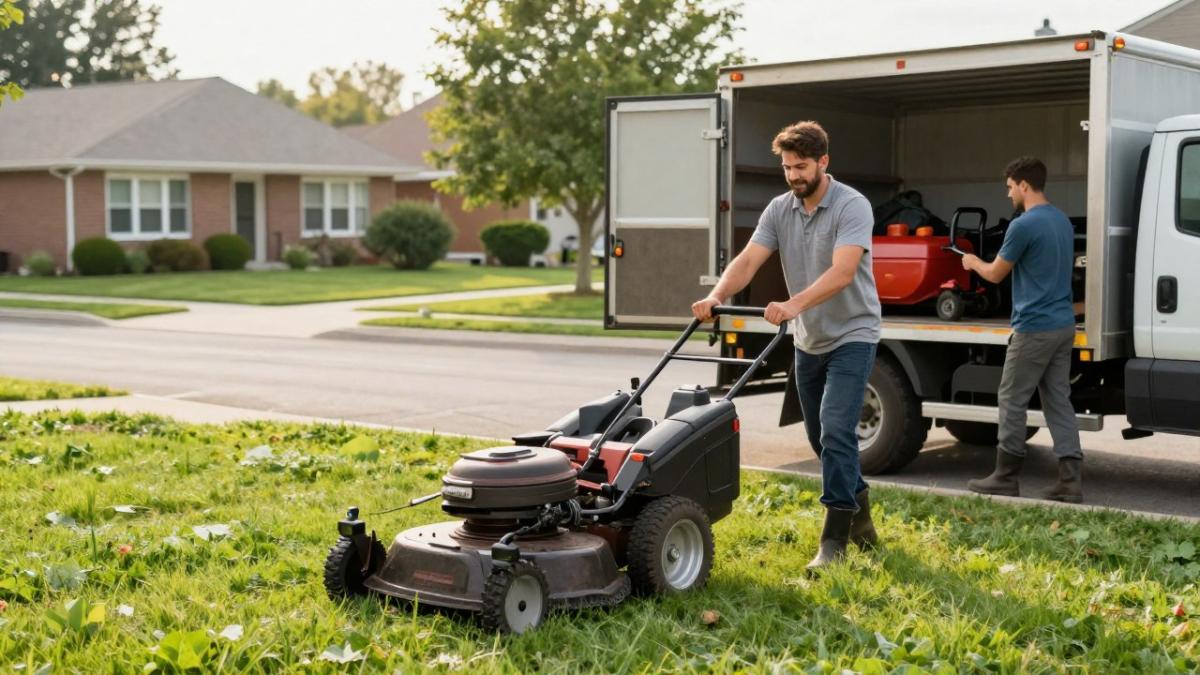
Lawn care crew loading equipment into a truck before starting their shift, highlighting the need for lawn care workers comp.

Employee-Count Thresholds and Owner Exemptions

Many states exempt very small businesses, but the cutoff differs widely. Some states start requiring coverage at one employee, while others wait until a business has several workers on payroll. Owner exemptions also vary. In some states a sole owner can opt out, while in others the owner must be covered as well.

Be careful when counting. Some states include part-time and seasonal staff in the total, and others do not. Count everyone you pay, then check the rule in your state.

Part-Time and Seasonal Workers

Lawn care businesses often add crews in spring and summer. Seasonal workers still count as employees in most states. Part-time workers usually count too, even when they work only a few hours each week.

A common mistake is hiring a short-term crew for peak season and assuming they fall outside the rules. Check the timing of your hiring, because a busy season can push you past a threshold quickly.

Deciding Who Is an Employee, Owner, or Subcontractor

Classification matters more than most lawn care owners expect. The label you put on a worker does not settle the question. States look at how the work is done, and a state auditor can reclassify a worker after an injury, which is the worst possible time to discover the mistake.

Use the decision steps below for each person who works on your jobs.

  1. Is the person an owner? If the worker is a sole proprietor, partner, or LLC member of your business, check your state's owner-election rule. Some states require owners to be covered, some allow an opt-out, and some treat corporate officers differently from LLC members.
  2. Does the person run their own business? A true subcontractor has their own business name, their own insurance, their own tools, and other customers. Ask for a certificate of insurance and a business license before the first job.
  3. Who controls the work? If you set the schedule, supply the mowers and trimmers, direct the crew on site, and pay by the hour or day, the worker looks like an employee under most state tests, regardless of the label on the invoice.
  4. Who bears the financial risk? A subcontractor quotes a price for a finished job, can profit or lose on the work, and can send someone else to do it. An employee is paid for time and does not share in the profit or loss.
  5. Is the work part of your regular business? Lawn maintenance is your core service, so a worker who mows lawns for you is more likely to be an employee than a specialist you hire for a one-time project outside your normal work.

Document the answer for every worker. Keep the subcontractor's certificate of insurance, business license, and a signed agreement on file, and note the date you verified each one. For employees, keep payroll records, job assignments, and equipment records that show the working relationship.

Verify each worker's status before the season starts, and re-check it whenever the working relationship changes.

Workers' Compensation for Independent Contractors

Ask every subcontractor for a current certificate of insurance and confirm it is active.

Keep copies of each certificate on file and set a reminder to check them at renewal. Many lawn care companies skip this step, and it is one of the easiest ways to create liability.

Landscaping Workers' Compensation Class Code 9102 Explained

Insurers assign workers' compensation rates using classification codes. Your insurer or agent can confirm which code fits your operations. Your insurer or agent confirms which code fits your operations, since the code affects your premium.

Ask your agent to explain how your payroll is split across codes. If your crew does both maintenance and installation, the work may fall under different codes, each with its own rate. Accurate classification protects you from underpaying premiums and from later audit surprises.

What Lawn Care Business Insurance Costs and How Premiums Are Calculated

Premiums are not a fixed number. Insurers calculate them using several factors, and the cost can shift from year to year. Common rating factors include:

  • Total payroll for each classification code
  • Your claims history
  • The class codes assigned to your work
  • Your state's rate table and experience modifier
  • Coverage limits and deductibles

Insurers estimate payroll when you buy a policy and then audit actual payroll at the end of the term. If you hired more workers than you projected, you may owe additional premium. If your payroll came in lower, you may receive a refund.

Pricing depends on your state, your payroll, your claims history, and your class codes, so ask a licensed insurance agent for a written quote. Get quotes from more than one carrier before you choose a policy.

Next Steps: Verify Your Coverage Before Your Next Crew Season

Start with your state rules, confirm your employee count, and check each worker's classification. Then request current certificates from every subcontractor and review your policy's payroll estimate. Local providers such as Everett Lawn Care LLC can also confirm that their own licensed and insured services meet your needs. Bring your questions to a licensed insurance agent before the busy season begins.

If you want help reviewing your lawn care operation, reach out to Everett Lawn Care. You can also read our Lawn Care Service Licensed and Insured: 2026 Guide to see how we handle licensing and insurance, or review our Lawn Care Cost Raleigh NC: 2026 Pricing Guide for current pricing context.


Frequently Asked Questions

Are lawn care business owners required to carry workers’ compensation insurance?

It depends on your state and how many employees you have. Coverage requirements depend on your state, so check your state labor or insurance department before assuming you are exempt. Owners who hire subcontractors should also confirm those subcontractors carry their own coverage, because uninsured workers can make the business liable.

What is the workers’ compensation class code for lawn care workers?

Insurers use the class code, together with your payroll and state rates, to set your premium. Confirm the classification with your insurance agent.

What happens if a lawn care business does not have workers’ comp?

Operating without required coverage can carry legal and financial consequences, so confirm your obligations with your state agency.

How much does workers’ comp insurance cost for landscaping?

Premiums depend on your state, class code, estimated annual payroll, claims history and the experience modification rate that applies to your business. Because each rating factor varies, request quotes from a licensed insurance agent for your situation. Request quotes from a licensed insurance agent using your actual payroll estimates, and ask how the policy will be audited at the end of the term so you understand how the final premium is reconciled.

GoogleAdd everett-lawncare.com as a preferred source on Google →

Lawn Care Workers Comp Requirements Explained

By Everett McLain

Quick Summary

Lawn care workers comp requirements depend mainly on your state, which sets its own employee-count thresholds, owner exemptions, and penalties for going uninsured. Check your state's workers' compensation agency before hiring, and count seasonal and part-time staff as employees in most states.

  • Each state sets its own workers' compensation rules, so there is no single federal requirement for lawn care businesses.
  • Seasonal and part-time workers usually count toward the employee total in most states.
  • Classify each worker by how the work is controlled and who bears the financial risk, not by the label used.
  • Ask every subcontractor for a current certificate of insurance and keep copies on file.
  • Get a written quote from a licensed insurance agent and compare more than one carrier.
Need your lawn care coverage checked?Everett Lawn Care is licensed and insured and serves Raleigh, Cary, and Apex.
Get a Free Estimate

Table of Contents

Lawn Care Workers Comp Requirements Explained

Last Updated: November 7, 2026

Lawn Care Workers Compensation Insurance Requirements Start With Your State

Workers' compensation requirements by state, U.S. Department of Labor

Whether you need lawn care workers comp depends mostly on where you operate. Each state sets its own rules for workers' compensation insurance, including which employers must carry it, how many workers trigger the requirement, and what penalties apply for going without it. There is no single federal rule that covers every lawn care business in the country.

Before you hire anyone, check your state's workers' compensation agency first. A quick call or website search can save you from a costly mistake later. Start with the agency that regulates coverage in your state, so you can go straight to the source instead of guessing.

State Regulator to contact What to confirm first
California Division of Workers' Compensation (DWC), Department of Industrial Relations Whether any employee triggers coverage; sole-owner rules
Texas Texas Department of Insurance, Division of Workers' Compensation That coverage is optional for most private employers but required for government contracts
Florida Florida Division of Workers' Compensation Construction vs. non-construction thresholds; officer exemptions
New York New York State Workers' Compensation Board Coverage at one employee; sole-proprietor and LLC-member rules
Illinois Illinois Workers' Compensation Commission Employee-count threshold and corporate-officer election
Ohio Ohio Bureau of Workers' Compensation State-fund vs. self-insured options; owner elections
Georgia Georgia State Board of Workers' Compensation Employee-count threshold and subcontractor certificates
North Carolina North Carolina Industrial Commission Coverage at three employees; owner exclusion rules
Pennsylvania Pennsylvania Department of Labor & Industry, Bureau of Workers' Compensation Employee-count threshold and sole-proprietor status
Arizona Industrial Commission of Arizona Coverage at one employee; owner/LLC-member elections

Use the table as a starting point, not a substitute for the rule itself. Agency names and thresholds change, and the details that matter most, whether part-time and seasonal workers count, how owners are treated, and what proof you must file, are specific to each state's statute and regulations.

  • Check your state's workers' comp agency or insurance department
  • Confirm the employee count that triggers coverage
  • Ask how owners, part-time workers, and subcontractors are treated
  • Keep written records of what you find

This guide walks through what usually matters for lawn care and landscaping businesses across the United States.

Workers' Compensation Requirements for Lawn Care Businesses

Most states require lawn care employers to carry workers' compensation once they reach a set number of employees. Lawn care work involves mowing, trimming, lifting, and operating power equipment, so injuries are common. That is why the rules are strict in this industry.

Lawn care crew loading equipment into a truck before starting their shift, highlighting the need for lawn care workers comp.

Employee-Count Thresholds and Owner Exemptions

Many states exempt very small businesses, but the cutoff differs widely. Some states start requiring coverage at one employee, while others wait until a business has several workers on payroll. Owner exemptions also vary. In some states a sole owner can opt out, while in others the owner must be covered as well.

Be careful when counting. Some states include part-time and seasonal staff in the total, and others do not. Count everyone you pay, then check the rule in your state.

Part-Time and Seasonal Workers

Lawn care businesses often add crews in spring and summer. Seasonal workers still count as employees in most states. Part-time workers usually count too, even when they work only a few hours each week.

A common mistake is hiring a short-term crew for peak season and assuming they fall outside the rules. Check the timing of your hiring, because a busy season can push you past a threshold quickly.

Deciding Who Is an Employee, Owner, or Subcontractor

Classification matters more than most lawn care owners expect. The label you put on a worker does not settle the question. States look at how the work is done, and a state auditor can reclassify a worker after an injury, which is the worst possible time to discover the mistake.

Use the decision steps below for each person who works on your jobs.

  1. Is the person an owner? If the worker is a sole proprietor, partner, or LLC member of your business, check your state's owner-election rule. Some states require owners to be covered, some allow an opt-out, and some treat corporate officers differently from LLC members.
  2. Does the person run their own business? A true subcontractor has their own business name, their own insurance, their own tools, and other customers. Ask for a certificate of insurance and a business license before the first job.
  3. Who controls the work? If you set the schedule, supply the mowers and trimmers, direct the crew on site, and pay by the hour or day, the worker looks like an employee under most state tests, regardless of the label on the invoice.
  4. Who bears the financial risk? A subcontractor quotes a price for a finished job, can profit or lose on the work, and can send someone else to do it. An employee is paid for time and does not share in the profit or loss.
  5. Is the work part of your regular business? Lawn maintenance is your core service, so a worker who mows lawns for you is more likely to be an employee than a specialist you hire for a one-time project outside your normal work.

Document the answer for every worker. Keep the subcontractor's certificate of insurance, business license, and a signed agreement on file, and note the date you verified each one. For employees, keep payroll records, job assignments, and equipment records that show the working relationship.

Verify each worker's status before the season starts, and re-check it whenever the working relationship changes.

Workers' Compensation for Independent Contractors

Ask every subcontractor for a current certificate of insurance and confirm it is active.

Keep copies of each certificate on file and set a reminder to check them at renewal. Many lawn care companies skip this step, and it is one of the easiest ways to create liability.

Landscaping Workers' Compensation Class Code 9102 Explained

Insurers assign workers' compensation rates using classification codes. Your insurer or agent can confirm which code fits your operations. Your insurer or agent confirms which code fits your operations, since the code affects your premium.

Ask your agent to explain how your payroll is split across codes. If your crew does both maintenance and installation, the work may fall under different codes, each with its own rate. Accurate classification protects you from underpaying premiums and from later audit surprises.

What Lawn Care Business Insurance Costs and How Premiums Are Calculated

Premiums are not a fixed number. Insurers calculate them using several factors, and the cost can shift from year to year. Common rating factors include:

  • Total payroll for each classification code
  • Your claims history
  • The class codes assigned to your work
  • Your state's rate table and experience modifier
  • Coverage limits and deductibles

Insurers estimate payroll when you buy a policy and then audit actual payroll at the end of the term. If you hired more workers than you projected, you may owe additional premium. If your payroll came in lower, you may receive a refund.

Pricing depends on your state, your payroll, your claims history, and your class codes, so ask a licensed insurance agent for a written quote. Get quotes from more than one carrier before you choose a policy.

Next Steps: Verify Your Coverage Before Your Next Crew Season

Start with your state rules, confirm your employee count, and check each worker's classification. Then request current certificates from every subcontractor and review your policy's payroll estimate. Local providers such as Everett Lawn Care LLC can also confirm that their own licensed and insured services meet your needs. Bring your questions to a licensed insurance agent before the busy season begins.

If you want help reviewing your lawn care operation, reach out to Everett Lawn Care. You can also read our Lawn Care Service Licensed and Insured: 2026 Guide to see how we handle licensing and insurance, or review our Lawn Care Cost Raleigh NC: 2026 Pricing Guide for current pricing context.


Frequently Asked Questions

Are lawn care business owners required to carry workers’ compensation insurance?

It depends on your state and how many employees you have. Coverage requirements depend on your state, so check your state labor or insurance department before assuming you are exempt. Owners who hire subcontractors should also confirm those subcontractors carry their own coverage, because uninsured workers can make the business liable.

What is the workers’ compensation class code for lawn care workers?

Insurers use the class code, together with your payroll and state rates, to set your premium. Confirm the classification with your insurance agent.

What happens if a lawn care business does not have workers’ comp?

Operating without required coverage can carry legal and financial consequences, so confirm your obligations with your state agency.

How much does workers’ comp insurance cost for landscaping?

Premiums depend on your state, class code, estimated annual payroll, claims history and the experience modification rate that applies to your business. Because each rating factor varies, request quotes from a licensed insurance agent for your situation. Request quotes from a licensed insurance agent using your actual payroll estimates, and ask how the policy will be audited at the end of the term so you understand how the final premium is reconciled.

GoogleAdd everett-lawncare.com as a preferred source on Google →

Everett Lawn Care

Loading your experience…

Please wait — this usually finishes in a few seconds.