Last Updated: October 23, 2026
Quick Summary
Lawn care cost in Raleigh is driven by yard size, with mowing-only service running - per visit for small yards, - for medium yards, and -5 for large properties. Weekly mowing typically totals 0-0 per month depending on property size, and treatments, aeration, or leaf removal raise that figure.
- A standard mowing visit includes mowing, string trimming, edging, blowing, and a quick visual check for problems.
- Pricing is quoted per square foot of mowable turf, not total lot size, so subtract hardscape and beds first.
- Weekly service costs less per visit than biweekly, and skipping weeks can trigger a billed double cut.
- Fall aeration and overseeding is the single most valuable add-on for fescue lawns in Raleigh.
- Compare quotes on a monthly fee basis and ask each provider to price the same scope of work.
Table of Contents
- Lawn Mowing Cost Raleigh: What a Standard Visit Includes
- Lawn Treatment Cost Raleigh: Fertilizer, Weed Control, and Aeration
- Pricing by Yard Size: Small, Medium, and Large Properties
- Recurring vs. One-Time Service: Which Schedule Fits Your Budget?
- Lawn Care Quote Comparison: A Practical Checklist
- Seasonal Lawn Care Costs Beyond Mowing
- What Drives Price Differences in the Triangle
- Conclusion
- Frequently Asked Questions
Lawn Mowing Cost Raleigh: What a Standard Visit Includes
Lawn care cost in Raleigh starts with the mowing visit, and that visit is priced by how long a crew is on your property, not by a flat rate. At Everett Lawn Care, we quote every property after looking at its size, slope, and obstacles. A standard visit bundles more than most homeowners expect.
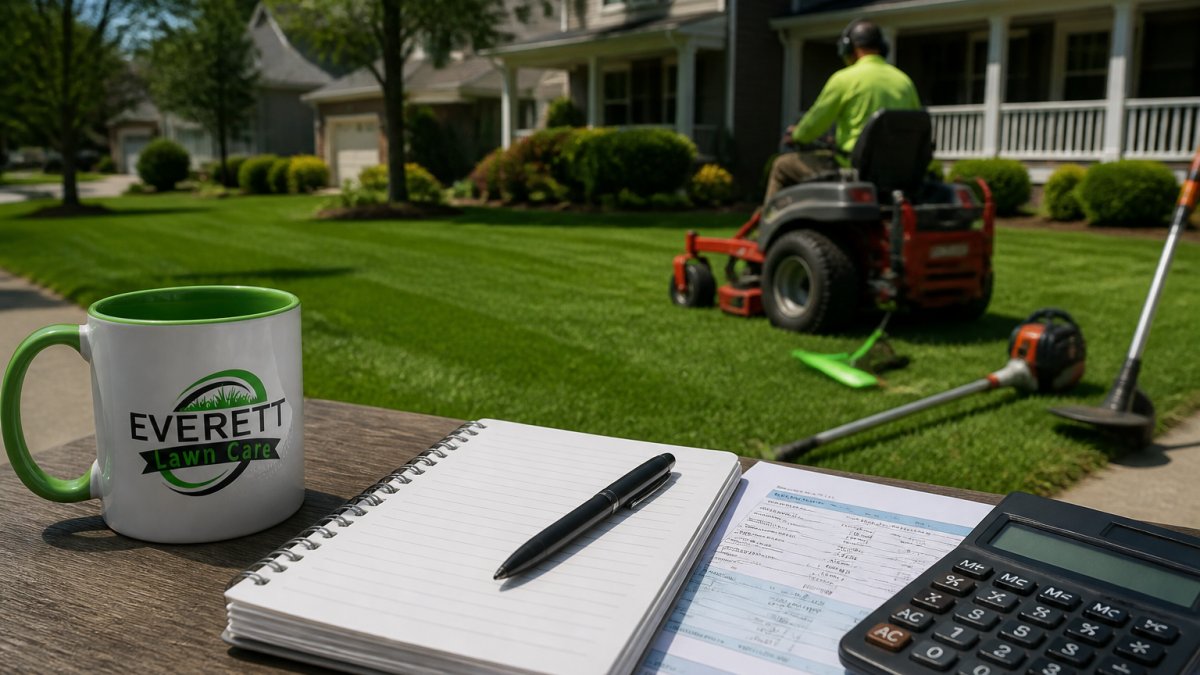
Tasks bundled into a professional mowing visit
A complete service visit covers the whole job, not just the pass with the mower:
- Mowing at the correct grass height for the season
- String trimming around fences, trees, and foundations
- Edging along walks and driveways
- Blowing clippings off hardscape and paths
- A quick visual check for weeds, bare spots, or damage
That last item matters. A crew that spots a problem early saves you a bigger repair later.
How mowing frequency changes your monthly bill
Weekly service costs more per month than biweekly service, but it usually costs less per visit in wear on your turf. Raleigh's warm-season grasses push hard from spring through summer. Skip a week in June and you may need a double cut.
Biweekly mowing fits dormant winter months. It rarely works in peak growth.
Lawn Treatment Cost Raleigh: Fertilizer, Weed Control, and Aeration
Lawn treatment cost in Raleigh depends on how many applications you buy and whether aeration is included. Treatments are usually sold as a yearly program rather than a single visit. That structure keeps the price predictable.
A typical program covers:
- Fertilizer applications timed to the growing season
- Pre-emergent and post-emergent weed control
- Aeration and overseeding in fall
- Soil testing to check pH and nutrient levels
Each application carries its own cost. A program with more visits costs more, but skipping treatments usually costs more in the long run through thin, weed-prone turf.
When to fertilize fescue Raleigh lawns for the best results
Fescue is a cool-season grass, so its feeding schedule differs from Bermuda or Zoysia. The best windows are early fall and late fall, with a lighter application in early spring. Summer feeding pushes top growth when the plant is stressed by heat.
Get the timing wrong and you feed weeds instead of grass.
Pricing by Yard Size: Small, Medium, and Large Properties
Yard size is the biggest driver of lawn care cost, and it scales in steps rather than a straight line. A small front-and-back lot takes one crew member a short stop. A large property takes a full crew and a longer block of time.
| Property size | Typical lot | Mowable turf (approx.) | Per-visit range | Monthly range (weekly) | What changes |
|---|---|---|---|---|---|
| Small yard | Under a quarter-acre lot | 3,000-5,000 sq ft | - | 0-0 | Basic mow, trim, blow |
| Medium yard | One-third to half acre | 6,000-10,000 sq ft | - | 0-0 | More edging and trimming, sometimes two crew |
| Large property | One acre or more | 12,000-20,000+ sq ft | -5 | 0-0 | Ride-on equipment, extra trimming, debris hauling |
These ranges are for mowing-only service. Add treatments, aeration, or leaf removal and the monthly figure rises. A common pattern is that the mowing line is the smallest part of a full-maintenance bill once treatments are included.
How to estimate your mowable area
Pricing is often quoted per square foot of mowable turf, not total lot size. A house, driveway, and beds shrink the mowable area. Measure that, not your deed.
- Sketch your lot and mark the house footprint, driveway, patios, and large beds.
- Measure the total lot in feet and multiply length by width for a rough square footage.
- Subtract the hardscape and bed areas from the total.
- The remainder is your mowable turf, the number a provider will price against.
A quarter-acre lot is about 10,890 sq ft. Subtract a 2,000 sq ft house, a 400 sq ft driveway, and 800 sq ft of beds, and you are near 7,700 sq ft of turf. That lands in the medium band, not the small one, which is why deed size alone misleads.
Why two same-size yards price differently
Square footage sets the baseline, but the quote moves on access and obstacles. A corner lot with a wide gate and open turf prices at the low end of its band. A sloped yard with a narrow gate, a play set, and beds along the fence prices at the high end. Ask whether the quote assumes a clean, open lawn or accounts for the trimming time your property actually needs.
Recurring vs. One-Time Service: Which Schedule Fits Your Budget?
Recurring service almost always beats one-time service on value, even though the per-visit rate looks similar. A recurring plan spreads cost across the season and keeps the lawn on a schedule. The math is easiest to see on a monthly basis.
| Schedule | Visits per month | Effective per-visit cost | Best for |
|---|---|---|---|
| Weekly | 4-5 | Lowest per visit | Peak growth, spring through summer |
| Biweekly | 2 | Higher per visit | Dormant or slow-growth months |
| Monthly | 1 | Highest per visit | Winter dormancy, budget holding pattern |
| One-time | 1 | Highest, plus overgrowth risk | Pre-listing cleanup, post-vacation rescue |
A weekly plan provides consistent care in peak season. Biweekly service might have a lower per-visit rate, but the grass grows taller between cuts and may need a double cut that erases the savings. One-time service often carries a premium because the crew budgets extra time for overgrowth.
When one-time service makes sense
One-time service fits a few clear cases:
- A pre-listing cleanup before you sell
- A single rescue cut after a vacation
- A seasonal cleanup in fall or spring
- A first cut to test a provider before committing
For ongoing curb appeal, monthly maintenance on a set schedule wins. You avoid the growth spikes that turn a routine cut into a costly overgrowth job.
The hidden cost of skipping weeks
Raleigh's warm-season grasses push hard from spring through summer. Skip a week in June and you may need a double cut, which is billed as two passes. Skip two weeks and the crew may need to bag clippings and haul them away, an add-on most recurring plans do not charge. The per-visit savings of biweekly service disappear the first time you pay for a double cut.
Lawn Care Quote Comparison: A Practical Checklist
Comparing lawn care quotes is where most homeowners leave money on the table. Two quotes that look alike can cover very different work. Use this checklist before you sign:
- Is the quote per visit or per month, and how many visits does it include?
- Does it list trimming, edging, and blowing as included?
- Are treatments itemized by application, or bundled?
- Is aeration and overseeding included or an add-on?
- Is the provider licensed and insured, and can they show proof?
- What happens if it rains on your service day?
- Are there fuel or debris hauling surcharges?
- Can they share references or before-and-after photos from nearby homes?
Ask for a written scope. A verbal quote is not a comparison.
Seasonal Lawn Care Costs Beyond Mowing
Mowing is only part of the yearly lawn care cost. Raleigh lawns need seasonal work that a mowing-only plan leaves out. Budget for these across the calendar:
- Spring: pre-emergent weed control, first fertilizer, bed cleanup
- Summer: mowing at peak frequency, irrigation checks, spot weed control
- Fall: aeration and overseeding, leaf cleanup, final fertilizer
- Winter: dormant mowing, pruning, mulch refresh
Fall aeration and overseeding is the single most valuable add-on for fescue. It thickens turf before winter and reduces spring weeds. Skip it and you pay for it in reseeding later.
What Drives Price Differences in the Triangle
Two homes on the same street can get very different quotes, and the reasons are usually visible once you know where to look. In the Triangle, these factors move price the most:
- Turf type: fescue, Bermuda, and Zoysia need different care and timing
- Soil: compacted clay from construction is common here and needs aeration
- Access: narrow gates or steep slopes slow a crew down
- Obstacles: beds, trees, and play sets add trimming time
- Frequency: weekly service costs more per month than biweekly
- Scope: treatments, cleanups, and mulch are priced separately
The cheapest quote is often the one with the smallest scope. Read what is excluded before you compare.
Conclusion
Getting a fair lawn care cost in Raleigh comes down to comparing complete scopes, not headline prices. The right plan matches your yard size, turf type, and schedule.
Everett Lawn Care is licensed and insured, with a local crew serving the Triangle. We handle maintenance, aeration and seeding, treatments, soil testing, and seasonal cleanups, all quoted to your property. Get a free estimate and see exactly what your lawn needs.
Frequently Asked Questions
How much does lawn care cost in Raleigh?
Lawn care cost in Raleigh depends on yard size, visit frequency, and the services you choose. A basic mowing visit and monthly maintenance plans are quoted to your property, while treatments and aeration are quoted separately. Request a free estimate from a licensed provider to get an exact figure for your property.
How much does lawn mowing cost in Raleigh?
Lawn mowing cost Raleigh homeowners pay depends on lot size and access. Weekly service can lower the per-visit rate compared to biweekly or one-time mowing. Ask for a written quote that lists trimming, edging, and blowing so you can compare complete scopes.
How can I compare lawn care quotes fairly?
Use a lawn care quote comparison checklist: confirm the provider is licensed and insured, verify the mowing frequency and what tasks each visit includes, ask whether treatments and aeration are bundled or extra, and request a written scope with start and end dates. Compare at least three quotes on the same schedule and property size. A lower price with fewer services is not a better deal, so line up the scopes before deciding.
When should I fertilize fescue in Raleigh?
Fescue is a cool-season grass, so the key feeding windows are early fall (September) and late fall (November), with a lighter application in early spring (March). Avoid heavy summer nitrogen, which stresses fescue in the heat. Soil testing first tells you which nutrients your lawn actually needs. A local provider can time applications to your soil and irrigation, and a treatment plan usually costs more than mowing alone.
Ready to stop guessing at prices? Get a free estimate from Everett Lawn Care and get a written scope for your property.
