Everett Lawn Care LLC

Lawn mowing and treatments in the Raleigh area

Everett Lawn Care offers recurring mowing, fertilization, and weed control in Raleigh and nearby communities. Request an estimate for either service or both.

Serving Raleigh, Cary, Apex, Holly Springs, Wake Forest, and nearby Triangle cities.

We also do cleanups, sod, and mulch

  • Seasonal cleanups Clear fallen leaves and yard debris and tidy up outdoor areas between seasons.
  • Sod installation Install new turf in bare or damaged areas, or replace a lawn that needs a fresh start.
  • Mulch installation Refresh planting beds with mulch or ask about gravel for paths and other areas.

Request an estimate · Contact us · (919) 899-2341 · info@everett-lawncare.com

5300 Six Forks Rd, Raleigh, NC 27609

7 Core Services in Lawn Maintenance: What's Included

By Everett McLain

Quick Summary

Lawn maintenance is the recurring care of an existing lawn, usually covering mowing, string trimming, edging and clipping cleanup. Fertilization and weed control are often sold alongside it as add-ons.

  • Mow no more than about one-third of the blade length in a single cut.
  • Cool-season grasses are commonly kept at roughly 2.5 to 4 inches tall.
  • Warm-season grasses like Bermuda and zoysia are often kept in the 1 to 2.5 inch range.
  • Frequency should follow growth, so mowing typically slows in summer for cool-season grass.
  • Clear clippings off paved surfaces so they do not stain the hardscape or wash into drains.
What does your lawn need each month?Everett Lawn Care offers licensed, insured maintenance tailored to Raleigh-area yards.
Get a Free Estimate

Table of Contents

What Lawn Maintenance Includes at Its Core

Last Updated: November 12, 2026

Lawn maintenance is the recurring work that keeps a yard tidy, healthy and looking its best between bigger projects. It is commonly described as a regular cycle of mowing, trimming, edging and cleanup, with fertilization and weed control added as the season and the lawn require. Most homeowners picture only the mowing, but a full visit covers more than that.

Lawn maintenance is the routine, recurring care of an existing lawn. It usually covers mowing, string trimming, edging, and clipping cleanup. Other services, such as fertilization and weed control, are often sold alongside it.

Many people mix up maintenance with the bigger jobs. Installing a new patio or redesigning a flower bed is landscaping, not maintenance. Keeping the grass cut, the edges clean and the yard clear is maintenance.

Mowing is the core of any maintenance plan, and it is the task that sets the rhythm for everything else in a visit. How often a lawn needs mowing depends on growth rate, which shifts with the season, the grass type, and how much water and fertilizer the lawn is getting.
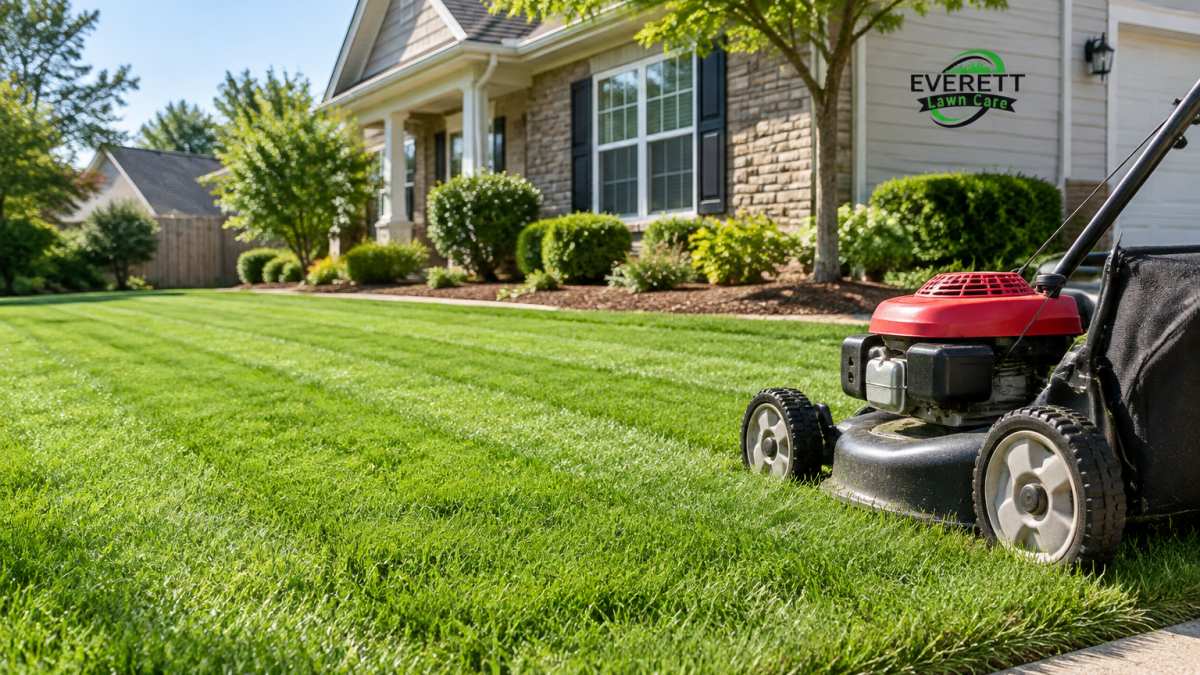
Freshly mowed Raleigh suburban lawn with a push mower for routine lawn maintenance on a sunny morning

The one-third rule and why it matters

A widely used guideline is to cut no more than about one-third of the blade length in a single mowing. Our month-by-month lawn care schedule shows how often to mow across each season. Removing more than that at once stresses the grass, thins the canopy, and opens bare soil where weeds can establish.

Mowing height is not one number for every lawn. Cool-season grasses are generally kept taller than warm-season grasses, and the range within each group matters:

  • Cool-season grasses (tall fescue, Kentucky bluegrass, perennial ryegrass): commonly maintained at roughly 2.5 to 4 inches. Tall fescue is often kept on the higher end of that range for drought and heat tolerance.
  • Warm-season grasses (Bermuda, zoysia, St. Augustine, centipede): commonly maintained lower, with Bermuda and zoysia often in the 1 to 2.5 inch range, St. Augustine typically higher at around 2.5 to 4 inches, and centipede usually around 1.5 to 2 inches.

These are common ranges, not universal rules. The right height for a specific lawn depends on the cultivar, the amount of shade, irrigation, and the provider's program. Ask your provider which height they plan to use and why.

How often a lawn needs mowing

Visit frequency should follow growth, not a fixed calendar. A common pattern is:

  • Spring: growth is fastest for cool-season grasses, so weekly mowing is typical, and sometimes more frequent during flushes.
  • Summer: cool-season grasses slow in heat and may stretch to every 10 to 14 days, while warm-season grasses are at their peak and often need weekly cuts.
  • Fall: cool-season grasses recover and may need weekly mowing again, while warm-season grasses slow and can go to a longer interval.
  • Winter: warm-season grasses go dormant and usually need little or no mowing; cool-season grasses may still need occasional cuts in mild climates.

Ask whether a plan adjusts frequency by season and how that affects the per-visit price.

Blade sharpness and cut quality

Clean, sharp blades matter as much as height. Dull blades tear the grass tips instead of slicing them, which turns the lawn brown at the edges and makes it more vulnerable to disease. If you see frayed, whitish tips after a cut, that is a sign the blades need attention.

Watch out: cutting too short to stretch the interval between visits can contribute to thin, weed-prone turf.

Trimming, Edging, and Clipping Cleanup

These finishing tasks are what make a lawn look cared for. They are also the part most often skipped by do-it-yourself owners.

  • String trimming cuts grass around trees, fences, posts and garden beds that the mower cannot reach.
  • Edging cuts a clean line along sidewalks, driveways and bed borders.
  • Clipping cleanup removes grass left on hard surfaces so it does not stain or smother the lawn.

Watch out: blowing clippings into the street or storm drain can cause problems. Clear them off paved surfaces before you leave the property.

Standard Services vs. Optional Treatments: A Maintenance Checklist

Much of the confusion around lawn maintenance comes from the word "include." Two providers can both say they include maintenance and mean different things. A clear way to compare plans is to separate routine tasks from treatments that are often quoted separately.

Typically included in a recurring maintenance visit

These are the visible, recurring tasks that most maintenance plans cover on each visit:

  • Mowing at the agreed height for the grass type
  • String trimming around trees, fences, posts, and bed edges
  • Edging along sidewalks, driveways, and bed borders
  • Blowing clippings and debris off paved surfaces
  • Leaving the lawn and hardscape clean at the end of the visit

Often optional or quoted separately

These tasks are commonly sold as add-ons, seasonal services, or separate programs rather than being bundled into every mowing visit: Check whether your lawn shows signs of fungus before adding a treatment.

  • Fertilization and nutrient applications
  • Weed prevention and control (pre-emergent and post-emergent)
  • Aeration and soil conditioning
  • Overseeding and lawn repair
  • Seasonal cleanups (leaf removal, bed refresh)
  • Mulch installation
  • Irrigation checks or adjustments
  • Grub, insect, or disease treatment

The useful question is what happens on a visit when a treatment is not due. For a deeper look at one common add-on, read our weed control guide for Raleigh lawns.

What changes the scope and the price

Scope and price are not one-size-fits-all. The factors that most often move a quote are:

  • Lawn size: measured in square footage, not just lot size, since house, beds, and hardscape reduce mowable area.
  • Terrain and access: slopes, narrow gates, and obstacles slow a crew and change equipment needs.
  • Grass type and growth rate: fast-growing grasses need more frequent visits.
  • Frequency and season: weekly versus biweekly, and whether the plan adjusts by season.
  • Requested add-ons: fertilization, weed control, aeration, and overseeding each carry their own cost.
  • Cleanup expectations: bagging clippings, hauling debris, and leaf removal add time and disposal cost.

Because these factors vary, a per-visit price quoted without a walkthrough is usually an estimate, not a final number. Ask for the quote to state what is included per visit, what is billed separately, and how frequency changes by season.

A practical way to compare two plans

Line up two quotes side by side and check three things: which tasks appear on every visit, which are add-ons, and how the plan handles a missed or skipped visit. A plan that clearly separates routine maintenance from optional treatments is easier to compare and less likely to produce surprise charges than one that bundles everything into a single number.

Watch out: a low per-visit price that excludes edging, clipping cleanup, or seasonal frequency changes can end up costing more than a plan that states those items up front.

The table below separates the tasks most maintenance plans include on every visit from the treatments usually quoted separately.

Task Usually included per visit? Note
Mowing Yes At the agreed height for the grass type
String trimming Yes Around trees, fences, posts and bed edges
Edging Yes Along sidewalks, driveways and bed borders
Clipping cleanup Yes Blow clippings off paved surfaces
Fertilization Often optional Usually sold as a separate program
Weed control Often optional Pre- and post-emergent options
Aeration and overseeding Often optional Quoted separately or seasonally
Mulch installation Often optional Separate project or add-on

Lawn Care vs. Landscaping: Where the Line Falls

Lawn care keeps an existing lawn healthy and tidy. Landscaping changes the property itself, through new beds, plantings, hardscape or grading.

Some providers offer both. If you only need the grass kept up, a lawn care plan is usually the right fit. If you are reshaping the yard, you need a landscaping project first, then maintenance afterward.

Residential Lawn Care Services List and Typical Basic Service Prices

Here is a typical list of residential services:

  • Recurring mowing and trimming
  • Edging and clipping cleanup
  • Fertilization and weed control
  • Aeration and overseeding
  • Seasonal cleanup
  • Mulch installation

Pricing depends on lawn size, service frequency, and which add-ons you choose. For current pricing, see our lawn maintenance page or request a quote.

Booking Your Lawn Maintenance Plan with Everett Lawn Care

Start by deciding which tasks you need every visit and which treatments you want to add. Then ask the provider to walk the lawn with you. Good providers explain what they will do and why.

Everett Lawn Care is a licensed and insured local crew serving the Triangle area. Our crew handles recurring mowing, trimming, edging and cleanup, and can add aeration or seasonal cleanups when your lawn needs them. Request an estimate to get a plan built around your yard.


Frequently Asked Questions

What does lawn maintenance consist of?

Lawn maintenance is the recurring work that keeps a lawn looking neat and healthy between bigger projects. Core tasks include mowing at an appropriate height, string trimming around obstacles, edging along sidewalks and driveways, and clipping cleanup. Many plans also include periodic weed control, fertilization, and seasonal cleanups. Scope varies by plan, so ask for a written list of included tasks before you sign. Everett Lawn Care can walk you through what a plan covers for your property.

Does lawn maintenance include weed control and fertilization?

Not always. Routine maintenance usually covers mowing, trimming, edging, and cleanup. Fertilization and weed control are typically treatments that may be bundled into a full-service package or sold as add-ons. Whether they are included depends on the provider and the plan you choose. Check whether treatments are scheduled as part of the recurring service or billed separately, and ask how many applications are included per season.

What is included in a basic lawn care package?

A basic lawn care package generally includes regular mowing, string trimming, edging along hard surfaces, and blowing or raking debris off walks and driveways. It typically excludes soil work, aeration, overseeding, shrub pruning, and mulch installation. Basic packages are a good fit for homeowners whose lawns are already healthy. If your grass is thin or compacted, you may need to add treatments or aeration. Ask for a clear breakdown of what the package covers before comparing prices.

How much does basic lawn care cost in the United States?

Pricing depends on lawn size, service frequency, property layout, and which add-on services you choose. Because costs vary widely by provider and by property, it is more useful to request a quote based on your specific lawn than to rely on a general average. You can use a written quote to compare what is included in each package rather than just the total price.

GoogleAdd everett-lawncare.com as a preferred source on Google →

7 Core Services in Lawn Maintenance: What's Included

By Everett McLain

Quick Summary

Lawn maintenance is the recurring care of an existing lawn, usually covering mowing, string trimming, edging and clipping cleanup. Fertilization and weed control are often sold alongside it as add-ons.

  • Mow no more than about one-third of the blade length in a single cut.
  • Cool-season grasses are commonly kept at roughly 2.5 to 4 inches tall.
  • Warm-season grasses like Bermuda and zoysia are often kept in the 1 to 2.5 inch range.
  • Frequency should follow growth, so mowing typically slows in summer for cool-season grass.
  • Clear clippings off paved surfaces so they do not stain the hardscape or wash into drains.
What does your lawn need each month?Everett Lawn Care offers licensed, insured maintenance tailored to Raleigh-area yards.
Get a Free Estimate

Table of Contents

What Lawn Maintenance Includes at Its Core

Last Updated: November 12, 2026

Lawn maintenance is the recurring work that keeps a yard tidy, healthy and looking its best between bigger projects. It is commonly described as a regular cycle of mowing, trimming, edging and cleanup, with fertilization and weed control added as the season and the lawn require. Most homeowners picture only the mowing, but a full visit covers more than that.

Lawn maintenance is the routine, recurring care of an existing lawn. It usually covers mowing, string trimming, edging, and clipping cleanup. Other services, such as fertilization and weed control, are often sold alongside it.

Many people mix up maintenance with the bigger jobs. Installing a new patio or redesigning a flower bed is landscaping, not maintenance. Keeping the grass cut, the edges clean and the yard clear is maintenance.

Mowing is the core of any maintenance plan, and it is the task that sets the rhythm for everything else in a visit. How often a lawn needs mowing depends on growth rate, which shifts with the season, the grass type, and how much water and fertilizer the lawn is getting.

Freshly mowed Raleigh suburban lawn with a push mower for routine lawn maintenance on a sunny morning

The one-third rule and why it matters

A widely used guideline is to cut no more than about one-third of the blade length in a single mowing. Our month-by-month lawn care schedule shows how often to mow across each season. Removing more than that at once stresses the grass, thins the canopy, and opens bare soil where weeds can establish.

Mowing height is not one number for every lawn. Cool-season grasses are generally kept taller than warm-season grasses, and the range within each group matters:

  • Cool-season grasses (tall fescue, Kentucky bluegrass, perennial ryegrass): commonly maintained at roughly 2.5 to 4 inches. Tall fescue is often kept on the higher end of that range for drought and heat tolerance.
  • Warm-season grasses (Bermuda, zoysia, St. Augustine, centipede): commonly maintained lower, with Bermuda and zoysia often in the 1 to 2.5 inch range, St. Augustine typically higher at around 2.5 to 4 inches, and centipede usually around 1.5 to 2 inches.

These are common ranges, not universal rules. The right height for a specific lawn depends on the cultivar, the amount of shade, irrigation, and the provider's program. Ask your provider which height they plan to use and why.

How often a lawn needs mowing

Visit frequency should follow growth, not a fixed calendar. A common pattern is:

  • Spring: growth is fastest for cool-season grasses, so weekly mowing is typical, and sometimes more frequent during flushes.
  • Summer: cool-season grasses slow in heat and may stretch to every 10 to 14 days, while warm-season grasses are at their peak and often need weekly cuts.
  • Fall: cool-season grasses recover and may need weekly mowing again, while warm-season grasses slow and can go to a longer interval.
  • Winter: warm-season grasses go dormant and usually need little or no mowing; cool-season grasses may still need occasional cuts in mild climates.

Ask whether a plan adjusts frequency by season and how that affects the per-visit price.

Blade sharpness and cut quality

Clean, sharp blades matter as much as height. Dull blades tear the grass tips instead of slicing them, which turns the lawn brown at the edges and makes it more vulnerable to disease. If you see frayed, whitish tips after a cut, that is a sign the blades need attention.

Watch out: cutting too short to stretch the interval between visits can contribute to thin, weed-prone turf.

Trimming, Edging, and Clipping Cleanup

These finishing tasks are what make a lawn look cared for. They are also the part most often skipped by do-it-yourself owners.

  • String trimming cuts grass around trees, fences, posts and garden beds that the mower cannot reach.
  • Edging cuts a clean line along sidewalks, driveways and bed borders.
  • Clipping cleanup removes grass left on hard surfaces so it does not stain or smother the lawn.

Watch out: blowing clippings into the street or storm drain can cause problems. Clear them off paved surfaces before you leave the property.

Standard Services vs. Optional Treatments: A Maintenance Checklist

Much of the confusion around lawn maintenance comes from the word "include." Two providers can both say they include maintenance and mean different things. A clear way to compare plans is to separate routine tasks from treatments that are often quoted separately.

Typically included in a recurring maintenance visit

These are the visible, recurring tasks that most maintenance plans cover on each visit:

  • Mowing at the agreed height for the grass type
  • String trimming around trees, fences, posts, and bed edges
  • Edging along sidewalks, driveways, and bed borders
  • Blowing clippings and debris off paved surfaces
  • Leaving the lawn and hardscape clean at the end of the visit

Often optional or quoted separately

These tasks are commonly sold as add-ons, seasonal services, or separate programs rather than being bundled into every mowing visit: Check whether your lawn shows signs of fungus before adding a treatment.

  • Fertilization and nutrient applications
  • Weed prevention and control (pre-emergent and post-emergent)
  • Aeration and soil conditioning
  • Overseeding and lawn repair
  • Seasonal cleanups (leaf removal, bed refresh)
  • Mulch installation
  • Irrigation checks or adjustments
  • Grub, insect, or disease treatment

The useful question is what happens on a visit when a treatment is not due. For a deeper look at one common add-on, read our weed control guide for Raleigh lawns.

What changes the scope and the price

Scope and price are not one-size-fits-all. The factors that most often move a quote are:

  • Lawn size: measured in square footage, not just lot size, since house, beds, and hardscape reduce mowable area.
  • Terrain and access: slopes, narrow gates, and obstacles slow a crew and change equipment needs.
  • Grass type and growth rate: fast-growing grasses need more frequent visits.
  • Frequency and season: weekly versus biweekly, and whether the plan adjusts by season.
  • Requested add-ons: fertilization, weed control, aeration, and overseeding each carry their own cost.
  • Cleanup expectations: bagging clippings, hauling debris, and leaf removal add time and disposal cost.

Because these factors vary, a per-visit price quoted without a walkthrough is usually an estimate, not a final number. Ask for the quote to state what is included per visit, what is billed separately, and how frequency changes by season.

A practical way to compare two plans

Line up two quotes side by side and check three things: which tasks appear on every visit, which are add-ons, and how the plan handles a missed or skipped visit. A plan that clearly separates routine maintenance from optional treatments is easier to compare and less likely to produce surprise charges than one that bundles everything into a single number.

Watch out: a low per-visit price that excludes edging, clipping cleanup, or seasonal frequency changes can end up costing more than a plan that states those items up front.

The table below separates the tasks most maintenance plans include on every visit from the treatments usually quoted separately.

Task Usually included per visit? Note
Mowing Yes At the agreed height for the grass type
String trimming Yes Around trees, fences, posts and bed edges
Edging Yes Along sidewalks, driveways and bed borders
Clipping cleanup Yes Blow clippings off paved surfaces
Fertilization Often optional Usually sold as a separate program
Weed control Often optional Pre- and post-emergent options
Aeration and overseeding Often optional Quoted separately or seasonally
Mulch installation Often optional Separate project or add-on

Lawn Care vs. Landscaping: Where the Line Falls

Lawn care keeps an existing lawn healthy and tidy. Landscaping changes the property itself, through new beds, plantings, hardscape or grading.

Some providers offer both. If you only need the grass kept up, a lawn care plan is usually the right fit. If you are reshaping the yard, you need a landscaping project first, then maintenance afterward.

Residential Lawn Care Services List and Typical Basic Service Prices

Here is a typical list of residential services:

  • Recurring mowing and trimming
  • Edging and clipping cleanup
  • Fertilization and weed control
  • Aeration and overseeding
  • Seasonal cleanup
  • Mulch installation

Pricing depends on lawn size, service frequency, and which add-ons you choose. For current pricing, see our lawn maintenance page or request a quote.

Booking Your Lawn Maintenance Plan with Everett Lawn Care

Start by deciding which tasks you need every visit and which treatments you want to add. Then ask the provider to walk the lawn with you. Good providers explain what they will do and why.

Everett Lawn Care is a licensed and insured local crew serving the Triangle area. Our crew handles recurring mowing, trimming, edging and cleanup, and can add aeration or seasonal cleanups when your lawn needs them. Request an estimate to get a plan built around your yard.


Frequently Asked Questions

What does lawn maintenance consist of?

Lawn maintenance is the recurring work that keeps a lawn looking neat and healthy between bigger projects. Core tasks include mowing at an appropriate height, string trimming around obstacles, edging along sidewalks and driveways, and clipping cleanup. Many plans also include periodic weed control, fertilization, and seasonal cleanups. Scope varies by plan, so ask for a written list of included tasks before you sign. Everett Lawn Care can walk you through what a plan covers for your property.

Does lawn maintenance include weed control and fertilization?

Not always. Routine maintenance usually covers mowing, trimming, edging, and cleanup. Fertilization and weed control are typically treatments that may be bundled into a full-service package or sold as add-ons. Whether they are included depends on the provider and the plan you choose. Check whether treatments are scheduled as part of the recurring service or billed separately, and ask how many applications are included per season.

What is included in a basic lawn care package?

A basic lawn care package generally includes regular mowing, string trimming, edging along hard surfaces, and blowing or raking debris off walks and driveways. It typically excludes soil work, aeration, overseeding, shrub pruning, and mulch installation. Basic packages are a good fit for homeowners whose lawns are already healthy. If your grass is thin or compacted, you may need to add treatments or aeration. Ask for a clear breakdown of what the package covers before comparing prices.

How much does basic lawn care cost in the United States?

Pricing depends on lawn size, service frequency, property layout, and which add-on services you choose. Because costs vary widely by provider and by property, it is more useful to request a quote based on your specific lawn than to rely on a general average. You can use a written quote to compare what is included in each package rather than just the total price.

GoogleAdd everett-lawncare.com as a preferred source on Google →

Everett Lawn Care

Loading your experience…

Please wait — this usually finishes in a few seconds.