Everett Lawn Care LLC

Professional Landscaping in Raleigh, NC

Everett Lawn Care provides mowing, aeration, seeding, sod installation, mulch, cleanups, landscaping, and pressure washing in Raleigh and Wake County.

Serving Raleigh, Cary, Apex, Holly Springs, Wake Forest, and nearby Triangle cities.

Request an estimate · Contact us · (919) 899-2341 · info@everett-lawncare.com

5300 Six Forks Rd, Raleigh, NC 27609

Weed Control for Lawns in Raleigh: A Complete Guide

By Everett McLain

Last Updated: October 31, 2026

Quick Summary

Effective weed control for lawns in Raleigh starts with a spring pre-emergent barrier timed to soil temperature, applied when soil at 2 inches holds around 55°F for several days, typically early to mid-March. A second application six to eight weeks later refreshes the barrier, and thick tall fescue maintained through fall aeration, overseeding, and proper mowing keeps weeds from returning.

  • Crabgrass seed germinates when 2-inch soil temperatures hold around 55°F for several consecutive days.
  • Apply the second pre-emergent six to eight weeks after the first, usually late April to mid-May.
  • Pre-emergent does not control perennial weeds like nutsedge, wild violet, or ground ivy.
  • Watering heavily or aerating right after pre-emergent application can break the soil barrier.
  • Core aeration and overseeding are fall tasks, kept out of the spring pre-emergent window.

Table of Contents

Why Raleigh Lawns Fight Weeds Differently

Weed control for lawns in Raleigh is not the same job it is in most of the country, and treating it that way is why so many local yards stay patchy.

At Everett Lawn Care, we see the same pattern in neighborhood after neighborhood: homeowners who fertilize faithfully, water on schedule, and still watch crabgrass and clover win the summer.

Clay Soil, Humidity, and the Tall Fescue Factor

Tall fescue is the grass most Raleigh yards are built on, and it comes with a built-in weakness. It's a cool-season grass that looks its best in spring and fall, then spends July and August under heat stress.

Clay makes it worse. Our guide to clay soil lawn care fixes that work covers that in detail, and it's worth reading before you spend another dollar on herbicide.

Common Lawn Weeds in the Triangle and How to Identify Them

Identifying the weed correctly is half the battle, because pre-emergent and post-emergent products target different plants at different life stages. Misidentify the problem and you'll buy the wrong product twice.
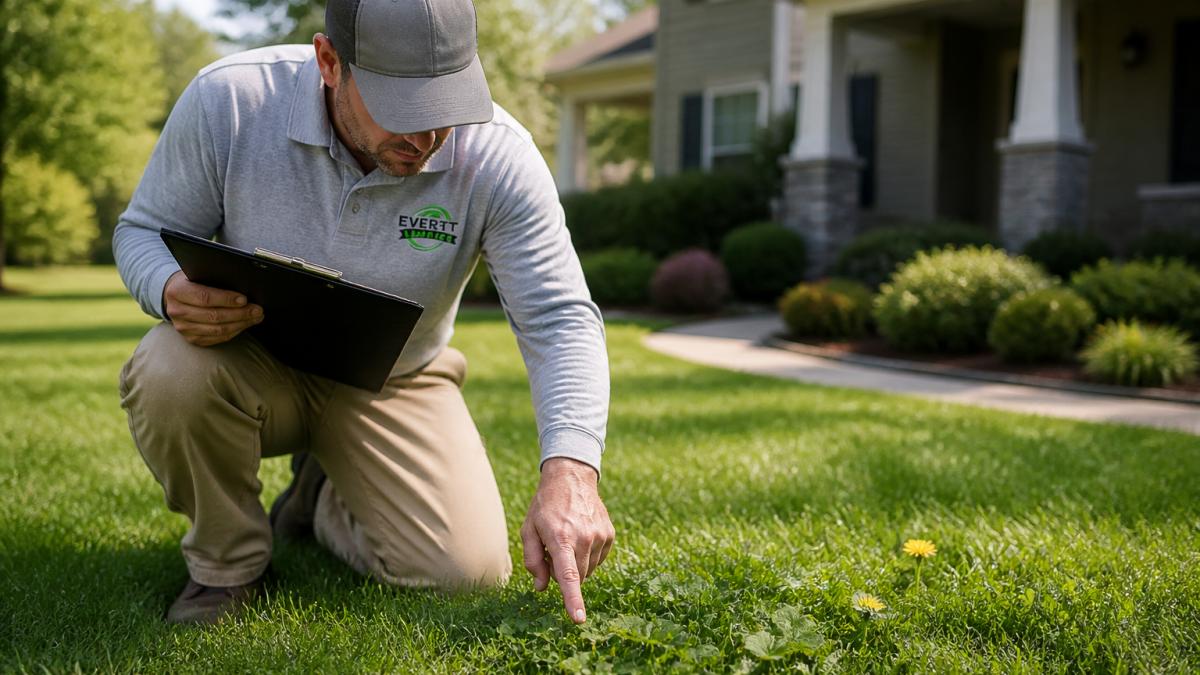
Lawn technician identifying dandelions and clover for weed control

Here are the common lawn weeds you'll run into most:

  • Crabgrass. Light green, spreads flat in a star pattern, appears in thin spots and along driveways once soil warms. An annual that returns from seed every year.
  • Dandelion. Yellow flower, deep taproot, spreads fast in spring. Pulling the top leaves the root and the plant returns.
  • Clover. Three-leaf ground cover that shows up in low-nitrogen soil. Its presence often signals a fertility problem, not just a weed problem.
  • Chickweed and henbit. Low, mat-forming winter annuals that green up in cool weather and fade by late spring.

Crabgrass is the one that frustrates people most. If it's already established, our step-by-step guide on how to get rid of crabgrass walks through the treatment sequence.

Pre-Emergent Weed Control: Stopping Weeds Before They Sprout

Pre-emergent weed control is a barrier applied to the soil before weed seeds germinate, stopping annual weeds like crabgrass before they ever break the surface. It's the single most effective tool in a Raleigh weed program, and it only works if the timing is right.

The Raleigh Pre-Emergent Calendar

In the Triangle, the crabgrass germination window is narrow and driven by soil temperature, not the calendar. Crabgrass seed begins to germinate when soil temperatures at a 2-inch depth hold around 55°F for several consecutive days. In a typical year that happens in early to mid-March, though a warm late winter can push it into late February and a cool spring can delay it to late March.

A split application can be used to cover the full germination window:

  • First application: late February to mid-March, just before soil temperatures reach the germination threshold. This is the barrier that stops the first flush of crabgrass.
  • Second application: six to eight weeks later, typically late April to mid-May, to refresh the barrier as the first application breaks down and to catch later-germinating weeds like foxtail and goosegrass.

What Pre-Emergent Does and Does Not Control

Pre-emergent products sold for home lawns generally fall into two groups: those built around prodiamine or pendimethalin, which form a barrier in the top inch of soil, and those built around dithiopyr, which also has some early post-emergent activity on very young crabgrass. None of them kill established weeds. If crabgrass is already up and tillering, you're in post-emergent territory.

Pre-emergent also does not control perennial weeds that spread by root or rhizome, nutsedge, wild violet, and ground ivy among them. Those need a different approach, and applying pre-emergent for them wastes product.

Watch Out Watering heavily or aerating right after a pre-emergent application can break the soil barrier and waste the treatment. If aeration or overseeding is on your fall schedule, keep it out of the spring pre-emergent window, or use a product labeled safe for seeding.

Timing Around Tall Fescue

Tall fescue is a cool-season grass, and pre-emergent timing has to respect its growth cycle. Spring is when fescue is actively growing and thickening, so a properly timed barrier protects the turf without setting it back.

If you want the full seasonal sequence laid out month by month, our Raleigh seasonal weed-control calendar pairs pre-emergent, post-emergent, aeration, and overseeding into one schedule built for tall fescue and Triangle clay.

Post-Emergent Weed Control: Treating Weeds That Are Already Up

Post-emergent weed control kills weeds that have already sprouted, and it splits into two categories: selective products that target broadleaf weeds without harming turf, and non-selective products that kill everything they touch. For most lawns, selective is the answer. Spot-treating beats blanket spraying, because it limits stress on the fescue around the weed.

The catch is that post-emergent treatment is a cleanup, not a cure. If crabgrass keeps returning year after year, the seed bank in your soil is the real problem. Our article on why crabgrass keeps coming back explains the cycle and how to break it rather than chasing it every summer.

Instant Estimate →

Lawn Weed Prevention: Building a Turf That Outcompetes Weeds

Lawn weed prevention comes down to one principle: thick, healthy turf leaves no room for weeds to establish. Chemical control handles what's already there, but density is what keeps it from coming back.

That means three things working together. First, proper fertilization on a schedule built for tall fescue, which feeds the grass during its active cool-season growth. Our seasonal fescue fertilizing guide lays out the timing. Second, core aeration to break up compacted clay and let air, water, and nutrients reach the root zone. Third, correct mowing height, kept tall enough to shade the soil surface and block light from reaching weed seeds.

Practice Timing What It Fixes
Pre-emergent application Early to mid-spring Stops annual weeds before sprouting
Post-emergent spot treatment Spring through fall Removes weeds already growing
Core aeration Fall, during fescue's growth window Relieves clay compaction
Overseeding Fall, after aeration Thickens turf to crowd out weeds
Balanced fertilization Fall and spring Strengthens fescue against stress

DIY vs Professional Weed Control: An Honest Comparison

DIY weed control is cheaper on paper and works for small, healthy lawns with minor weed pressure.

Professional weed control is built around a yard assessment rather than guesswork. A technician identifies the actual weeds, checks soil conditions, and sequences pre-emergent, post-emergent, and fertilization so each step supports the next.

Where DIY genuinely wins: a single dandelion patch in an otherwise solid lawn. Where it loses: a yard that's been losing ground for three summers running.

What Drives the Cost of Weed Control in Raleigh

Pricing for weed control depends on several variables, which is why flat quotes over the phone tend to be inaccurate. For Raleigh-specific pricing to compare against DIY costs, see our Lawn Care Cost Raleigh NC guide. The biggest factors are lawn size, current weed severity, how much soil correction is needed, and whether the plan includes fertilization and aeration alongside treatment.

The Factors That Move the Number

  • Lawn size. Treatment is priced by treated area, so a 5,000-square-foot yard and a one-acre yard are different jobs even if the weed mix is identical. Most residential programs quote in 1,000-square-foot increments.
  • Weed pressure and species. A lawn with scattered dandelions needs a spot treatment. A lawn with established nutsedge, wild violet, or a multi-year crabgrass seed bank needs multiple visits and different products, which raises the total.
  • Soil condition. Compacted clay that sheds water limits how well any product performs. If core aeration or soil amendment is added to the plan, that's a separate line item but often reduces the number of return visits.
  • Program scope. Weed-only programs cost less than bundled programs that pair weed control with fertilization and aeration. Bundling usually lowers the per-visit cost even though the total is higher.

What a Typical Program Looks Like

Because every yard is different, pricing depends on the property and the work involved. For current prices or a quote, visit the Everett Lawn Care website and request a free estimate.

Get a Free Estimate From Everett Lawn Care

If your lawn has been losing the weed battle for more than one season, the fix is a plan, not another bottle of spray.

We start with a yard assessment, identify the weeds and soil issues driving the problem, and build a treatment plan around your property.

Get started with Everett Lawn Care and get a free estimate for weed control that actually holds through the Raleigh summer.


Frequently Asked Questions

What is the best way to control weeds in a lawn?

The best approach combines prevention and targeted treatment. Keep tall fescue thick through proper mowing height, fertilization, and aeration so weeds have less bare ground to invade. Then use pre-emergent weed control in late winter and early fall to stop seeds from sprouting, and post-emergent products only on weeds that break through. Raleigh's clay soil and humidity make a layered plan more effective than any single spray.

When should I apply weed control to my lawn?

Timing depends on the product and the weed. Pre-emergent weed control for crabgrass and summer annuals goes down when soil temperatures approach 55 degrees Fahrenheit, typically late February to mid-March in the Triangle. Fall pre-emergent targets winter annuals like chickweed and henbit. Post-emergent weed control works best on young, actively growing weeds in mild weather, not during summer heat stress or drought.

Can I apply weed killer and fertilizer at the same time?

Sometimes, but not always. Some granular products combine fertilizer with pre-emergent weed control, which saves a trip across the lawn. Post-emergent sprays are a different story: fertilizing right before or after can stress young turf, and some broadleaf herbicides shouldn't be tank-mixed with high-nitrogen fertilizer. Read the label, and when in doubt, space the applications a week or two apart.

How long should I keep pets off the lawn after weed treatment?

Follow the product label, which is the legal and safety standard. Many granular pre-emergent products ask for 24 hours or until granules are watered in and dry; liquid post-emergent treatments often require pets and children off the lawn until the spray dries, usually a few hours.

Is professional lawn weed control worth it?

For many Raleigh homeowners, yes. Store-bought products are easy to misdose, and the wrong timing wastes money without killing the weed. A lawn professional can evaluate yard conditions, identify the weeds present, and recommend a treatment approach suited to the turf type and soil. That said, DIY can work for small, mild weed problems if you're willing to learn the timing and calibrate a spreader.

Does natural lawn weed control work?

It can help, but results are slower and less complete than synthetic options. Organic lawn care practices like thicker mowing, overseeding, proper watering, and hand-pulling dandelions reduce weed pressure over time. Corn gluten meal is sometimes used as a natural pre-emergent, though research on its effectiveness is mixed. For heavy infestations, chemical-free options alone often won't clear a lawn.

What lawn weeds are common in Raleigh?

The Triangle's most common lawn weeds include dandelion, white clover, crabgrass, chickweed, henbit, wild onion, and nutsedge. Summer annuals like crabgrass and goosegrass take advantage of thin turf in hot weather, while winter annuals like chickweed and henbit germinate in fall and show up in early spring. Nutsedge is especially stubborn in wet, compacted clay areas and needs a targeted treatment.

How much does weed control for lawns in Raleigh cost?

Pricing depends on lawn size, weed severity, how many visits your plan needs, and whether fertilization or aeration is bundled in. Every yard is different. For current prices or a quote, visit the Everett Lawn Care website.

GoogleAdd everett-lawncare.com as a preferred source on Google →

Weed Control for Lawns in Raleigh: A Complete Guide

By Everett McLain

Last Updated: October 31, 2026

Quick Summary

Effective weed control for lawns in Raleigh starts with a spring pre-emergent barrier timed to soil temperature, applied when soil at 2 inches holds around 55°F for several days, typically early to mid-March. A second application six to eight weeks later refreshes the barrier, and thick tall fescue maintained through fall aeration, overseeding, and proper mowing keeps weeds from returning.

  • Crabgrass seed germinates when 2-inch soil temperatures hold around 55°F for several consecutive days.
  • Apply the second pre-emergent six to eight weeks after the first, usually late April to mid-May.
  • Pre-emergent does not control perennial weeds like nutsedge, wild violet, or ground ivy.
  • Watering heavily or aerating right after pre-emergent application can break the soil barrier.
  • Core aeration and overseeding are fall tasks, kept out of the spring pre-emergent window.

Table of Contents

Why Raleigh Lawns Fight Weeds Differently

Weed control for lawns in Raleigh is not the same job it is in most of the country, and treating it that way is why so many local yards stay patchy.

At Everett Lawn Care, we see the same pattern in neighborhood after neighborhood: homeowners who fertilize faithfully, water on schedule, and still watch crabgrass and clover win the summer.

Clay Soil, Humidity, and the Tall Fescue Factor

Tall fescue is the grass most Raleigh yards are built on, and it comes with a built-in weakness. It's a cool-season grass that looks its best in spring and fall, then spends July and August under heat stress.

Clay makes it worse. Our guide to clay soil lawn care fixes that work covers that in detail, and it's worth reading before you spend another dollar on herbicide.

Common Lawn Weeds in the Triangle and How to Identify Them

Identifying the weed correctly is half the battle, because pre-emergent and post-emergent products target different plants at different life stages. Misidentify the problem and you'll buy the wrong product twice.

Lawn technician identifying dandelions and clover for weed control

Here are the common lawn weeds you'll run into most:

  • Crabgrass. Light green, spreads flat in a star pattern, appears in thin spots and along driveways once soil warms. An annual that returns from seed every year.
  • Dandelion. Yellow flower, deep taproot, spreads fast in spring. Pulling the top leaves the root and the plant returns.
  • Clover. Three-leaf ground cover that shows up in low-nitrogen soil. Its presence often signals a fertility problem, not just a weed problem.
  • Chickweed and henbit. Low, mat-forming winter annuals that green up in cool weather and fade by late spring.

Crabgrass is the one that frustrates people most. If it's already established, our step-by-step guide on how to get rid of crabgrass walks through the treatment sequence.

Pre-Emergent Weed Control: Stopping Weeds Before They Sprout

Pre-emergent weed control is a barrier applied to the soil before weed seeds germinate, stopping annual weeds like crabgrass before they ever break the surface. It's the single most effective tool in a Raleigh weed program, and it only works if the timing is right.

The Raleigh Pre-Emergent Calendar

In the Triangle, the crabgrass germination window is narrow and driven by soil temperature, not the calendar. Crabgrass seed begins to germinate when soil temperatures at a 2-inch depth hold around 55°F for several consecutive days. In a typical year that happens in early to mid-March, though a warm late winter can push it into late February and a cool spring can delay it to late March.

A split application can be used to cover the full germination window:

  • First application: late February to mid-March, just before soil temperatures reach the germination threshold. This is the barrier that stops the first flush of crabgrass.
  • Second application: six to eight weeks later, typically late April to mid-May, to refresh the barrier as the first application breaks down and to catch later-germinating weeds like foxtail and goosegrass.

What Pre-Emergent Does and Does Not Control

Pre-emergent products sold for home lawns generally fall into two groups: those built around prodiamine or pendimethalin, which form a barrier in the top inch of soil, and those built around dithiopyr, which also has some early post-emergent activity on very young crabgrass. None of them kill established weeds. If crabgrass is already up and tillering, you're in post-emergent territory.

Pre-emergent also does not control perennial weeds that spread by root or rhizome, nutsedge, wild violet, and ground ivy among them. Those need a different approach, and applying pre-emergent for them wastes product.

Watch Out Watering heavily or aerating right after a pre-emergent application can break the soil barrier and waste the treatment. If aeration or overseeding is on your fall schedule, keep it out of the spring pre-emergent window, or use a product labeled safe for seeding.

Timing Around Tall Fescue

Tall fescue is a cool-season grass, and pre-emergent timing has to respect its growth cycle. Spring is when fescue is actively growing and thickening, so a properly timed barrier protects the turf without setting it back.

If you want the full seasonal sequence laid out month by month, our Raleigh seasonal weed-control calendar pairs pre-emergent, post-emergent, aeration, and overseeding into one schedule built for tall fescue and Triangle clay.

Post-Emergent Weed Control: Treating Weeds That Are Already Up

Post-emergent weed control kills weeds that have already sprouted, and it splits into two categories: selective products that target broadleaf weeds without harming turf, and non-selective products that kill everything they touch. For most lawns, selective is the answer. Spot-treating beats blanket spraying, because it limits stress on the fescue around the weed.

The catch is that post-emergent treatment is a cleanup, not a cure. If crabgrass keeps returning year after year, the seed bank in your soil is the real problem. Our article on why crabgrass keeps coming back explains the cycle and how to break it rather than chasing it every summer.

Instant Estimate →

Lawn Weed Prevention: Building a Turf That Outcompetes Weeds

Lawn weed prevention comes down to one principle: thick, healthy turf leaves no room for weeds to establish. Chemical control handles what's already there, but density is what keeps it from coming back.

That means three things working together. First, proper fertilization on a schedule built for tall fescue, which feeds the grass during its active cool-season growth. Our seasonal fescue fertilizing guide lays out the timing. Second, core aeration to break up compacted clay and let air, water, and nutrients reach the root zone. Third, correct mowing height, kept tall enough to shade the soil surface and block light from reaching weed seeds.

Practice Timing What It Fixes
Pre-emergent application Early to mid-spring Stops annual weeds before sprouting
Post-emergent spot treatment Spring through fall Removes weeds already growing
Core aeration Fall, during fescue's growth window Relieves clay compaction
Overseeding Fall, after aeration Thickens turf to crowd out weeds
Balanced fertilization Fall and spring Strengthens fescue against stress

DIY vs Professional Weed Control: An Honest Comparison

DIY weed control is cheaper on paper and works for small, healthy lawns with minor weed pressure.

Professional weed control is built around a yard assessment rather than guesswork. A technician identifies the actual weeds, checks soil conditions, and sequences pre-emergent, post-emergent, and fertilization so each step supports the next.

Where DIY genuinely wins: a single dandelion patch in an otherwise solid lawn. Where it loses: a yard that's been losing ground for three summers running.

What Drives the Cost of Weed Control in Raleigh

Pricing for weed control depends on several variables, which is why flat quotes over the phone tend to be inaccurate. For Raleigh-specific pricing to compare against DIY costs, see our Lawn Care Cost Raleigh NC guide. The biggest factors are lawn size, current weed severity, how much soil correction is needed, and whether the plan includes fertilization and aeration alongside treatment.

The Factors That Move the Number

  • Lawn size. Treatment is priced by treated area, so a 5,000-square-foot yard and a one-acre yard are different jobs even if the weed mix is identical. Most residential programs quote in 1,000-square-foot increments.
  • Weed pressure and species. A lawn with scattered dandelions needs a spot treatment. A lawn with established nutsedge, wild violet, or a multi-year crabgrass seed bank needs multiple visits and different products, which raises the total.
  • Soil condition. Compacted clay that sheds water limits how well any product performs. If core aeration or soil amendment is added to the plan, that's a separate line item but often reduces the number of return visits.
  • Program scope. Weed-only programs cost less than bundled programs that pair weed control with fertilization and aeration. Bundling usually lowers the per-visit cost even though the total is higher.

What a Typical Program Looks Like

Because every yard is different, pricing depends on the property and the work involved. For current prices or a quote, visit the Everett Lawn Care website and request a free estimate.

Get a Free Estimate From Everett Lawn Care

If your lawn has been losing the weed battle for more than one season, the fix is a plan, not another bottle of spray.

We start with a yard assessment, identify the weeds and soil issues driving the problem, and build a treatment plan around your property.

Get started with Everett Lawn Care and get a free estimate for weed control that actually holds through the Raleigh summer.


Frequently Asked Questions

What is the best way to control weeds in a lawn?

The best approach combines prevention and targeted treatment. Keep tall fescue thick through proper mowing height, fertilization, and aeration so weeds have less bare ground to invade. Then use pre-emergent weed control in late winter and early fall to stop seeds from sprouting, and post-emergent products only on weeds that break through. Raleigh's clay soil and humidity make a layered plan more effective than any single spray.

When should I apply weed control to my lawn?

Timing depends on the product and the weed. Pre-emergent weed control for crabgrass and summer annuals goes down when soil temperatures approach 55 degrees Fahrenheit, typically late February to mid-March in the Triangle. Fall pre-emergent targets winter annuals like chickweed and henbit. Post-emergent weed control works best on young, actively growing weeds in mild weather, not during summer heat stress or drought.

Can I apply weed killer and fertilizer at the same time?

Sometimes, but not always. Some granular products combine fertilizer with pre-emergent weed control, which saves a trip across the lawn. Post-emergent sprays are a different story: fertilizing right before or after can stress young turf, and some broadleaf herbicides shouldn't be tank-mixed with high-nitrogen fertilizer. Read the label, and when in doubt, space the applications a week or two apart.

How long should I keep pets off the lawn after weed treatment?

Follow the product label, which is the legal and safety standard. Many granular pre-emergent products ask for 24 hours or until granules are watered in and dry; liquid post-emergent treatments often require pets and children off the lawn until the spray dries, usually a few hours.

Is professional lawn weed control worth it?

For many Raleigh homeowners, yes. Store-bought products are easy to misdose, and the wrong timing wastes money without killing the weed. A lawn professional can evaluate yard conditions, identify the weeds present, and recommend a treatment approach suited to the turf type and soil. That said, DIY can work for small, mild weed problems if you're willing to learn the timing and calibrate a spreader.

Does natural lawn weed control work?

It can help, but results are slower and less complete than synthetic options. Organic lawn care practices like thicker mowing, overseeding, proper watering, and hand-pulling dandelions reduce weed pressure over time. Corn gluten meal is sometimes used as a natural pre-emergent, though research on its effectiveness is mixed. For heavy infestations, chemical-free options alone often won't clear a lawn.

What lawn weeds are common in Raleigh?

The Triangle's most common lawn weeds include dandelion, white clover, crabgrass, chickweed, henbit, wild onion, and nutsedge. Summer annuals like crabgrass and goosegrass take advantage of thin turf in hot weather, while winter annuals like chickweed and henbit germinate in fall and show up in early spring. Nutsedge is especially stubborn in wet, compacted clay areas and needs a targeted treatment.

How much does weed control for lawns in Raleigh cost?

Pricing depends on lawn size, weed severity, how many visits your plan needs, and whether fertilization or aeration is bundled in. Every yard is different. For current prices or a quote, visit the Everett Lawn Care website.

GoogleAdd everett-lawncare.com as a preferred source on Google →

Everett Lawn Care

Loading your experience…

Please wait — this usually finishes in a few seconds.