Everett Lawn Care LLC

Professional Landscaping in Raleigh, NC

Everett Lawn Care provides mowing, aeration, seeding, sod installation, mulch, cleanups, landscaping, and pressure washing in Raleigh and Wake County.

Serving Raleigh, Cary, Apex, Holly Springs, Wake Forest, and nearby Triangle cities.

Request an estimate · Contact us · (919) 899-2341 · info@everett-lawncare.com

5300 Six Forks Rd, Raleigh, NC 27609

7 Clay Soil Lawn Care Fixes That Actually Work in Raleigh

By Everett McLain

Last Updated: October 25, 2026

Quick Summary

Effective clay soil lawn care in Raleigh starts with a soil test, then core aeration to break compaction, followed by overseeding tall fescue in early fall and a quarter- to half-inch layer of compost annually. Fix the soil structure first, then feed what grows in it.

  • Piedmont red clay is dense and compacted, squeezing out the air and water grass roots need.
  • Pull soil samples about 4 inches deep from several spots and mix them in a clean bucket.
  • Core aerate fescue lawns in early fall when the grass is actively growing and can recover.
  • Apply a quarter- to half-inch layer of finished compost once a year after core aeration.
  • Never till wet clay or work sand into it, which creates hard clods or a cemented layer.

Table of Contents

Why Piedmont Red Clay Makes Raleigh Lawns So Difficult

Piedmont red clay is dense, sticky soil with tiny particles that pack together and squeeze out the air and water your grass roots need. That single fact explains most of the lawn problems homeowners around Raleigh face every year.

Here is the core tension. Clay holds nutrients well, but it holds them hostage. Roots can't reach them when the soil is compacted, and water can't drain when the particles bind tight. So you fertilize, you water, and nothing changes.

  • Compaction: foot traffic, mowers, and construction press the particles together.
  • Poor drainage: water sits on top or runs off before it can soak down.
  • Thin roots: roots need oxygen, and compacted clay has almost none.
  • Patchy turf: bare spots open the door for weeds.

Clay soil lawn care in Raleigh isn't about working harder. It's about fixing the soil structure first, then feeding what grows in it.

Start With Soil Testing for Lawns Before You Buy Anything

Soil testing for lawns is the cheapest step you'll take all year, and it's the one most homeowners skip. A basic test tells you your pH, nutrient levels, and whether you need lime or fertilizer. Without it, you're guessing.

Clay in this region tends to run acidic, which locks up nutrients even when they're present. A test removes the guesswork.

  • Pull samples from several spots, about 4 inches deep.
  • Mix them in a clean bucket and let the sample dry.
  • Send it to a lab and read the pH and nutrient report.
  • Match your amendments to what the report actually says.

Watch out: applying lime or fertilizer without a test is the fastest way to waste money and make the soil worse.

Lawn Aeration for Clay Soil: Breaking the Compaction Layer

Lawn aeration for clay soil is the single most effective fix for compaction. Core aeration pulls small plugs of soil out of the ground, opening channels that let air, water, and nutrients reach the root zone.
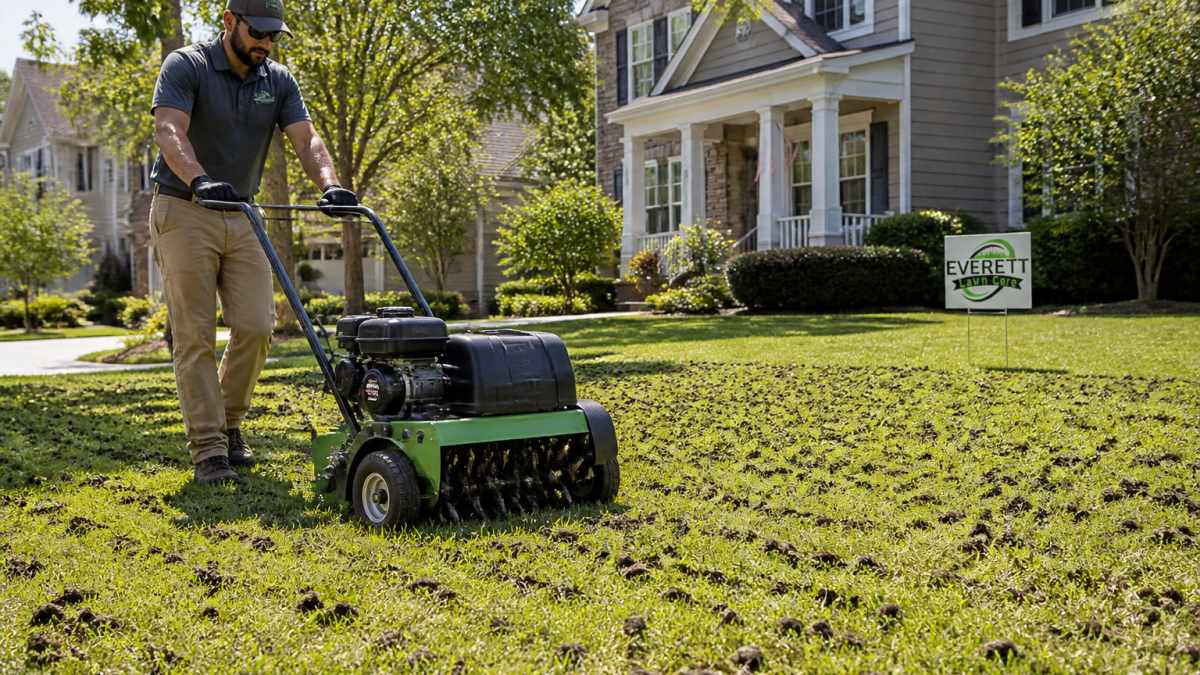
Technician using a core aerator on a lawn to improve clay soil lawn care by removing plugs of compacted earth.

Timing matters. For fescue lawns, aerate in early fall when the grass is actively growing and can recover. For a deeper walkthrough, our guide on expert lawn aeration for landscaping covers the full process.

A common mistake is aerating bone-dry soil. Water the lawn a day or two before so the tines pull clean plugs instead of bouncing off hard ground.

How to Improve Clay Soil Drainage Without Making It Worse

How to improve clay soil drainage comes down to one rule: open the soil, don't smother it. Compacted clay sheds water, so the goal is to break the surface and let moisture move down.

  • Aerate first to create channels for water.
  • Add organic matter to the surface and let it work in.
  • Water deeply but less often to train roots downward.
  • Fix low spots where standing water collects.
  • Keep mower blades sharp and avoid driving on wet soil.

Watch out: tilling wet clay creates hard clods that take years to break down. And piling sand on top of clay can form a concrete-like layer. Skip both.

Overseeding After Aeration: Timing, Seed Choice, and Fescue

Overseeding after aeration works best when the seed contacts soil, stays moist, and has time to root before cold sets in. For tall fescue, the region's go-to cool-season grass, early fall is the window. Aerating first gives seed a place to land and shelter.

  • Seed choice: tall fescue suits full sun and most yards here. Use a shade-tolerant blend for heavy tree cover.
  • Timing: overseed right after aeration in early fall.
  • Coverage: apply seed evenly, then keep the top inch moist until it sprouts.
  • Patience: new seed needs consistent water for the first few weeks.

The thing nobody tells you about overseeding: a thin lawn rarely fills in from seed alone if the soil underneath is still compacted. Fix the soil first, then seed.

Compost, Lime, and Fertilizer: Amendments That Help Clay

Compost is the amendment that does the most for clay, but how you apply it matters as much as how much you use. Organic matter separates tight clay particles, improves water infiltration, and feeds the microbes that build soil structure over time. The goal is to change the soil's architecture, not to bury the lawn under a fresh layer of dirt.

Instant Estimate →

Compost: How Much, How Often, and Why Sand Backfires

Most practitioners find that a quarter-inch to half-inch layer of finished compost spread over the lawn once a year is enough to make measurable progress on clay. More than that can smother grass and create a layered interface that roots struggle to cross. Apply in early fall after core aeration so the compost falls into the holes and works into the root zone, then water it in. Repeat annually; clay structure improves slowly, and one heavy application does not fix years of compaction.

Two common mistakes do real damage:

  • Adding sand. Mixing sand into clay or piling it on top can create a concrete-like layer where the two materials meet. Water stops moving, roots stop growing, and the problem gets worse, not better.
  • Spreading a thick layer of topsoil. A thin topsoil dressing can help seed establishment, but a deep layer over clay creates a perched water table. Roots stay in the shallow topsoil, dry out in summer, and never anchor into the clay below.
Watch Out Do not till wet clay or work sand into it. Both practices create hard clods or a cemented layer that can take years to break down.

Lime: Only When the Soil Test Says So

Lime raises pH when the soil is too acidic, and Piedmont clay tends to run acidic. But applying lime without a soil test is guesswork that can push pH too high, locking up micronutrients like iron and manganese. Follow the test report's recommendation, usually expressed in pounds per 1,000 square feet, and apply in fall or early spring when the lawn can respond. Pelletized lime is easier to spread evenly than powdered lime, and it reacts faster than dolomitic lime in most lawn settings.

Fertilizer: Feed the Grass, Not the Soil

Fertilizer feeds the grass, not the soil. On clay, the risk is applying too much nitrogen at the wrong time, which pushes tender growth that heat and disease punish. For tall fescue, the most effective schedule is light feeding in early fall and again in late fall, with a modest spring application only if the lawn needs it. Use a slow-release nitrogen source and keep phosphorus and potassium in line with the soil test. A soil test that shows adequate phosphorus means you can skip it entirely, which saves money and reduces runoff.

  • Compost: quarter- to half-inch layer annually after aeration.
  • Lime: only per soil test, applied in fall or early spring.
  • Fertilizer: slow-release, fall-heavy for fescue, guided by test results.

For fescue timing, our guide on when to fertilize fescue maps out the seasonal schedule so amendments land at the right moment.

A Month-by-Month Raleigh Lawn Care Calendar for Clay Soil

A calendar keeps clay soil lawn care on track instead of reactive. The table below turns general advice into a month-by-month plan for a tall fescue lawn on Piedmont red clay, with the reasoning behind each task so you can adjust for weather.

Month Key Task Why It Matters on Clay
January Stay off wet soil; plan the year Wet clay compacts under foot traffic and mowers
February Soil test; order compost and lime per results Sets the amendment plan before spring growth
March Light feeding as grass greens up; watch for weeds Early weeds move in where turf is thin
April Mow high; spot-treat weeds; water deeply if dry Roots are active; clay holds moisture unevenly
May Deep, infrequent watering; sharpen blades Trains roots downward before summer stress
June Raise mowing height; monitor for drought stress Heat and clay stress turf; taller grass shades soil
July Water early morning; avoid fertilizing Nitrogen pushes tender growth that heat punishes
August Plan aeration and overseeding; buy seed Seed supply and timing matter for fall success
September Core aerate; overseed; apply compost Best window for fescue recovery and seed contact
October Lime and fertilizer per soil test Feeds fall recovery and root growth
November Final mow; leaf cleanup Leaves smother turf and trap moisture
December Stay off wet soil; service equipment Protects soil structure through winter

The fall window is the anchor. Early fall, roughly September into early October, is when fescue is actively growing, soil is still warm, and air temperatures are dropping.

Summer is the other critical stretch. Clay holds moisture but infiltrates slowly, so deep, infrequent watering in the morning is more effective than daily light sprinkling. Raise the mowing height to shade the soil and reduce stress. Avoid fertilizing in the heat of summer; the grass cannot use the nitrogen efficiently and disease pressure rises.

Pro Tip Write the soil-test date and the aeration date on the calendar each year. Tracking them makes it obvious when the fall window is slipping and keeps amendments on schedule.

Local humidity and summer thunderstorms mean clay can stay saturated for days. If water stands after a storm, fix the low spot or add a drainage channel before the next growing season; no amount of aeration overcomes a yard that collects water.

Get a Free Estimate and Stop Fighting Your Clay

Fixing clay soil takes the right sequence: test, aerate, amend, seed, and water with discipline. Most homeowners can do it. But it takes time, the right equipment, and a plan that fits your specific yard.

If you'd rather hand off the heavy work, that's where we come in. Everett Lawn Care is licensed and insured, with a local crew serving the Triangle. We handle core aeration, expert overseeding, and full lawn maintenance tailored to your soil. You can see what professional clay-soil lawn care costs before you commit, and book aeration and lawn maintenance when you're ready.

Get started with Everett Lawn Care and turn your compacted clay into a lawn that actually holds up.


Frequently Asked Questions

How do you improve clay soil for a lawn?

Start with a soil test to learn your pH and nutrient levels, then focus on three things: relieving compaction with core aeration, working in compost as organic matter, and correcting pH with lime if the test calls for it. Sand is a common mistake. Mixing sand into clay creates a concrete-like layer. Add organic matter instead, aerate once or twice a year depending on traffic, and overseed in fall so new roots establish before summer heat.

When should you aerate a clay soil lawn in Raleigh?

For tall fescue, the best window is early fall, roughly September into October, when soil is still warm and air temperatures drop. That gives seed and roots time to establish before winter. A spring aeration can help heavily compacted lawns, but pair it with overseeding only in fall. Avoid aerating when the soil is saturated. Clay that is too wet smears instead of fracturing, which makes compaction worse.

Should you add sand to clay soil?

No. Adding sand to clay soil is one of the most common lawn mistakes. Clay particles are tiny, and sand particles are large. When you mix a small amount of sand into clay, the result sets up hard and drains poorly, similar to concrete. To improve clay soil drainage, add organic matter such as compost, aerate to open the root zone, and manage water with grading and downspout routing rather than trying to change the soil texture with sand.

How often should you test lawn soil before adding lime or fertilizer?

Test every one to two years, and always before applying lime. Piedmont red clay tends to run acidic, but guessing at lime rates can push pH too high and lock up nutrients. A soil test for lawns reports pH and nutrient levels so you apply only what is missing. For overseeding after aeration, test first so fertilizer supports establishment instead of feeding weeds.

GoogleAdd everett-lawncare.com as a preferred source on Google →

7 Clay Soil Lawn Care Fixes That Actually Work in Raleigh

By Everett McLain

Last Updated: October 25, 2026

Quick Summary

Effective clay soil lawn care in Raleigh starts with a soil test, then core aeration to break compaction, followed by overseeding tall fescue in early fall and a quarter- to half-inch layer of compost annually. Fix the soil structure first, then feed what grows in it.

  • Piedmont red clay is dense and compacted, squeezing out the air and water grass roots need.
  • Pull soil samples about 4 inches deep from several spots and mix them in a clean bucket.
  • Core aerate fescue lawns in early fall when the grass is actively growing and can recover.
  • Apply a quarter- to half-inch layer of finished compost once a year after core aeration.
  • Never till wet clay or work sand into it, which creates hard clods or a cemented layer.

Table of Contents

Why Piedmont Red Clay Makes Raleigh Lawns So Difficult

Piedmont red clay is dense, sticky soil with tiny particles that pack together and squeeze out the air and water your grass roots need. That single fact explains most of the lawn problems homeowners around Raleigh face every year.

Here is the core tension. Clay holds nutrients well, but it holds them hostage. Roots can't reach them when the soil is compacted, and water can't drain when the particles bind tight. So you fertilize, you water, and nothing changes.

  • Compaction: foot traffic, mowers, and construction press the particles together.
  • Poor drainage: water sits on top or runs off before it can soak down.
  • Thin roots: roots need oxygen, and compacted clay has almost none.
  • Patchy turf: bare spots open the door for weeds.

Clay soil lawn care in Raleigh isn't about working harder. It's about fixing the soil structure first, then feeding what grows in it.

Start With Soil Testing for Lawns Before You Buy Anything

Soil testing for lawns is the cheapest step you'll take all year, and it's the one most homeowners skip. A basic test tells you your pH, nutrient levels, and whether you need lime or fertilizer. Without it, you're guessing.

Clay in this region tends to run acidic, which locks up nutrients even when they're present. A test removes the guesswork.

  • Pull samples from several spots, about 4 inches deep.
  • Mix them in a clean bucket and let the sample dry.
  • Send it to a lab and read the pH and nutrient report.
  • Match your amendments to what the report actually says.

Watch out: applying lime or fertilizer without a test is the fastest way to waste money and make the soil worse.

Lawn Aeration for Clay Soil: Breaking the Compaction Layer

Lawn aeration for clay soil is the single most effective fix for compaction. Core aeration pulls small plugs of soil out of the ground, opening channels that let air, water, and nutrients reach the root zone.

Technician using a core aerator on a lawn to improve clay soil lawn care by removing plugs of compacted earth.

Timing matters. For fescue lawns, aerate in early fall when the grass is actively growing and can recover. For a deeper walkthrough, our guide on expert lawn aeration for landscaping covers the full process.

A common mistake is aerating bone-dry soil. Water the lawn a day or two before so the tines pull clean plugs instead of bouncing off hard ground.

How to Improve Clay Soil Drainage Without Making It Worse

How to improve clay soil drainage comes down to one rule: open the soil, don't smother it. Compacted clay sheds water, so the goal is to break the surface and let moisture move down.

  • Aerate first to create channels for water.
  • Add organic matter to the surface and let it work in.
  • Water deeply but less often to train roots downward.
  • Fix low spots where standing water collects.
  • Keep mower blades sharp and avoid driving on wet soil.

Watch out: tilling wet clay creates hard clods that take years to break down. And piling sand on top of clay can form a concrete-like layer. Skip both.

Overseeding After Aeration: Timing, Seed Choice, and Fescue

Overseeding after aeration works best when the seed contacts soil, stays moist, and has time to root before cold sets in. For tall fescue, the region's go-to cool-season grass, early fall is the window. Aerating first gives seed a place to land and shelter.

  • Seed choice: tall fescue suits full sun and most yards here. Use a shade-tolerant blend for heavy tree cover.
  • Timing: overseed right after aeration in early fall.
  • Coverage: apply seed evenly, then keep the top inch moist until it sprouts.
  • Patience: new seed needs consistent water for the first few weeks.

The thing nobody tells you about overseeding: a thin lawn rarely fills in from seed alone if the soil underneath is still compacted. Fix the soil first, then seed.

Compost, Lime, and Fertilizer: Amendments That Help Clay

Compost is the amendment that does the most for clay, but how you apply it matters as much as how much you use. Organic matter separates tight clay particles, improves water infiltration, and feeds the microbes that build soil structure over time. The goal is to change the soil's architecture, not to bury the lawn under a fresh layer of dirt.

Instant Estimate →

Compost: How Much, How Often, and Why Sand Backfires

Most practitioners find that a quarter-inch to half-inch layer of finished compost spread over the lawn once a year is enough to make measurable progress on clay. More than that can smother grass and create a layered interface that roots struggle to cross. Apply in early fall after core aeration so the compost falls into the holes and works into the root zone, then water it in. Repeat annually; clay structure improves slowly, and one heavy application does not fix years of compaction.

Two common mistakes do real damage:

  • Adding sand. Mixing sand into clay or piling it on top can create a concrete-like layer where the two materials meet. Water stops moving, roots stop growing, and the problem gets worse, not better.
  • Spreading a thick layer of topsoil. A thin topsoil dressing can help seed establishment, but a deep layer over clay creates a perched water table. Roots stay in the shallow topsoil, dry out in summer, and never anchor into the clay below.
Watch Out Do not till wet clay or work sand into it. Both practices create hard clods or a cemented layer that can take years to break down.

Lime: Only When the Soil Test Says So

Lime raises pH when the soil is too acidic, and Piedmont clay tends to run acidic. But applying lime without a soil test is guesswork that can push pH too high, locking up micronutrients like iron and manganese. Follow the test report's recommendation, usually expressed in pounds per 1,000 square feet, and apply in fall or early spring when the lawn can respond. Pelletized lime is easier to spread evenly than powdered lime, and it reacts faster than dolomitic lime in most lawn settings.

Fertilizer: Feed the Grass, Not the Soil

Fertilizer feeds the grass, not the soil. On clay, the risk is applying too much nitrogen at the wrong time, which pushes tender growth that heat and disease punish. For tall fescue, the most effective schedule is light feeding in early fall and again in late fall, with a modest spring application only if the lawn needs it. Use a slow-release nitrogen source and keep phosphorus and potassium in line with the soil test. A soil test that shows adequate phosphorus means you can skip it entirely, which saves money and reduces runoff.

  • Compost: quarter- to half-inch layer annually after aeration.
  • Lime: only per soil test, applied in fall or early spring.
  • Fertilizer: slow-release, fall-heavy for fescue, guided by test results.

For fescue timing, our guide on when to fertilize fescue maps out the seasonal schedule so amendments land at the right moment.

A Month-by-Month Raleigh Lawn Care Calendar for Clay Soil

A calendar keeps clay soil lawn care on track instead of reactive. The table below turns general advice into a month-by-month plan for a tall fescue lawn on Piedmont red clay, with the reasoning behind each task so you can adjust for weather.

Month Key Task Why It Matters on Clay
January Stay off wet soil; plan the year Wet clay compacts under foot traffic and mowers
February Soil test; order compost and lime per results Sets the amendment plan before spring growth
March Light feeding as grass greens up; watch for weeds Early weeds move in where turf is thin
April Mow high; spot-treat weeds; water deeply if dry Roots are active; clay holds moisture unevenly
May Deep, infrequent watering; sharpen blades Trains roots downward before summer stress
June Raise mowing height; monitor for drought stress Heat and clay stress turf; taller grass shades soil
July Water early morning; avoid fertilizing Nitrogen pushes tender growth that heat punishes
August Plan aeration and overseeding; buy seed Seed supply and timing matter for fall success
September Core aerate; overseed; apply compost Best window for fescue recovery and seed contact
October Lime and fertilizer per soil test Feeds fall recovery and root growth
November Final mow; leaf cleanup Leaves smother turf and trap moisture
December Stay off wet soil; service equipment Protects soil structure through winter

The fall window is the anchor. Early fall, roughly September into early October, is when fescue is actively growing, soil is still warm, and air temperatures are dropping.

Summer is the other critical stretch. Clay holds moisture but infiltrates slowly, so deep, infrequent watering in the morning is more effective than daily light sprinkling. Raise the mowing height to shade the soil and reduce stress. Avoid fertilizing in the heat of summer; the grass cannot use the nitrogen efficiently and disease pressure rises.

Pro Tip Write the soil-test date and the aeration date on the calendar each year. Tracking them makes it obvious when the fall window is slipping and keeps amendments on schedule.

Local humidity and summer thunderstorms mean clay can stay saturated for days. If water stands after a storm, fix the low spot or add a drainage channel before the next growing season; no amount of aeration overcomes a yard that collects water.

Get a Free Estimate and Stop Fighting Your Clay

Fixing clay soil takes the right sequence: test, aerate, amend, seed, and water with discipline. Most homeowners can do it. But it takes time, the right equipment, and a plan that fits your specific yard.

If you'd rather hand off the heavy work, that's where we come in. Everett Lawn Care is licensed and insured, with a local crew serving the Triangle. We handle core aeration, expert overseeding, and full lawn maintenance tailored to your soil. You can see what professional clay-soil lawn care costs before you commit, and book aeration and lawn maintenance when you're ready.

Get started with Everett Lawn Care and turn your compacted clay into a lawn that actually holds up.


Frequently Asked Questions

How do you improve clay soil for a lawn?

Start with a soil test to learn your pH and nutrient levels, then focus on three things: relieving compaction with core aeration, working in compost as organic matter, and correcting pH with lime if the test calls for it. Sand is a common mistake. Mixing sand into clay creates a concrete-like layer. Add organic matter instead, aerate once or twice a year depending on traffic, and overseed in fall so new roots establish before summer heat.

When should you aerate a clay soil lawn in Raleigh?

For tall fescue, the best window is early fall, roughly September into October, when soil is still warm and air temperatures drop. That gives seed and roots time to establish before winter. A spring aeration can help heavily compacted lawns, but pair it with overseeding only in fall. Avoid aerating when the soil is saturated. Clay that is too wet smears instead of fracturing, which makes compaction worse.

Should you add sand to clay soil?

No. Adding sand to clay soil is one of the most common lawn mistakes. Clay particles are tiny, and sand particles are large. When you mix a small amount of sand into clay, the result sets up hard and drains poorly, similar to concrete. To improve clay soil drainage, add organic matter such as compost, aerate to open the root zone, and manage water with grading and downspout routing rather than trying to change the soil texture with sand.

How often should you test lawn soil before adding lime or fertilizer?

Test every one to two years, and always before applying lime. Piedmont red clay tends to run acidic, but guessing at lime rates can push pH too high and lock up nutrients. A soil test for lawns reports pH and nutrient levels so you apply only what is missing. For overseeding after aeration, test first so fertilizer supports establishment instead of feeding weeds.

GoogleAdd everett-lawncare.com as a preferred source on Google →

Everett Lawn Care

Loading your experience…

Please wait — this usually finishes in a few seconds.