Last Updated: November 19, 2026
Quick Summary
The most effective way to prevent crabgrass in a Raleigh lawn is to apply a pre-emergent herbicide before soil warms to about 55°F, usually late February to early April. Pair it with thick turf by mowing high, watering deeply, and repairing bare spots early.
- Apply pre-emergent before germination begins, when soil at 2-4 inches deep nears 55°F.
- Pre-emergent does nothing to crabgrass that has already sprouted, so timing is critical.
- Read the product label for exact rate, reapplication interval, and seeding restrictions.
- Mow at the highest setting your grass type handles, never removing more than one-third of the blade.
- Water deeply once or twice a week rather than lightly every day.
Table of Contents
- Identifying Crabgrass and Why It Shows Up in Raleigh Lawns
- Crabgrass Pre-Emergent Timing Raleigh: Building a Seasonal Calendar
- Crabgrass Germination Temperature and Why Soil Readings Matter
- Building Dense Turf: Mowing, Watering and Fertility for Prevention
- Pre-Emergent Around Seeding and Overseeding Without Losing Your Barrier
- When to Apply Crabgrass Killer and What to Do If It Already Sprouted
- How to Repair Bare Spots in a Lawn Before Crabgrass Moves In
- Booking a Lawn Assessment for Your Raleigh Property
- Frequently Asked Questions
Identifying Crabgrass and Why It Shows Up in Raleigh Lawns
Crabgrass is a summer annual weed, and knowing how it behaves is the first step to learning how to prevent crabgrass. Each plant lives for one growing season, but it produces huge numbers of seed, so a single plant left alone can seed a whole lawn. It most often shows up in Raleigh lawns that are thin, stressed by summer heat, or mowed too short. Crabgrass spreads low and flat, with wide blades and seed heads that look like the fingers of a crab.
Crabgrass sprouts when soil warms, usually once temperatures stay in the upper 50s to 60s Fahrenheit for several days. That is why it appears in late spring and grows fast through July and August. Bare spots and weak turf give it room to take hold.
How crabgrass differs from similar summer weeds
Several weeds look like crabgrass at first glance. Look at how the plant grows:
- Crabgrass grows in a flat, spreading clump with hairy leaf sheaths and finger-like seed heads.
- Goosegrass has flatter stems and white, flat seed heads that look more like a bird's foot.
- Dallisgrass grows in upright clumps with seed stalks that look like a row of beads.
Getting the ID right matters, because the timing and product you choose depend on it.
Crabgrass Pre-Emergent Timing Raleigh: Building a Seasonal Calendar
Pre-emergent herbicide works by stopping seeds from sprouting, which is the core method to prevent crabgrass in a lawn. It does nothing to a plant that is already growing, so timing is the whole game. Apply it before soil temperatures reach the point where crabgrass germinates. In this region that window usually falls between late February and early April, but the exact date shifts year to year with soil temperature, not the calendar.
A practical local calendar looks like this:
| Window | Soil temperature cue (2-4 in. deep) | Action |
|---|---|---|
| Late winter (mid-February) | Consistently below 50°F | Buy product, calibrate spreader, map thin areas, check label for seeding restrictions |
| First application (late February-mid-March) | Approaching 55°F | Apply pre-emergent at the label rate before germination begins |
| Split application (6-8 weeks later) | 55-65°F and rising | Apply the second half of a split-rate program if the label allows |
| Late spring (April-May) | Above 65°F | Stop pre-emergent; switch to scouting and post-emergent spot treatment |
| Summer | Soil warm | Keep turf tall and thick; hand-pull small patches before they seed |
| Fall | Soil cooling below 70°F | Overseed or repair bare spots, then plan next spring's barrier |
Two adjustments matter more than the table:
- Grass type changes the window. Grass type changes the window. Warm-season and cool-season lawns have different seeding schedules, so check the label before you spread, especially if you plan any spring seeding.
- Weather contingencies. A warm late-winter stretch can push soil past 55°F weeks early; a cold snap can pull it back. If you already applied and a cold snap follows, do not reapply, the barrier is still there. If you missed the window and seedlings are up, pre-emergent will not help; move to the post-emergent section below.
Always read the product label for the exact timing, rate, and reapplication interval. Labels are the legal instruction for use.
Crabgrass Germination Temperature and Why Soil Readings Matter
Crabgrass germinates when soil temperature at about 2 to 4 inches deep stays near 55 degrees Fahrenheit for several days in a row. Air temperature alone is a poor guide, because soil warms more slowly, especially after a cold snap.
Many homeowners find a soil thermometer useful. Check the reading each morning for a few days. When it holds steady near that range, apply your pre-emergent within a few days. Waiting too long means some seeds have already sprouted and will escape the barrier.
Building Dense Turf: Mowing, Watering and Fertility for Prevention
Dense turf is the strongest defense against crabgrass. Thick grass shades the soil, so seeds struggle to get the light they need. Learn how to reduce thatch before lawn aeration, since a thick thatch layer crowds out healthy grass and lets crabgrass in.
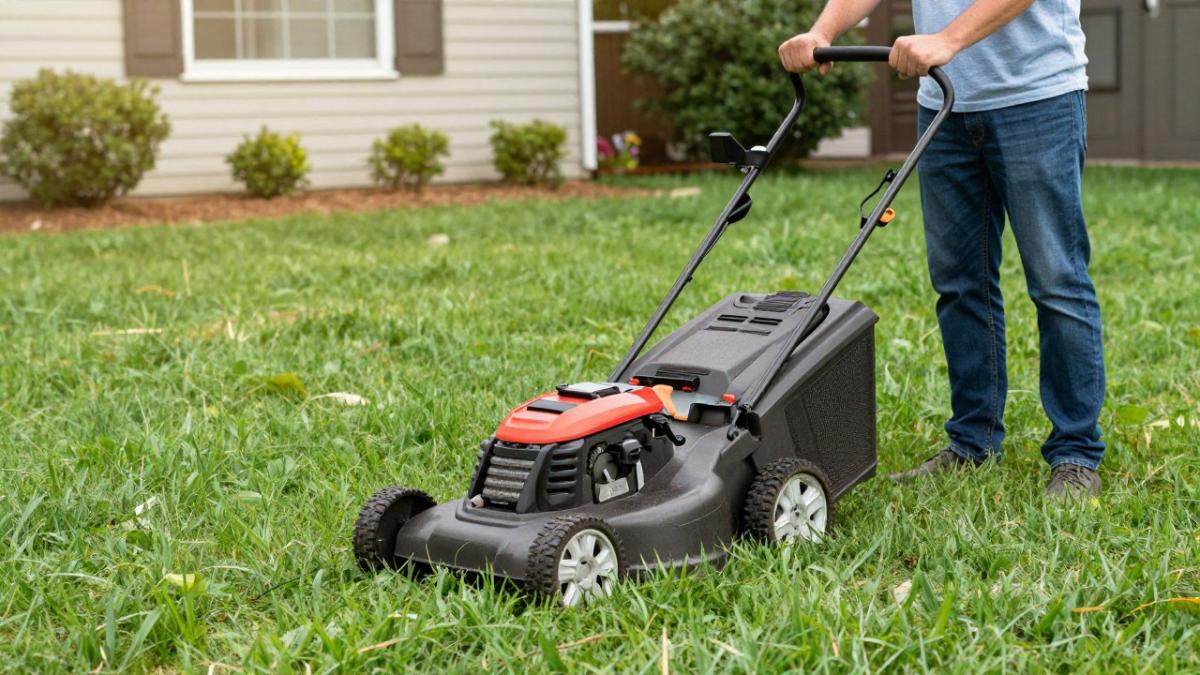
Keep these habits in place:
- Mow high, and never remove more than one-third of the blade at once.
- Water deeply and less often to encourage deep roots.
- Feed the lawn on a schedule that matches your grass type.
- Aerate compacted soil so roots and water can move freely.
Everett Lawn Care offers lawn treatments and aeration.
Mowing height and frequency
Mow at the highest setting your grass type handles well, and keep blades sharp. Tall grass shades soil and blocks crabgrass seed from germinating. Cutting too low weakens turf and opens bare patches for weeds.
Deep, infrequent watering
Water deeply once or twice a week rather than lightly every day. Shallow watering keeps the top layer of soil moist, which is exactly where crabgrass seed sprouts. Deep watering pushes roots down and keeps the surface drier.
Pre-Emergent Around Seeding and Overseeding Without Losing Your Barrier
Pre-emergent prevents new grass seed from sprouting too, so seeding and a pre-emergent barrier can work against each other. Our complete guide to weed control for Raleigh lawns covers how to manage weeds around seeding and overseeding. The fix is not to guess, it is to match the product's active ingredient and label wait period to your seeding plan.
A decision path for a lawn that needs repair:
- Decide which matters more this season, a barrier or new grass. If the lawn is thin enough that crabgrass will win anyway, skip the spring pre-emergent, repair the turf, and plan a fall barrier instead.
- Check the active ingredient. Products built on prodiamine, pendimethalin, and dithiopyr are the common pre-emergents and generally carry label restrictions on seeding. Read the specific label, wait periods differ by product and rate, and some products are not labeled for use on newly seeded lawns at all.
- Use the label wait period, not a rule of thumb. If the label says wait a set number of weeks before overseeding, count from the application date, not from when you first saw weeds.
- Sequence fall overseeding ahead of the next barrier. In cool-season lawns, the common pattern is to overseed in early fall, let new grass establish, then apply a fall pre-emergent after the label wait period, or skip the fall barrier and rely on turf density through winter.
- Consider a split application. A split-rate program (part of the label rate early, the rest 6-8 weeks later) can extend control without over-applying, but only if the label lists that use.
Watch out: spreading pre-emergent and grass seed in the same week is the most common way homeowners lose an overseeding, the barrier does not distinguish crabgrass seed from the grass seed you paid for.
If you need to overseed and also want spring protection, the safe order is usually repair first, barrier second, with the label wait period in between. A Raleigh lawn assessment can help you sort out timing for your specific property.
When to Apply Crabgrass Killer and What to Do If It Already Sprouted
If crabgrass is already up, pre-emergent will not help. Use a post-emergent product labeled for emerged crabgrass, and apply it while the plants are small and actively growing. Larger plants are harder to control.
Read the label for rate, temperature limits, and mowing instructions. Keep children and pets off treated turf until the label says it is safe. Pull out small patches by hand before they seed, and water the lawn afterward to help nearby grass fill in.
Take a look at our guide on how to get rid of crabgrass in your lawn for step-by-step removal once the weeds have appeared.
How to Repair Bare Spots in a Lawn Before Crabgrass Moves In
Bare spots are an open door for crabgrass. Repair them early in the season, before weeds take over.
- Loosen the top inch of soil with a rake or cultivator.
- Spread grass seed suited to your lawn type at the rate on the bag.
- Cover lightly with a thin layer of topsoil or compost.
- Keep the area moist until new grass is established.
If bare spots are widespread, a seeding and aeration service may be a better fit. Remember that pre-emergent can block new seed, so time repairs with your product label in mind.
Booking a Lawn Assessment for Your Raleigh Property
Preventing crabgrass takes a plan, and timing is easy to miss. Everett Lawn Care provides lawn care services for homeowners in the Raleigh area.
Request an estimate for mowing, fertilization, or weed control to get a plan tailored to your yard. Pricing depends on property size, service frequency, and the treatments you choose, so contact Everett Lawn Care for a quote.
Frequently Asked Questions
When should I apply crabgrass pre-emergent in Raleigh?
In the Raleigh area, pre-emergent is usually applied in late winter to early spring, before soil temperatures consistently reach the range where crabgrass seeds germinate. Many homeowners aim for when soil reaches roughly 55 degrees Fahrenheit for several days, which typically falls in late February through March. Timing varies from year to year, so check soil readings and the product label rather than relying on a single date. Pre-emergent works by forming a barrier at the soil surface, so it must be down before seeds sprout. Pricing for products depends on quantity, coverage and delivery, so check with your provider or Everett Lawn Care for a current quote.
What temperature triggers crabgrass germination?
Crabgrass seeds generally begin germinating when the soil surface reaches about 55 degrees Fahrenheit for several consecutive days. Germination accelerates as soil warms through the spring. Because soil temperature shifts with weather, a warm stretch in February can start germination earlier than the calendar suggests. Using a soil thermometer in the top inch of soil in the morning gives a more reliable signal than air temperature. Applying crabgrass pre-emergent before this threshold is the goal, since the barrier needs to be in place when seeds start to sprout.
Can I apply pre-emergent and grass seed at the same time?
Generally no, unless the product label specifically says it is safe for seeding. Most pre-emergent herbicides prevent germination of all seeds, including the grass seed you are trying to establish. Overseeding and new seeding usually require waiting a period after application, which varies by product, so read the label carefully. Some lawns need a choice between preventing crabgrass and establishing new turf, and that decision is worth planning around the season. A lawn care professional can help sequence these steps for your specific lawn.
What kills crabgrass after it has already sprouted?
Post-emergent herbicides target crabgrass that has already emerged, and they work best when plants are small and actively growing. Crabgrass that has grown large or gone to seed is harder to control and may need repeat applications. Product selection depends on the lawn grass type, since some products can injure certain turf species. Always follow the label for rates, timing and safety, including mowing and watering restrictions. Hand removal is practical for small patches, though it is less effective once roots are established.
