Last Updated: October 30, 2026
Quick Summary
The best weed killer for lawns safe for pets is one applied exactly per its label, since every herbicide, natural or synthetic, carries some risk. Choose iron-based or soap-based products for low mammal toxicity, and keep pets off until the spray dries plus the label's re-entry interval.
- A pet-safe claim describes the product at label dilution, not your dog's size or how much treated grass it eats.
- Vinegar is a contact burn only and will not kill deep-rooted perennials, and it damages turf it touches.
- Granular weed and feed labels typically require watering in, then a re-entry interval that may be 24 hours or more.
- Synthetic selective herbicides carry the longest re-entry intervals, some specifying 24 to 48 hours or until fully dry.
- Match spot treatment to a few weeds and whole-lawn control to a spreading infestation, not the product aisle.
Table of Contents
- What Pet-Safe Weed Control Actually Means (and What It Doesn't)
- Dog Safe Lawn Weed Killer Options: Ingredient-by-Ingredient Safety
- Vinegar and Dish Soap Weed Killer: What It Kills and What It Misses
- Is Weed and Feed Safe for Dogs? Reading the Label Before You Spread
- How Long to Keep Pets Off the Lawn After Weed Killer
- Spot Treatment vs. Whole-Lawn Control: Matching the Method to the Weed
- Get a Free Estimate for Pet-Friendly Weed Control
- Frequently Asked Questions
What Pet-Safe Weed Control Actually Means (and What It Doesn't)
That gap between "pet-safe" and "zero risk" is where most homeowners get into trouble.
The Environmental Protection Agency's guidance on pesticide safety and pets makes the core point clearly. Every herbicide, synthetic or organic, is a pesticide.
So the real question is never "is this product pet-safe?" It is "safe for which pet, at what concentration, and after how long?"
Pet-Safe Claims vs. Real Exposure Risk
A pet-safe claim describes the formulated product at label dilution. It says nothing about your dog's size, the weed killer's concentration, or how much treated grass a puppy eats in ten minutes.
Three exposure routes matter:
- Skin contact with wet grass or a treated surface
- Ingestion of grass, soil, or a chewed container
- Inhalation of spray drift or vapor while the area is still wet
A large dog crossing a dry lawn faces very different risk than a small dog grazing on wet turf. That is why we treat re-entry timing as part of the product.
Dog Safe Lawn Weed Killer Options: Ingredient-by-Ingredient Safety
No herbicide is risk-free, but these are the ingredients homeowners ask about most.
| Ingredient | Weed effectiveness | Lawn impact | Pet exposure considerations |
|---|---|---|---|
| Vinegar (acetic acid) | Contact burn only; weak on established perennials | Nonselective, kills grass on contact | Irritant to skin, eyes, and paws when wet; keep pets off until dry |
| Salt (sodium chloride) | Strong on cracks and gravel; poor in turf | Accumulates in soil; can sterilize beds for seasons | Generally low acute toxicity, but large ingestion causes GI upset; avoid treated areas |
| Corn gluten meal | Pre-emergent suppression only; no post-emergent kill | Safe on established turf when applied at label rate | Food-grade byproduct; low concern, but dogs may eat it, store sealed |
| Soap-based / fatty acid | Good on young broadleaf weeds; contact only | Nonselective at higher rates; can burn turf | Low mammalian toxicity when diluted; rinse paws if contact occurs |
| Iron-based (FeHEDTA) | Effective on broadleaf weeds; works by disrupting cell membranes | Selective on many turf types at label rate; can stain hardscapes | Low toxicity to mammals; ingestion of concentrate can cause GI upset |
| Synthetic selective herbicides (2,4-D, dicamba, etc.) | High, targets broadleaf weeds while sparing grass | Selective when applied correctly; drift can damage ornamentals | Most detailed label precautions; longest re-entry intervals; keep pets off until dry plus label interval |
Vinegar (acetic acid) is a contact herbicide that burns green tissue on contact and does not move through soil.
Salt kills by drawing moisture from plant tissue.
Corn gluten meal is a pre-emergent that suppresses seed germination.
Soap-based and fatty acid products break down plant cell membranes.
Iron-based products (FeHEDTA) disrupt cell membranes in broadleaf weeds and are selective on many turf types at label rates.
Synthetic selective herbicides target broadleaf weeds without killing grass.
Vinegar and Dish Soap Weed Killer: What It Kills and What It Misses
A vinegar and dish soap weed killer works on small, young weeds in cracks, mulch, and garden edges. It is a contact herbicide, so it only damages the green plant tissue it actually touches. It does not travel down to the root.
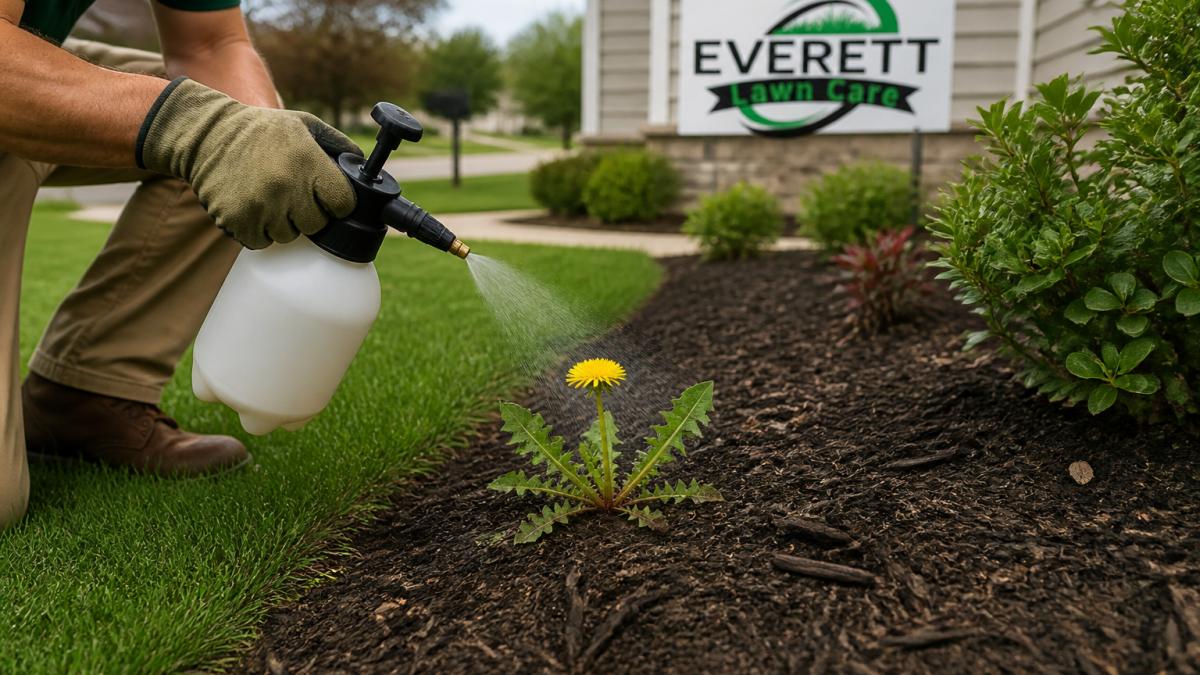
That distinction matters. Weeds with deep taproots can brown on top and regrow from the crown, and creeping weeds can regrow from missed pieces.
What it handles well:
- Seedlings and small annual weeds
- Weeds in gravel, driveways, and patio joints
- Spot treatment in garden beds away from desirable plants
What it misses:
- Established perennials with deep roots
- Grassy weeds that blend into the lawn
- Anything you cannot spray without hitting turf or ornamentals
A Basic Homemade Recipe and Its Limits
A common homeowner mix is roughly one gallon of white vinegar with a squirt of liquid dishwashing detergent and a cup of salt.
Use it as a spot treatment, not an all-over spray.
The honest limit: homemade mixes are nonselective. They kill grass as readily as weeds and do nothing for prevention. If your lawn has a spreading weed problem, a homemade spray treats the symptom.
Is Weed and Feed Safe for Dogs? Reading the Label Before You Spread
Weed and feed products are safe for dogs only when you follow the label's re-entry interval and keep pets off the lawn until the product has fully dried and settled.
Before you spread anything, read four things on the label:
- Active ingredient and concentration - this tells you what you are handling
- Re-entry interval - the minimum time before people and pets return
- Application rate - over-applying raises exposure risk without improving results
- Storage and disposal - chewed bags and open containers are a real hazard
Granular weed and feed has one extra wrinkle: dogs lick their paws, and granules can stick to them.
If your dog is a grazer or a puppy that mouths everything, treat the label interval as a floor, not a target.
How Long to Keep Pets Off the Lawn After Weed Killer
There is no universal wait time. Re-entry guidance depends on the active ingredient, formulation (liquid vs. granular), weather, and the label's stated interval.
Here is how to build a safe re-entry decision for any product:
- Read the label's re-entry interval first. This is the minimum time before people and pets can return. It may be stated in hours or days, and it may differ for pets versus people.
- Account for formulation. Liquid products typically require waiting until the spray has completely dried, plus any label interval. Granular products often require watering in first, then the label interval, granules can stick to paws and be ingested.
- Factor in weather. Cool, humid, or cloudy conditions slow drying. A product that dries in two hours on a sunny 80°F day may take four or more hours on a cool, overcast morning. Wind can carry spray drift onto untreated areas where pets may walk.
- Add a margin for vulnerable pets. Puppies, senior dogs, and dogs with liver or kidney conditions face higher risk. For these pets, treat the label interval as a floor, not a target, wait an extra few hours or until the next dry day.
Product-specific examples (always verify against your actual label):
- Vinegar-based contact sprays: Most labels direct users to keep pets off until the spray has dried, typically a few hours. Horticultural vinegar may carry a longer interval.
- Iron-based selective products: Labels commonly state a re-entry interval once dried, often a few hours. Staining on hardscapes is a separate concern.
- Granular weed and feed: Labels typically require watering in to activate the herbicide and dissolve granules, then a re-entry interval that may be 24 hours or more. Sweep granules off driveways and walks immediately.
- Synthetic selective herbicides: These carry the most detailed and often longest re-entry intervals, some specify 24 to 48 hours or until fully dry, whichever is longer. Do not shortcut these.
What about rain? If rain falls before the product has dried or before the label's rainfast period, the product may be less effective and may run off into areas where pets walk.
The bottom line: Do not rely on "until it looks dry" as your only guide.
Spot Treatment vs. Whole-Lawn Control: Matching the Method to the Weed
Match your weed killer for lawns to the weed, not the product aisle. Spot treatment suits a handful of weeds in beds, cracks, and thin patches. Whole-lawn control suits a spreading infestation where the same weed shows up everywhere.
Here is how we think about the split:
| Situation | Best Method | Why |
|---|---|---|
| A few weeds in mulch or gravel | Spot spray | Limits exposure to small areas |
| Scattered broadleaf weeds in turf | Selective spot treatment | Kills weeds, spares grass |
| Thick, uniform weed coverage | Whole-lawn program | Spot work cannot keep pace |
| Weeds returning every season | Prevention plus soil work | Treats the cause, not the symptom |
Two things generally separate a lawn that stays clean from one that fights the same weeds every year: correct weed identification and healthy turf that outcompetes weeds. If your spot treatment keeps failing, the weed is likely perennial or your soil is compacted enough that grass cannot fill the gaps. For a deeper look at one stubborn case, see how to get rid of crabgrass in your lawn, and if the same weeds keep returning, read why crabgrass keeps coming back.
Get a Free Estimate for Pet-Friendly Weed Control
Getting the weed program right takes more than picking a product. It takes identifying the weeds, checking the soil, and timing applications so pets stay safe.
Everett Lawn Care provides professional lawn care and weed control for homeowners in the Triangle area. Our licensed and insured crew offers lawn treatments, aeration, and soil testing.
For current pricing, visit Everett Lawn Care's website or request a free estimate. You can also review our professional landscaping services when you are ready.
Frequently Asked Questions
What is the weed killer that's safe for animals?
There is no weed killer that is risk-free for animals, but the lowest-exposure options are nonselective contact products such as vinegar-based sprays and corn gluten meal, which is a pre-emergent that stops seeds from sprouting rather than killing existing plants. The label is the deciding document: look for an EPA registration number, read the precautionary statement, and follow the re-entry interval. Products labeled pet-safe still require the lawn to dry completely before a dog walks on it.
Does vinegar and dish soap really kill weeds?
Household white vinegar at 5% acetic acid burns back small broadleaf weeds and grassy weeds that have just sprouted, but it usually does not kill the root, so many weeds regrow. Adding a few drops of liquid dish detergent helps the spray cling to waxy leaves. Horticultural vinegar at 20% or higher acetic acid works faster but is corrosive and requires gloves and eye protection. Either version is nonselective, so it will damage any green plant tissue it touches, including your turf.
Is weed and feed safe for dogs?
Weed and feed products combine a broadleaf herbicide with fertilizer, and many are labeled for use on established lawns. Safety depends on the specific active ingredient and the label directions, not the product category. Keep dogs off the lawn until the application has dried and the label's stated interval has passed, and store the bag where pets cannot reach it. If your dog has a history of skin reactions, ask your veterinarian before the first application.
How long should pets stay off the lawn after weed killer is applied?
Follow the re-entry interval printed on the product label, which is the only figure backed by the manufacturer's testing. As a practical rule, keep pets off until the spray has fully dried, which is often a few hours, and longer for granular products that need watering in. Granular weed and feed usually calls for keeping pets away until the granules have been watered into the soil. When in doubt, wait an extra day rather than guess.
Your dog will be back on that lawn soon enough. The question is whether the weeds will be too. Get started with Everett Lawn Care and a pet-friendly weed control plan built around your yard, your soil, and your animals.
