Last Updated: November 4, 2026
Quick Summary
To repair bare lawn patches for good, clear the dead material, loosen the top inch or two of soil, mix in a quarter to a half inch of compost, spread seed matched to your grass type, and keep the top inch of soil moist until seedlings establish. Fixing the underlying cause first, such as compaction, shade or pet damage, keeps the patch from returning.
- Diagnose the cause of a bare patch before reseeding, or the same spot often dies again.
- Seed cool-season grasses in late summer to early fall and warm-season grasses in late spring.
- Most cool-season blends list a seeding rate of 6 to 8 pounds per 1,000 square feet.
- Keep foot traffic off new seed until it is tall enough to mow, usually three to four weeks.
- Flush dog urine spots heavily with water to dilute nitrogen before reseeding.
Table of Contents
- What Causes Bare Spots in a Lawn
- When Is the Best Time to Seed Bare Spots in a Lawn
- Step-by-Step: How to Repair Bare Lawn Patches
- How to Fix Bare Spots in a Lawn with Sod
- How to Fix Bare Spots in a Lawn from Dogs
- Aftercare and Establishment Milestones for New Grass
- Get a Free Estimate for Lasting Lawn Repair
- Frequently Asked Questions
What Causes Bare Spots in a Lawn
A bare lawn patch is an area where grass has stopped growing because something changed below or above the soil surface. Fixing the patch without fixing the cause usually means it comes back. This guide walks through the real causes, the right timing, and a repair method that holds.
Seed often fails for a reason. Finding the reason first makes the repair simpler.
Diagnose Before You Reseed
Use the pattern of the patch and the condition of the surrounding grass to narrow the cause. A single round spot with a green ring is different from a broad thin area under a tree, and each calls for a different fix.
- Wear and traffic. Patches appear along a repeated path, a route to the mailbox, a dog's patrol line, a spot where kids cut the corner. Soil is compacted and grass is scuffed short. Look for a hard surface underfoot and thin turf that greens up after rain but thins again in dry spells.
- Shade. Thin, pale grass under a dense canopy, often with moss or bare dirt at the trunk line. Grass needs roughly four to six hours of direct sun for most cool-season types; below that, standard seed blends thin out and moss moves in.
- Drought and heat. Irregular browning that follows a dry stretch, often on slopes, sandy spots, or near pavement that radiates heat. Soil may be dry several inches down even after a light watering.
- Compaction. Hard, slick soil that sheds water and puddles instead of absorbing it. Roots stay shallow and the lawn dries out fast. A screwdriver pushed into the soil meets real resistance.
- Pet damage. Concentrated nitrogen from urine burns a spot in the center with a darker green ring at the edge. Females typically squat in one place, so the damage repeats in the same spot.
- Pests. Grubs chew roots from below, so the turf lifts like a loose carpet and skunks or raccoons may dig for them. Surface insects and chinch bugs leave irregular dead patches that spread outward.
Skipping the diagnosis can mean reseeding the same dead patch repeatedly. Check the soil, the light, and the traffic pattern before you buy a single bag of seed.
Match the Fix to the Cause
Once you know the cause, the repair changes:
- Wear and compaction: aerate or loosen the soil, then reseed with a traffic-tolerant blend.
- Shade: choose a shade-tolerant seed blend or shift to a groundcover or mulch in deep shade where turf will not persist.
- Drought: improve soil organic matter and watering depth so roots go deeper.
- Pet damage: flush the spot with water to dilute nitrogen, then reseed.
- Pests and disease: treat the underlying problem first, then reseed once the activity stops.
A repair that addresses the cause is more likely to last.
When Is the Best Time to Seed Bare Spots in a Lawn
The best time to seed bare spots in a lawn is early fall for cool-season grasses and late spring to early summer for warm-season grasses. Soil is still warm, air is cooler, and weeds are winding down.
Timing depends on your grass type:
- Cool-season lawns such as tall fescue: seed in late summer to early fall.
- Warm-season grasses such as bermuda or zoysia: seed once soil has warmed in late spring.
- Emergency patches: seed anyway, but expect slower germination and more watering.
Late summer and early fall give new grass a full growing season to build roots before winter. That root development is what makes a repair last.
Step-by-Step: How to Repair Bare Lawn Patches
Repairing bare lawn patches generally involves five steps: clear the dead material, loosen the soil, add amendments, spread seed, and keep it moist. Each step supports seed-to-soil contact.
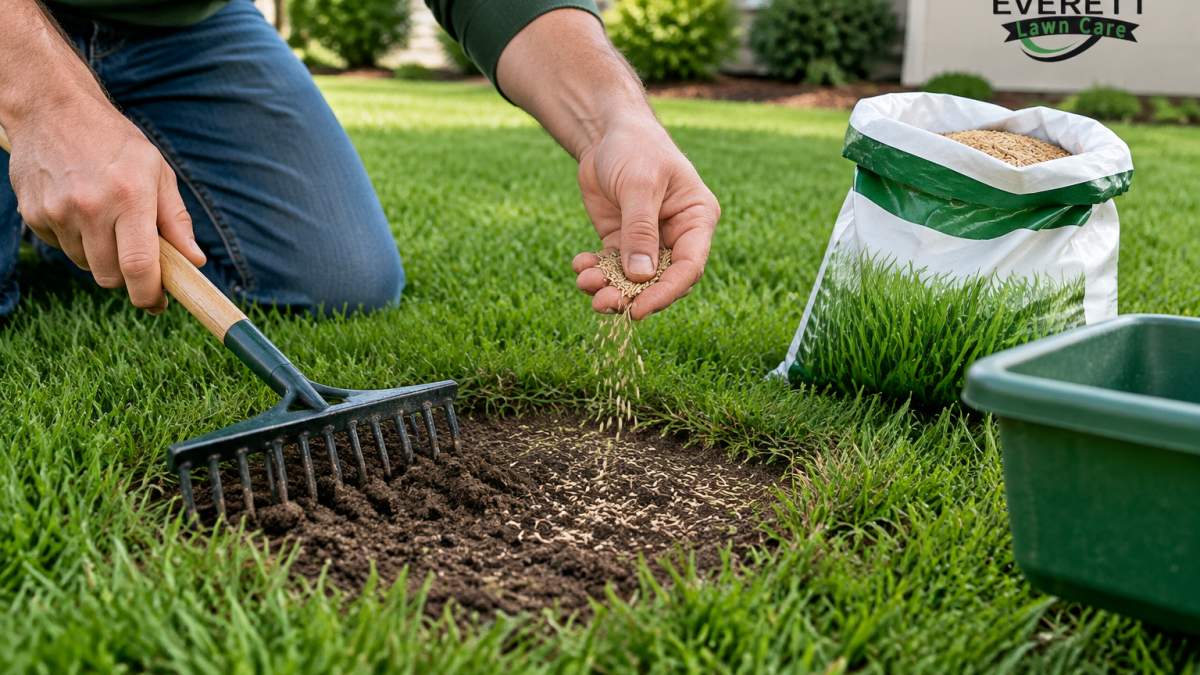
Step 1: Clear and Prepare the Damaged Area
Start by removing what is already dead. Rake out dead grass, thatch, weeds, and old roots until you reach bare soil.
Then measure the patch. Multiply length by width in feet to get square footage, a 3-by-4-foot patch is 12 square feet.
Clear edges help new grass blend into the surrounding lawn. A patch under a few feet wide is a reseeding job; a large dead area may call for sod or returfing instead.
Step 2: Loosen Soil and Add Amendments
Compact soil is the most common reason a repair fails. Break up the top inch or two with a rake or hand cultivator so roots can push down.
Next, work in a soil amendment. For a deeper look at fixing tough ground, see our guide on clay soil lawn care fixes.
If compaction runs deep, expert lawn aeration breaks up the hard layer so water and roots can move freely.
Step 3: Spread Seed and Cover for Seed-to-Soil Contact
Choose a seed blend that matches your existing lawn. A cool-season blend for fescue, a warm-season option for bermuda.
Spread seed evenly by hand or with a spreader, then lightly rake it into the top quarter inch.
Cover the seed with a thin layer of soil, compost, or straw. This keeps moisture in and hides seed from birds.
Watch out: seed applied too thick clumps and competes with itself, while seed applied too thin leaves gaps that weeds fill first.
Step 4: Water for Germination
Keep the top inch of soil consistently moist until seedlings are up. Light, frequent watering, often twice a day in warm weather, beats one deep soak, because the seed is shallow. Once seedlings reach about two inches, shift to deeper, less frequent watering to push roots down.
Step 5: Protect the Repair While It Establishes
Keep foot traffic off the patch until the new grass is tall enough to mow, usually around three to four weeks depending on the grass type and weather. A light straw cover or a temporary barrier discourages birds and keeps pets off the repair. Hold off on weed treatments until the new grass has been mowed at least twice.
Here is the five-step repair sequence and what each step involves.
| Step | What to do | Key detail |
|---|---|---|
| 1 | Clear and prepare the damaged area | Rake out dead grass, thatch, weeds, old roots |
| 2 | Loosen soil and add amendments | Break up top inch or two; spread quarter to half inch compost |
| 3 | Spread seed and cover | Rake into top quarter inch; cover with soil, compost or straw |
| 4 | Water for germination | Keep top inch moist; often twice a day in warm weather |
| 5 | Protect the repair | Keep traffic off until tall enough to mow, around three to four weeks |
How to Fix Bare Spots in a Lawn with Sod
Sod is the faster route when a patch is large, badly eroded, or you want instant coverage. Fix bare spots in a lawn with sod by cutting the patch to a clean square, loosening the soil underneath, and pressing fresh turf down so roots meet soil.
Follow these steps:
- Cut the damaged area into a clean rectangle with a half-moon tool.
- Remove old grass and loosen the soil below.
- Add topsoil so the new turf sits level with the lawn.
- Lay new turf, press it down, and water deeply.
- Keep edges watered until the sod knits into the lawn.
Sod typically costs more than seed but skips the germination wait, which can suit large dead areas or steep spots.
How to Fix Bare Spots in a Lawn from Dogs
Dog urine burns grass because the nitrogen concentrates in one spot. Fix bare spots from dogs by flushing the area with water, clearing the dead grass, and reseeding with a tough grass blend.
A few practical tips:
- Water the spot heavily to dilute the nitrogen before you reseed.
- Rake out dead grass and loosen the soil.
- Seed with a durable blend and cover lightly.
- Train your dog to use one area, or water the lawn after each bathroom break.
For high-traffic pet zones, a tougher grass type and a small border of mulch can save the same repair from repeating.
Aftercare and Establishment Milestones for New Grass
New grass needs steady moisture for the first two to three weeks. Water lightly and often so the top inch stays moist. Once seedlings reach about two inches, switch to deeper, less frequent watering to push roots down.
What to expect:
- Week 1-2: keep soil moist, germination begins.
- Week 3-4: seedlings show, thin spots fill in.
- Week 6-8: new grass thickens and blends with the lawn.
Hold off on heavy traffic and weed treatments until the new grass is established. When it is ready for feeding, our guide on when to fertilize fescue covers seasonal timing.
Get a Free Estimate for Lasting Lawn Repair
Some repairs are a weekend project, while compacted clay, deep shade, and repeated die-off may call for professional help. Our team handles aeration, seeding, and soil testing.
We are licensed and insured, and we serve homeowners across the Triangle. Curious what professional care runs? See our lawn care cost guide. Or explore our full professional landscaping services to book a visit.
Frequently Asked Questions
Can I just throw grass seed on bare spots?
Throwing seed onto bare ground rarely works. Seed needs contact with soil to absorb moisture and germinate, and it needs the existing dead grass and thatch cleared away first. Loosen the top inch or two of soil, spread the seed evenly, then cover it with a thin layer of topsoil or peat moss and water gently. Without that seed-to-soil contact, much of the seed dries out or gets eaten before it can sprout.
Will bare spots in my lawn grow back on their own?
Some bare spots do fill in slowly if the cause was temporary, like a single season of heavy foot traffic. But most bare lawn patches stay bare or get wider because the underlying problem, such as compacted soil, deep shade, or grub damage, is still there. Weeds usually move in first. Repairing the patch with fresh seed or sod and fixing the cause gives you a thick lawn instead of a weed patch.
How do I fix bare spots in my lawn caused by dogs?
Dog urine burns grass because of the nitrogen concentration, so start by flushing the spot with plenty of water to dilute it. Rake out the dead grass, loosen the soil, and reseed with a tough grass blend suited to your lawn type. To prevent repeat damage, water the area right after your dog urinates and train them to use one designated spot. Severe, repeated damage may call for a small sod patch instead of seed.
How long does it take for repaired bare patches to fill in?
New grass seed typically germinates in one to three weeks depending on the grass type and soil temperature, and the patch usually knits into the surrounding lawn within six to eight weeks. Sod establishes faster, often rooting within two to three weeks if watered deeply. Keep the soil moist but not soggy during that window, and stay off the patch until the new grass is tall enough to mow.
Bare patches rarely fix themselves, and reseeding the same spot without solving the cause wastes your weekends. Everett Lawn Care brings licensed and insured crews, expert aeration, and soil testing to repair the damage and keep it from coming back. Get started with Everett Lawn Care and get a lawn that finally holds together.
