Last Updated: October 28, 2026
Quick Summary
Professional landscaping is worth the cost when a job needs equipment, volume, or diagnosis, such as full design, grading, drainage, or hardscape work. DIY makes sense for small jobs like mulch, a few shrubs, or reseeding a bare patch. Many homeowners split the work, hiring out treatments, aeration, and structural work while handling light upkeep themselves.
- Landscaping covers lawn maintenance, treatments, design, installation, and seasonal cleanups.
- Test soil first and correct pH a season ahead before planting.
- Map sun through a full day and mark beds as full sun, part sun, or shade.
- Mulch to 2 to 3 inches and keep mulch off the trunk flare.
- Ask whether the crew is licensed and insured before you sign.
Table of Contents
- What Landscaping Actually Covers
- Landscaping Project Planning: Start With Your Soil and Sun
- Landscape Design Ideas That Fit Your Yard's Layout
- Landscape Installation: What Happens on Site
- Low-Maintenance Landscaping That Still Looks Intentional
- DIY Versus Hiring a Landscape Contractor
- Get a Free Estimate Before You Commit
- Frequently Asked Questions
What Landscaping Actually Covers
Landscaping is the work of shaping how a property looks and functions outdoors. Homeowners in the Triangle often picture a mower and a blower, but the trade covers far more ground.
Here is the short version of what a full-service landscape contractor handles:
| Service Layer | What It Includes | How Often |
|---|---|---|
| Lawn maintenance | Mowing, edging, trimming, blowing | Weekly to biweekly in season |
| Lawn treatments | Fertilization, weed control, aeration, seeding | Seasonal schedule |
| Landscape design | Layout, plant selection, bed planning | One-time project |
| Installation | Planting, beds, mulch, hardscape features | Project-based |
| Seasonal cleanups | Leaf removal, bed refresh, debris hauling | Spring and fall |
Residential and Commercial Landscaping
Residential landscaping prioritizes curb appeal, outdoor living, and how a yard feels to the people who use it. Commercial landscaping answers a different brief: consistent appearance, safe walkways, and a property that reflects well on a business year-round. Both rely on the same underlying skills, but the maintenance schedule and plant choices differ. A homeowner can tolerate a slower spring green-up; a commercial property manager usually cannot.
Maintenance, Hardscaping, and Seasonal Cleanups
Maintenance keeps a landscape healthy between projects. Hardscaping covers the built elements: walkways, retaining walls, bed edging, and gravel or stone features. Seasonal cleanups reset the property at the start and end of the growing season. Skip any one of these and the others get harder. A yard with no fall cleanup, for example, enters spring with matted leaves smothering the turf underneath.
Landscaping Project Planning: Start With Your Soil and Sun
Most landscaping advice online is written for a generic yard. A plan for a property in this region has to start with the two facts that decide almost everything else: what the soil is made of and where the sun actually lands. Get those right and plant selection becomes a short list instead of a guessing game.
Step 1: Read the Soil Before You Buy a Single Plant
A practical sequence for a clay-heavy yard:
- Test first. Sample several spots, mix them, and send one composite sample.
- Correct pH before planting. Lime or sulfur takes months to move through the profile, so apply it a season ahead when possible.
- Amend the planting hole, not the whole yard. Blend compost into beds rather than tilling the entire lawn.
- Fix drainage before you plant. A bed that holds water after rain will drown shrubs regardless of species.
- Mulch to 2-3 inches. Keep mulch off the trunk flare; volcano mulching smothers roots.
Step 2: Map the Sun Through a Full Day
Sun mapping is not a glance out the window. Walk the yard in the morning, at midday, and in late afternoon, and mark each bed as full sun (6+ hours), part sun (3-6 hours), or shade (under 3 hours). A bed that bakes from noon onward needs different plants than one under a mature oak, and getting this wrong is the most common reason new plantings fail. Note reflected heat too: a bed against a south- or west-facing brick wall runs hotter and drier than the same bed in the open.
Step 3: Choose Plants That Fit the Site
- Sun and clay: coneflower, black-eyed Susan, ornamental grasses, and yaupon holly for structure.
- Part shade: oakleaf hydrangea, native azalea, and autumn fern.
- Shade: Christmas fern, wild ginger, and hosta where deer pressure is low.
- Screening: wax myrtle and Eastern red cedar establish faster than most evergreens sold as screens.
Step 4: Plan Water and Maintenance Up Front
For properties dealing with tough clay, 7 clay soil lawn care fixes that actually work in Raleigh walks through aeration, organic amendment, and drainage corrections that make a real difference.
Landscape Design Ideas That Fit Your Yard's Layout
For a deeper walkthrough of professional design principles, professional landscape design for landscaping covers layout, proportion, and planting strategy in more detail.
Landscape Installation: What Happens on Site
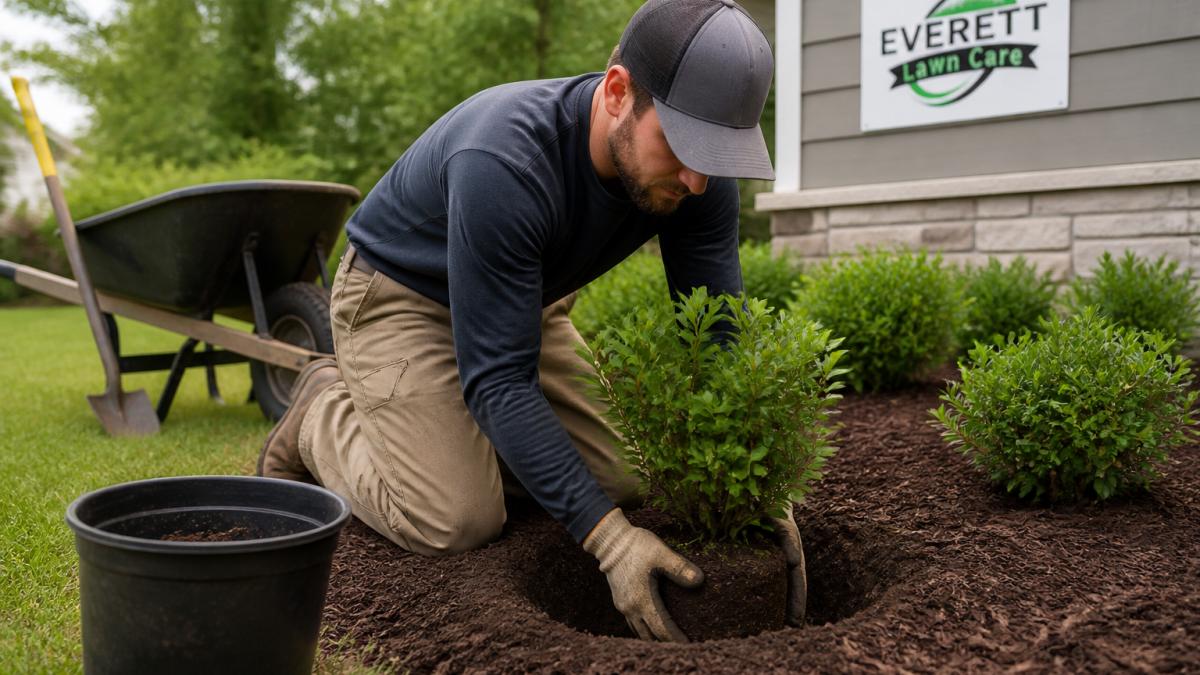
What most homeowners miss is the prep work. A crew that skips soil amendment and drops plants straight into unimproved clay is setting you up for a season of dieback. Watch for proper hole depth, correct spacing, and a final watering. Those three details separate an installation that establishes in one season from one that limps along for three.
Low-Maintenance Landscaping That Still Looks Intentional
A few approaches that hold up well:
- Native and adapted shrubs that tolerate local heat and clay
- Dense groundcover in beds that would otherwise need weekly weeding
- Gravel or stone borders that define beds without constant edging
- Layered planting so bare soil is rarely visible
- Grouped plantings in odd numbers for a natural, intentional look
DIY Versus Hiring a Landscape Contractor
DIY landscaping works for small, contained jobs: refreshing mulch, planting a few shrubs, reseeding a bare patch. It stops working when the job needs equipment, volume, or diagnosis. The useful question is not "can I do this?" but "what does each path actually cost me in money, time, and risk?" lawn care cost in Raleigh gives real pricing to compare against doing the work yourself. landscape design cost in Raleigh breaks down what a professional design project runs. Here is a framework that answers it.
A Decision Framework
| Factor | DIY makes sense when… | Hire a pro when… |
|---|---|---|
| Scope | A single bed, mulch, a few plants | Full design, grading, drainage, hardscape |
| Equipment | Hand tools and a rented tiller cover it | You need a skid-steer, auger, or plate compactor |
| Diagnosis | You know exactly what is wrong | The lawn is thinning and you cannot say why |
| Time | You have weekends and the job fits one season | The schedule is relentless or the project is structural |
| Risk | A mistake costs a shrub | A mistake means re-grading or replacing a retaining wall |
What Drives the Cost
- Square footage and access. A backyard reachable only through a gate costs more than one a truck can back up to.
- Soil and drainage corrections. Amending clay or fixing grading adds labor and material before a single plant goes in.
- Plant size and count. Larger specimens cost more and need more water to establish.
- Hardscape materials. Paver walkways and retaining walls are priced by the square foot and by the linear foot respectively, and both require base prep.
- Maintenance plan. A one-time install and an ongoing maintenance contract are separate line items.
The Middle Path
Many homeowners get the best result by splitting the work. Hire out the treatments, aeration, and any structural work, handle light upkeep like weeding and watering yourself, and bring in a crew for spring and fall cleanups and installations. That keeps the recurring, equipment-heavy tasks with professionals while you keep control of the easy, frequent ones.
What to Ask Before You Sign
- Is the crew licensed and insured?
- Does the quote include soil amendment and disposal of debris?
- Who waters new plantings for the first month?
- What is the warranty on plants, and what voids it?
- Is the maintenance schedule written into the contract or billed separately?
Get a Free Estimate Before You Commit
At Everett Lawn Care, we are licensed and insured, and we serve homeowners and property managers across the Triangle with maintenance, aeration, design, and seasonal cleanups. If you want to see how we work before deciding, professional landscaping in Raleigh, NC outlines our services and lets you request a quote.
Frequently Asked Questions
How do I plan a landscaping project?
Start with the conditions you cannot change: soil, drainage, and how much sun each side of the yard gets. Test the soil before choosing plants, since compacted clay is common on lots that have been graded or built on. Then decide what you want the space to do, map out beds and hardscape, and only after that pick plant material. A written plan with a maintenance schedule keeps the project from turning into a series of impulse purchases.
What is the difference between landscape design and landscaping?
Landscape design is the planning stage: layout, plant selection, grading, and how the space will be used. Landscaping is the physical work of installing and maintaining it, from soil prep and planting to hardscaping and seasonal cleanups. A design without installation is just a drawing, and installation without a design often means plants placed where they will not thrive. Most successful projects run both stages together.
What landscaping is easiest to maintain?
Low-maintenance landscaping leans on groundcover instead of bare mulch, native or regionally adapted plants that suit your sun and soil, and defined bed edges that keep trimming simple. Grouping plants by water needs reduces hand watering, and a layer of mulch cuts weed pressure. Hardscaping such as stone paths and gravel borders also trims weekly upkeep. The catch is that low-maintenance still means some maintenance, usually a spring cleanup and a fall cutback.
What should I ask a landscaping company before hiring?
Ask for proof of licensing and insurance. Get the scope in writing and ask how the company handles soil problems like compaction.
A yard that looks cared for year-round does not happen by accident. It comes from a plan that matches the soil and sun you actually have, an installation done properly, and a maintenance schedule that keeps it there. Everett Lawn Care handles all three with a local crew, licensed and insured work, and services that include lawn maintenance, expert aeration, professional landscape design, and seasonal cleanups. Get started with Everett Lawn Care and request a free estimate for your property.
