Last Updated: November 14, 2026
Quick Summary
Good patio landscaping in Raleigh starts with soil and drainage, not pavers, because the Triangle's red clay holds water and causes patios to heave, settle, and pool. Slope the patio away from the house, add a compacted gravel base, and plan a swale or dry creek bed for runoff before choosing materials.
- Clay soil drains slowly, so water sits against your foundation and under your patio base.
- Use one dominant material for the main patio and a secondary material for borders and steps.
- Run pavers diagonally and use vertical planters to make a small patio feel bigger.
- Choose dwarf shrubs, ornamental grasses, and groundcovers over fussy annuals for low maintenance.
- Verify the crew is licensed and insured and ask how they handle compacted clay.
Table of Contents
- Why Patio Landscaping in Raleigh Starts With Soil and Drainage
- Patio Hardscaping Ideas: Pavers, Brick, Concrete, and Natural Stone
- Small Patio Landscaping Ideas That Make Tight Spaces Feel Bigger
- Low-Maintenance Patio Landscaping for Busy Homeowners
- Patio Privacy Landscaping: Screening Without Blocking the Breeze
- Planting Around the Patio: Native Plants, Pollinators, and Shade
- What to Check Before You Hire a Patio Landscaping Crew
- Get a Free Estimate for Your Patio Landscaping Project
- Frequently Asked Questions
Why Patio Landscaping in Raleigh Starts With Soil and Drainage
Good patio landscaping in Raleigh begins underground, not with the pavers. The Triangle's red clay holds water like a cracked bathtub, so a patio that ignores drainage will heave, settle, and pool within a season or two. This guide walks through practical ideas that hold up in local soil and summer conditions.
Patio landscaping is the design and construction of the planted and hardscaped areas around a patio, including the base prep, edging, beds, and screening that make the space usable. Skip the base work and the surface is only decoration.
Clay Soil, Stormwater, and What It Means for Your Layout
Clay soil drains slowly, which means water sits against your foundation and under your patio base. A common mistake is setting pavers on a thin sand layer over compacted clay.
Build the layout around where water wants to go. Slope the patio away from the house, add a gravel base with proper compaction, and plan a swale or dry creek bed for runoff. If your yard has heavy clay, a soil test tells you what you're working with before you dig.
Patio Hardscaping Ideas: Pavers, Brick, Concrete, and Natural Stone
Hardscaping is the built, non-plant part of the yard: patios, walkways, walls, and edging. The material you pick sets the budget, the maintenance, and how the patio feels underfoot. In the Triangle's clay and summer heat, it also determines how the patio performs after a decade of freeze-thaw cycles and heavy thunderstorms.
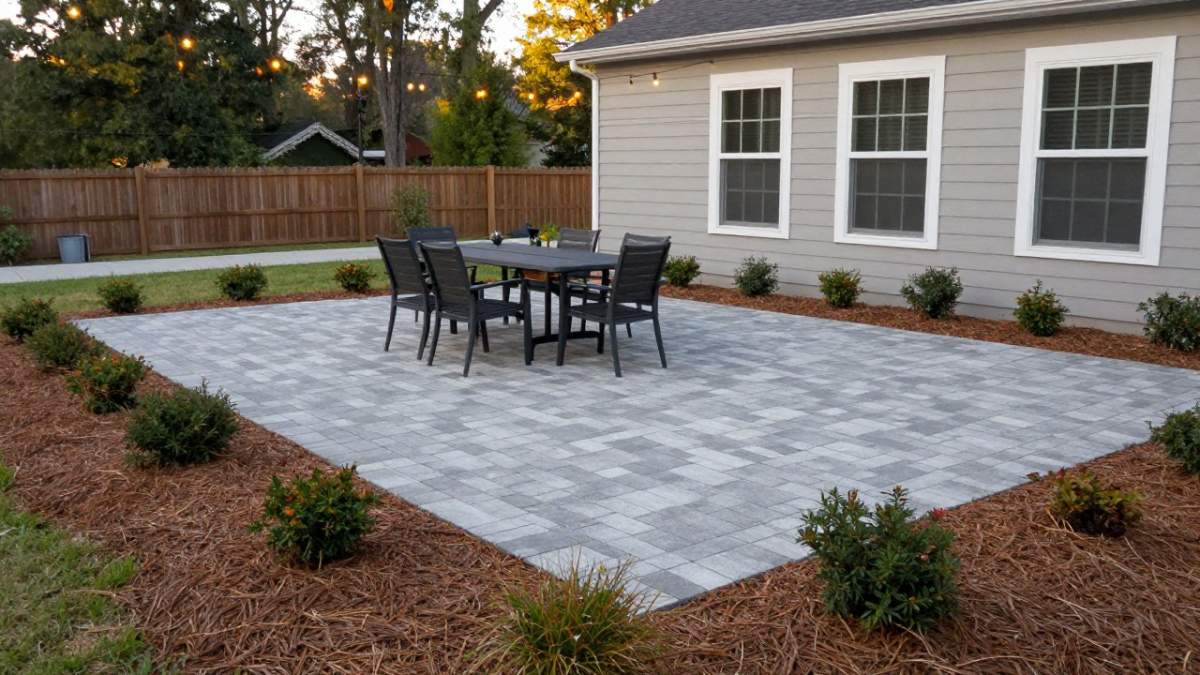
How Each Material Handles Local Conditions
| Material | Best For | Watch Out For | Local Performance Notes |
|---|---|---|---|
| Concrete pavers | Curb appeal, easy repairs, pool decks | Higher upfront cost than poured concrete | Individual units can be lifted and reset if clay settlement shifts a corner; choose a permeable or open-graded joint if runoff is a concern |
| Clay brick | Traditional homes, warm color, front entries | Can shift without a solid base | Mortar joints can crack with seasonal movement; dry-laid brick on a compacted gravel base is more forgiving |
| Poured concrete | Tight budgets, simple shapes, utility areas | Cracks; hard to repair | Clay movement and summer heat make control joints and a properly compacted subbase non-negotiable; stains are difficult to remove |
| Natural stone (flagstone, bluestone, travertine) | High-end finish, irregular shapes, shade gardens | Heavy, higher cost, needs a skilled setter | Flagstone set on a compacted gravel base with polymeric joint sand handles freeze-thaw better than thin-set over a cracked slab |
Base Prep Is the Real Material Decision
The base, not just the surface, largely determines whether a patio holds up in clay soil, since proper base preparation is central to drainage and stability.
Budget Ranges and Cost Drivers
Pricing depends on site access, square footage, base depth, and finish. For current pricing or a quote for your project, contact Everett Lawn Care directly.
Matching Material to the Rest of the Yard
Use one dominant material for the main patio and a secondary material for borders, steps, or a landing at the door. Too many materials make a small yard look busy. If the patio meets a lawn, a steel or stone edge keeps grass from creeping into the joints. If it meets a deck, plan the transition so the two surfaces sit flush and water drains away from both.
Small Patio Landscaping Ideas That Make Tight Spaces Feel Bigger
Small patio landscaping ideas work by directing the eye up and out. A tight patio feels cramped when everything sits at one level. In a small yard, the goal is to borrow space from the fence line, the house wall, and the sky rather than fill every square foot with furniture and pots.
Try these moves:
- Run pavers diagonally to stretch the visual line
- Use vertical planters and tall grasses at the edges
- Keep furniture low and scaled to the space
- Add a mirror or water feature for depth
- Paint the fence a deep, matte color so it recedes instead of closing in
- Use a single large planter instead of many small ones; one big pot reads as furniture, five small pots read as clutter
A common mistake is filling every corner with pots. Leave breathing room at the edges and the patio reads larger.
Layout Rules for Tight Lots
Watch out: a patio that touches the fence on all sides traps heat and blocks the breeze, which makes a small space feel smaller on a July afternoon.
Shade and Year-Round Usability in a Small Yard
A small patio can overheat because there is no room for a large shade tree. A pergola with a retractable shade, a cantilever umbrella, or a shade sail can extend usable hours without eating floor space. For planting, choose a small understory tree suited to the site, dogwood, redbud, and serviceberry are common choices in the region, and site it so the canopy shades the patio in the afternoon without dropping limbs on the roof.
Planting That Keeps a Small Patio Feeling Open
Use a few well-chosen plants rather than a crowded border. Ornamental grasses move in the breeze and screen without blocking light. Columnar evergreens give year-round structure in a narrow footprint. Native perennials such as coneflower, black-eyed Susan, and switchgrass add seasonal color and support pollinators without demanding much water once established. Group plants by water needs so you are not overwatering the whole bed to save one thirsty shrub.
Furniture and Storage That Earn Their Space
Choose furniture that does double duty: a bench with storage underneath, a table that folds or nests, and chairs that stack. Keep the grill on a separate pad or at the patio edge so smoke and grease do not drift across the seating area. If the patio is the only outdoor space, a small shed or deck box for cushions and tools keeps the floor clear.
Low-Maintenance Patio Landscaping for Busy Homeowners
Low-maintenance patio landscaping means fewer plants that need deadheading and more structure that holds its shape. Choose dwarf shrubs, ornamental grasses, and groundcovers over fussy annuals.
Mulch beds deeply to cut weeding, and edge beds with steel or stone so grass stops creeping in. Everett Lawn Care offers mulch and seasonal cleanup services.
Patio Privacy Landscaping: Screening Without Blocking the Breeze
Patio privacy landscaping screens sightlines without turning the patio into a hot box. Solid fences block air; layered plants filter it.
Good options include:
- Tall ornamental grasses that move in the wind
- Columnar evergreens for year-round screening
- Pergolas with climbing vines for overhead privacy
Space screening plants far enough from the patio that roots don't lift pavers, and check setback rules before planting a hedge on a property line.
Planting Around the Patio: Native Plants, Pollinators, and Shade
Native plants and pollinator-friendly beds settle in faster and need less water once established. Around a patio, they also bring bees and butterflies close without a fussy garden.
For shade, plant a small understory tree on the sun-baked side and let it grow into the space. Keep beds at least a foot back from the patio edge so mulch doesn't wash onto the pavers. Group plants by water needs so you're not overwatering the whole bed to save one thirsty shrub.
What to Check Before You Hire a Patio Landscaping Crew
Before you sign, verify the basics. A good crew will answer these without flinching:
-
Licensed and insured, with proof on request
-
Written scope covering base prep, drainage, and cleanup
-
Clear plan for clay soil and stormwater runoff
-
Permit and setback responsibilities spelled out
Ask how they handle compacted clay, because that's where cheap bids cut corners. If you want to understand pricing first, see this guide to landscape design cost in Raleigh, weigh whether professional landscaping is worth the cost, and read what professional landscape design actually involves. For clay soil fixes, our team covers clay soil lawn care in depth.
Get a Free Estimate for Your Patio Landscaping Project
The best patio starts with the right base, the right drainage, and plants that suit your light. Everett Lawn Care is licensed and insured, serving Raleigh and the surrounding Triangle with maintenance, aeration, treatments, and design work. Soil testing is available. Request lawn mowing and treatments in the Raleigh area or a full patio plan, and we'll walk your yard and give you a straight answer.
Your patio shouldn't be a puddle-prone afterthought. Everett Lawn Care brings licensed, insured crews, soil testing, and design that fits your yard's real conditions. Get started with Everett Lawn Care and build an outdoor space that looks right and drains right.
Frequently Asked Questions
What plants work well around a patio in Raleigh?
Choose plants that handle both summer heat and heavy clay soil. Native options like coneflower, black-eyed Susan, switchgrass, and inkberry holly settle in well and support pollinators. For shade on one side of the patio, try ferns, hellebores, and native azaleas. Keep larger shrubs at least 2 to 3 feet from the patio edge so roots do not lift pavers, and put anything thirsty in a raised bed or container where you control the soil.
How can I add privacy to a patio with landscaping?
Layered screening works better than a single row of plants. Start with a tall evergreen backdrop such as Eastern red cedar or wax myrtle, add a mid-height shrub layer, then fill in with ornamental grasses for softness. A trellis with native vines adds height in a narrow space. Check setback and height rules with your local permitting office before planting a screen near a property line, and confirm utility locations before digging.
What are some low-maintenance patio landscaping ideas?
Swap lawn strips for mulch beds planted with shrubs and perennials, use pavers or gravel instead of bare soil, and group plants by water needs so you can irrigate one zone. Native plants generally need less watering and fewer replacements once established. A fresh layer of mulch each spring cuts weeding and holds moisture. If your soil is compacted clay, a soil test and core aeration before planting save years of guesswork.
What should I consider before adding landscaping around a patio?
Start with drainage: water should slope away from the house and patio, not pool against it. Confirm property setbacks, utility lines, and any stormwater rules with your local office before digging. Test the soil so plant choices match your pH and clay content. Finally, plan for how you use the space: shade for afternoon seating, a clear path for foot traffic, and room for furniture. A written plan and a licensed, insured contractor prevent costly rework.
