Everett Lawn Care LLC

Professional Landscaping in Raleigh, NC

Everett Lawn Care provides mowing, aeration, seeding, sod installation, mulch, cleanups, landscaping, and pressure washing in Raleigh and Wake County.

Serving Raleigh, Cary, Apex, Holly Springs, Wake Forest, and nearby Triangle cities.

Request an estimate · Contact us · (919) 899-2341 · info@everett-lawncare.com

5300 Six Forks Rd, Raleigh, NC 27609

When Is the Best Time to Apply Weed Killer to Your Lawn?

By Everett McLain

Last Updated: November 3, 2026

Quick Summary

The best time to apply weed killer to your lawn is when weeds are actively growing and the weather is mild. For most lawns, that means spring for early-season weeds and early fall for perennial and winter annual weeds. Timing matters more than the product.

  • Apply pre-emergent herbicide for crabgrass in early spring, before soil temperatures trigger seed germination.
  • Spray weeds during a dry window with no rain expected for at least 24 to 48 hours.
  • Wait two to three days after mowing before you spray weed killer, then wait at least two days before mowing again.
  • Apply weed and feed when the lawn is actively growing and weeds are small and young.
  • Spray in late morning once dew is gone and before the heat peaks, on a calm day.

Table of Contents

When to Apply Weed Killer to Lawn: The Short Answer

The best time to apply weed killer to your lawn is when weeds are actively growing and the weather is mild. For most lawns, that means spring for early-season weeds and early fall for perennial and winter annual weeds. Timing matters more than the product.

Apply too early and the weed isn't absorbing anything. Apply too late and it's already set seed. Get it right and you'll see fewer weeds with less product.

Below, you'll find guidance on timing each application, from pre-emergent to post-emergent, so you can avoid wasting money on sprays that don't work.

Spring vs. Fall: Timing Weed Control by Season

Spring and fall are the two main windows for weed control, but they target different plants. For local timing, see weed control for lawns in Raleigh. Spring applications catch weeds as they emerge. Fall applications hit weeds as they store energy for winter.

Spring Applications for Early-Season Weeds

Spring is when annual weeds like crabgrass and chickweed start from seed. Apply pre-emergent herbicide when soil temperatures warm up and before seeds germinate. For most lawns, that's when you see forsythia blooming.

A common mistake is waiting until you see weeds to spray. By then, pre-emergent won't help. You'll need a post-emergent instead.

Spring is also the time for spot treatments on broadleaf weeds like dandelions. Spray when they're actively growing and the lawn is green.

Fall Applications for Perennial and Winter Annual Weeds

Fall is the best season for perennial weeds. These plants pull energy down to their roots before winter, so herbicide travels with it. September through October is prime time.

Winter annuals like henbit and deadnettle germinate in fall and grow in spring. A fall application stops them before they get established.

Penn State Extension guide on fall weed control notes that fall treatments often work better than spring ones for tough perennials. That's because the plant is moving food downward, not up.

When to Apply Pre-Emergent Herbicide for Crabgrass

Apply pre-emergent herbicide for crabgrass in early spring, before soil temperatures reach a level that triggers seed germination. That threshold is the widely used trigger because crabgrass seed germinates as soil warms, and pre-emergent only works before germination. Once crabgrass has sprouted, a pre-emergent does nothing.

The calendar date that corresponds to 55°F soil temperature varies widely by climate and grass species. In cooler climates and on cool-season lawns, the window often falls from late winter into early spring. In warmer climates and on warm-season lawns, it can arrive weeks earlier. A soil thermometer is more reliable than a date on the calendar, and a local extension office can confirm the typical window for your area.

Grass species changes the plan in two ways. On cool-season lawns, spring pre-emergent timing must also respect the fall overseeding schedule, because many pre-emergent products prevent grass seed from germinating too. On warm-season lawns, pre-emergent is often applied as soils warm in spring and sometimes again in early fall to catch a second germination window. Check the label for whether the product is safe on your grass type and whether it restricts overseeding for a stated period.

Formulation matters. Follow the label rate and watering instructions for your specific product.

Watch out: applying pre-emergent after crabgrass has germinated wastes money and may limit your options for overseeding later in the season. If it keeps returning, why crabgrass keeps coming back to your lawn explains why timing alone may not fix the problem.

If crabgrass has already sprouted, you need a different plan. How to Get Rid of Crabgrass in Your Lawn covers the full removal and prevention playbook.

Best Time to Spray Weeds Before or After Rain

The best time to spray weeds is during a dry window with no rain expected for at least 24 to 48 hours. Rain too soon washes the product off the leaf before it absorbs.

Check the forecast before you spray. If rain is coming within a day, wait. Most post-emergent herbicides need a rain-free period to work.

Also watch for dew. Spraying on wet grass dilutes the product and causes runoff. Wait until the dew dries in the morning.

Dry weather after application is just as important as dry weather during it. If the lawn is drought-stressed, weeds absorb less and the spray works poorly.

Do I Apply Weed Killer Before or After Mowing?

Apply weed killer after mowing, not before. Mowing opens up the leaf surface and can reduce how much herbicide the weed takes in if you spray right away.

Instant Estimate →

Wait two to three days after mowing before you spray. This gives the weeds time to regrow enough leaf surface to absorb the product.

After you spray, wait at least two days before mowing again. This lets the herbicide move into the plant.

Don't mow low before spraying either. Scalping the lawn stresses both grass and weeds, and stressed weeds don't absorb herbicide well.

When to Apply Weed and Feed to Lawn

Apply weed and feed when the lawn is actively growing and weeds are small and young. For most cool-season grasses, that's early spring or early fall. Timing depends on your grass type and your fertilization schedule.

Weed and feed combines fertilizer and herbicide in one product. The catch: the timing has to work for both. If your lawn needs fertilizer in fall but the weeds are already mature, a combo product won't do the job well.

Many lawn care pros recommend separate applications instead. That way you fertilize when the grass needs it and treat weeds when they're most vulnerable.

Your fertilizing schedule drives this decision. When to Fertilize Fescue in Raleigh: A Seasonal Guide lays out the seasonal schedule.

Match the Product to the Weed: Reading Labels and Diagnosing Growth Stage

Read the herbicide label before you buy anything. The label is the product-specific source of truth for which weeds it controls, the application rate, the growth stage it targets, temperature limits, rainfast time, and restrictions. A universal schedule cannot replace the label because products differ in active ingredients and formulation.

Start by diagnosing the weed. Pull a sample or take a photo and compare it to a weed identification guide. Note whether it is a broadleaf, a grass, or a sedge, and whether it is an annual, biennial, or perennial. Growth stage matters too: young seedlings are usually easier to control than mature plants that have set seed or developed storage roots.

Then match the product category to the weed:

  • Dandelion and broadleaf weeds: selective broadleaf herbicide
  • Crabgrass and annual weeds: pre-emergent in spring, post-emergent after sprouting
  • Perennial weeds: fall application when plants move energy to roots

Selective herbicide kills broadleaf weeds without harming grass. Non-selective herbicide kills everything it touches, so use it only for spot treatment on driveways and beds.

On the label, check these items before you spray:

  • Active ingredient and target weeds: confirm your weed is listed.
  • Application rate: measure rather than estimate; overdosing can damage grass and underdosing can fail.
  • Temperature limits: some products perform poorly or injure grass outside a stated range.
  • Rainfast time: the label states how long the product needs to stay on the leaf before rain.
  • Overseeding and reseeding restrictions: many products limit when you can plant grass seed.
  • Turfgrass tolerance: confirm the product is labeled for your grass species.

Watch out: spraying the wrong product or the wrong rate wastes money and can damage your lawn, so verify the label matches both the weed and your grass type before mixing. If pets share the yard, see how to pick the best weed killer for lawns safe for pets.

Weather, Temperature, and Time-of-Day Rules for Spraying
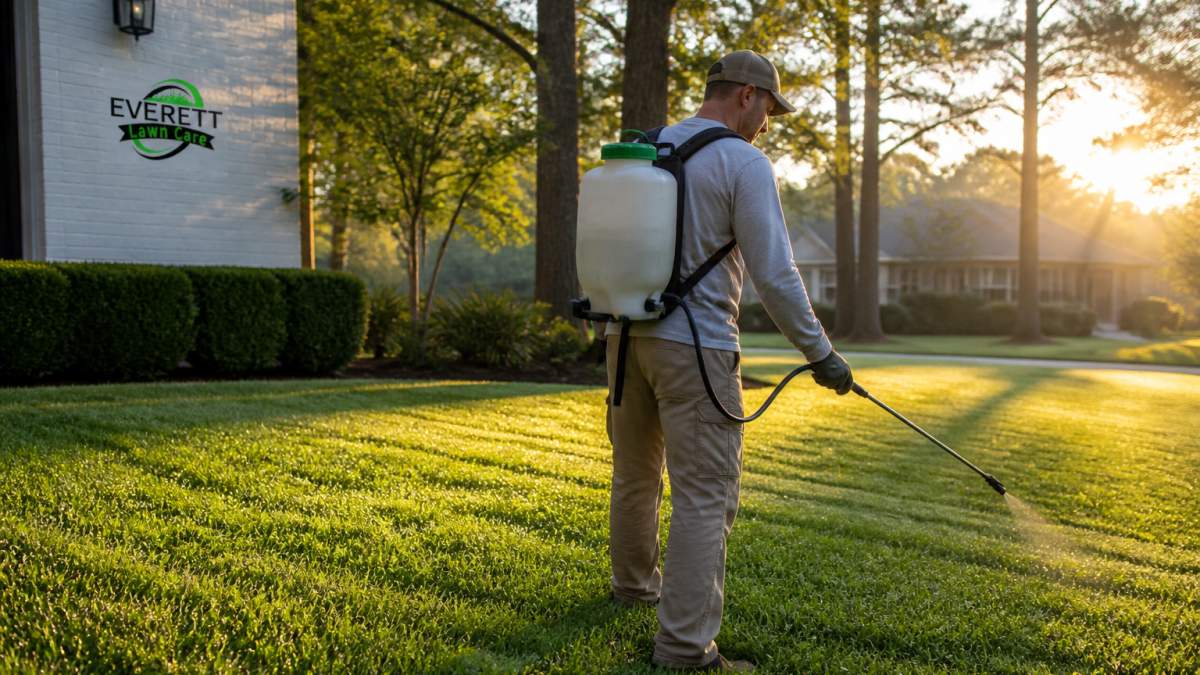
Homeowner spraying weed killer on a dew-covered suburban lawn during the early morning hours

Check the product label for its recommended temperature range and wind conditions before spraying.

Wind matters as much as temperature. Spray on a calm day to keep herbicide from drifting onto flowers, gardens, or a neighbor's yard.

Time of day affects absorption too. Late morning, once dew is gone and before the heat peaks, gives you the best conditions.

Watch out: spraying in high heat or full sun can burn the grass and reduce how well the herbicide works. If the forecast shows a heat wave, wait.

Condition Ideal Range Why It Matters
Temperature 60-85°F Absorption without burn
Wind Calm Prevents drift
Rain None for 24-48 hours Product stays on leaf
Time of day Late morning Dew gone, heat low

Frequently Asked Questions

What month should I put weed killer on my lawn?

It depends on the product and the weed. Pre-emergent herbicides for crabgrass are typically applied before crabgrass seed germinates, which generally falls in early spring as soil warms. Post-emergent broadleaf sprays work best in spring and fall when weeds are actively growing. Fall is the strongest window for perennial weeds like dandelion because the plant is pulling nutrients down to its roots. Always check the herbicide label for the specific timing window for your grass type.

Is it better to use weed killer when the ground is wet or dry?

Most post-emergent sprays work best on dry foliage with adequate soil moisture underneath. Wet grass blades dilute the product and cause runoff, so wait until dew has dried. Granular and liquid products have different activation and rain requirements, so read the label for the exact rain-free period and watering instructions.

How long before rain should I apply weed killer?

Check the product label for the rain-free period it requires before rain. If rain arrives sooner, the product washes off before it absorbs into the leaf and you will likely need to reapply. Granular weed killers are the opposite: they typically need rainfall or watering to activate. Check the label and the local forecast before you spray, and avoid applying when heavy rain is expected.

When is it too late to spray for weeds?

It is too late once weeds have gone to seed or when temperatures push past the label's upper limit, as stated on the product label. Spraying mature, seedy weeds kills the plant but does not undo the seed already dropped. Hot weather also increases the risk of volatilization and lawn damage. If weeds have already seeded, plan a fall or pre-emergent application for next season and focus on mowing before seed heads form.


Timing weed killer right takes some practice, and the details vary by grass type, weed, and weather. If you'd rather skip the guesswork, Everett Lawn Care can handle it. We're licensed and insured, and our local crew serves the Triangle area with customized lawn treatments, expert aeration, and premier lawn maintenance. Get a free estimate from Everett Lawn Care and get a lawn that stays weed-free all season.

GoogleAdd everett-lawncare.com as a preferred source on Google →

When Is the Best Time to Apply Weed Killer to Your Lawn?

By Everett McLain

Last Updated: November 3, 2026

Quick Summary

The best time to apply weed killer to your lawn is when weeds are actively growing and the weather is mild. For most lawns, that means spring for early-season weeds and early fall for perennial and winter annual weeds. Timing matters more than the product.

  • Apply pre-emergent herbicide for crabgrass in early spring, before soil temperatures trigger seed germination.
  • Spray weeds during a dry window with no rain expected for at least 24 to 48 hours.
  • Wait two to three days after mowing before you spray weed killer, then wait at least two days before mowing again.
  • Apply weed and feed when the lawn is actively growing and weeds are small and young.
  • Spray in late morning once dew is gone and before the heat peaks, on a calm day.

Table of Contents

When to Apply Weed Killer to Lawn: The Short Answer

The best time to apply weed killer to your lawn is when weeds are actively growing and the weather is mild. For most lawns, that means spring for early-season weeds and early fall for perennial and winter annual weeds. Timing matters more than the product.

Apply too early and the weed isn't absorbing anything. Apply too late and it's already set seed. Get it right and you'll see fewer weeds with less product.

Below, you'll find guidance on timing each application, from pre-emergent to post-emergent, so you can avoid wasting money on sprays that don't work.

Spring vs. Fall: Timing Weed Control by Season

Spring and fall are the two main windows for weed control, but they target different plants. For local timing, see weed control for lawns in Raleigh. Spring applications catch weeds as they emerge. Fall applications hit weeds as they store energy for winter.

Spring Applications for Early-Season Weeds

Spring is when annual weeds like crabgrass and chickweed start from seed. Apply pre-emergent herbicide when soil temperatures warm up and before seeds germinate. For most lawns, that's when you see forsythia blooming.

A common mistake is waiting until you see weeds to spray. By then, pre-emergent won't help. You'll need a post-emergent instead.

Spring is also the time for spot treatments on broadleaf weeds like dandelions. Spray when they're actively growing and the lawn is green.

Fall Applications for Perennial and Winter Annual Weeds

Fall is the best season for perennial weeds. These plants pull energy down to their roots before winter, so herbicide travels with it. September through October is prime time.

Winter annuals like henbit and deadnettle germinate in fall and grow in spring. A fall application stops them before they get established.

Penn State Extension guide on fall weed control notes that fall treatments often work better than spring ones for tough perennials. That's because the plant is moving food downward, not up.

When to Apply Pre-Emergent Herbicide for Crabgrass

Apply pre-emergent herbicide for crabgrass in early spring, before soil temperatures reach a level that triggers seed germination. That threshold is the widely used trigger because crabgrass seed germinates as soil warms, and pre-emergent only works before germination. Once crabgrass has sprouted, a pre-emergent does nothing.

The calendar date that corresponds to 55°F soil temperature varies widely by climate and grass species. In cooler climates and on cool-season lawns, the window often falls from late winter into early spring. In warmer climates and on warm-season lawns, it can arrive weeks earlier. A soil thermometer is more reliable than a date on the calendar, and a local extension office can confirm the typical window for your area.

Grass species changes the plan in two ways. On cool-season lawns, spring pre-emergent timing must also respect the fall overseeding schedule, because many pre-emergent products prevent grass seed from germinating too. On warm-season lawns, pre-emergent is often applied as soils warm in spring and sometimes again in early fall to catch a second germination window. Check the label for whether the product is safe on your grass type and whether it restricts overseeding for a stated period.

Formulation matters. Follow the label rate and watering instructions for your specific product.

Watch out: applying pre-emergent after crabgrass has germinated wastes money and may limit your options for overseeding later in the season. If it keeps returning, why crabgrass keeps coming back to your lawn explains why timing alone may not fix the problem.

If crabgrass has already sprouted, you need a different plan. How to Get Rid of Crabgrass in Your Lawn covers the full removal and prevention playbook.

Best Time to Spray Weeds Before or After Rain

The best time to spray weeds is during a dry window with no rain expected for at least 24 to 48 hours. Rain too soon washes the product off the leaf before it absorbs.

Check the forecast before you spray. If rain is coming within a day, wait. Most post-emergent herbicides need a rain-free period to work.

Also watch for dew. Spraying on wet grass dilutes the product and causes runoff. Wait until the dew dries in the morning.

Dry weather after application is just as important as dry weather during it. If the lawn is drought-stressed, weeds absorb less and the spray works poorly.

Do I Apply Weed Killer Before or After Mowing?

Apply weed killer after mowing, not before. Mowing opens up the leaf surface and can reduce how much herbicide the weed takes in if you spray right away.

Instant Estimate →

Wait two to three days after mowing before you spray. This gives the weeds time to regrow enough leaf surface to absorb the product.

After you spray, wait at least two days before mowing again. This lets the herbicide move into the plant.

Don't mow low before spraying either. Scalping the lawn stresses both grass and weeds, and stressed weeds don't absorb herbicide well.

When to Apply Weed and Feed to Lawn

Apply weed and feed when the lawn is actively growing and weeds are small and young. For most cool-season grasses, that's early spring or early fall. Timing depends on your grass type and your fertilization schedule.

Weed and feed combines fertilizer and herbicide in one product. The catch: the timing has to work for both. If your lawn needs fertilizer in fall but the weeds are already mature, a combo product won't do the job well.

Many lawn care pros recommend separate applications instead. That way you fertilize when the grass needs it and treat weeds when they're most vulnerable.

Your fertilizing schedule drives this decision. When to Fertilize Fescue in Raleigh: A Seasonal Guide lays out the seasonal schedule.

Match the Product to the Weed: Reading Labels and Diagnosing Growth Stage

Read the herbicide label before you buy anything. The label is the product-specific source of truth for which weeds it controls, the application rate, the growth stage it targets, temperature limits, rainfast time, and restrictions. A universal schedule cannot replace the label because products differ in active ingredients and formulation.

Start by diagnosing the weed. Pull a sample or take a photo and compare it to a weed identification guide. Note whether it is a broadleaf, a grass, or a sedge, and whether it is an annual, biennial, or perennial. Growth stage matters too: young seedlings are usually easier to control than mature plants that have set seed or developed storage roots.

Then match the product category to the weed:

  • Dandelion and broadleaf weeds: selective broadleaf herbicide
  • Crabgrass and annual weeds: pre-emergent in spring, post-emergent after sprouting
  • Perennial weeds: fall application when plants move energy to roots

Selective herbicide kills broadleaf weeds without harming grass. Non-selective herbicide kills everything it touches, so use it only for spot treatment on driveways and beds.

On the label, check these items before you spray:

  • Active ingredient and target weeds: confirm your weed is listed.
  • Application rate: measure rather than estimate; overdosing can damage grass and underdosing can fail.
  • Temperature limits: some products perform poorly or injure grass outside a stated range.
  • Rainfast time: the label states how long the product needs to stay on the leaf before rain.
  • Overseeding and reseeding restrictions: many products limit when you can plant grass seed.
  • Turfgrass tolerance: confirm the product is labeled for your grass species.

Watch out: spraying the wrong product or the wrong rate wastes money and can damage your lawn, so verify the label matches both the weed and your grass type before mixing. If pets share the yard, see how to pick the best weed killer for lawns safe for pets.

Weather, Temperature, and Time-of-Day Rules for Spraying

Homeowner spraying weed killer on a dew-covered suburban lawn during the early morning hours

Check the product label for its recommended temperature range and wind conditions before spraying.

Wind matters as much as temperature. Spray on a calm day to keep herbicide from drifting onto flowers, gardens, or a neighbor's yard.

Time of day affects absorption too. Late morning, once dew is gone and before the heat peaks, gives you the best conditions.

Watch out: spraying in high heat or full sun can burn the grass and reduce how well the herbicide works. If the forecast shows a heat wave, wait.

Condition Ideal Range Why It Matters
Temperature 60-85°F Absorption without burn
Wind Calm Prevents drift
Rain None for 24-48 hours Product stays on leaf
Time of day Late morning Dew gone, heat low

Frequently Asked Questions

What month should I put weed killer on my lawn?

It depends on the product and the weed. Pre-emergent herbicides for crabgrass are typically applied before crabgrass seed germinates, which generally falls in early spring as soil warms. Post-emergent broadleaf sprays work best in spring and fall when weeds are actively growing. Fall is the strongest window for perennial weeds like dandelion because the plant is pulling nutrients down to its roots. Always check the herbicide label for the specific timing window for your grass type.

Is it better to use weed killer when the ground is wet or dry?

Most post-emergent sprays work best on dry foliage with adequate soil moisture underneath. Wet grass blades dilute the product and cause runoff, so wait until dew has dried. Granular and liquid products have different activation and rain requirements, so read the label for the exact rain-free period and watering instructions.

How long before rain should I apply weed killer?

Check the product label for the rain-free period it requires before rain. If rain arrives sooner, the product washes off before it absorbs into the leaf and you will likely need to reapply. Granular weed killers are the opposite: they typically need rainfall or watering to activate. Check the label and the local forecast before you spray, and avoid applying when heavy rain is expected.

When is it too late to spray for weeds?

It is too late once weeds have gone to seed or when temperatures push past the label's upper limit, as stated on the product label. Spraying mature, seedy weeds kills the plant but does not undo the seed already dropped. Hot weather also increases the risk of volatilization and lawn damage. If weeds have already seeded, plan a fall or pre-emergent application for next season and focus on mowing before seed heads form.


Timing weed killer right takes some practice, and the details vary by grass type, weed, and weather. If you'd rather skip the guesswork, Everett Lawn Care can handle it. We're licensed and insured, and our local crew serves the Triangle area with customized lawn treatments, expert aeration, and premier lawn maintenance. Get a free estimate from Everett Lawn Care and get a lawn that stays weed-free all season.

GoogleAdd everett-lawncare.com as a preferred source on Google →

Everett Lawn Care

Loading your experience…

Please wait — this usually finishes in a few seconds.